
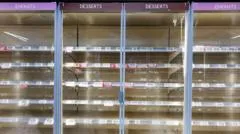
Supermarket fridge hacking: France blames Iran for food sabotage
Supermarket fridge hacking linked to Iranian state actors has caused massive food spoilage across France and parts of Europe. French authorities have officially blamed the Islamic Revolutionary Guard Corps (IRGC) for a series of cyber-attacks that manipulated refrigeration temperatures, destroying tons of frozen and chilled goods. According to French Foreign Minister Jean-Noël Barrot, the scale and aggression of these attacks are unprecedented. While Iran has dismissed the accusations as "baseless and hostile," French investigators are targeting the Shahid Kaveh cyber unit as part of a wider probe into national security sabotage.
November 17, 2026
4 min read
Source: ASHENVOW
Supermarket fridge hacking linked to Iranian state actors has caused massive food spoilage across France and parts of Europe. French authorities have officially blamed the Islamic Revolutionary Guard Corps (IRGC) for a series of cyber-attacks that manipulated refrigeration temperatures, destroying tons of frozen and chilled goods. According to French Foreign Minister Jean-Noël Barrot, the scale and aggression of these attacks are unprecedented. While Iran has dismissed the accusations as "baseless and hostile," French investigators are targeting the Shahid Kaveh cyber unit as part of a wider probe into national security sabotage.
The scale of the supermarket fridge hacking in France
The cyber-attacks targeted the software used to regulate refrigeration temperatures in major retail chains, leading to significant economic losses through food destruction. On 11 October, hackers gained control of the software systems that manage cold units remotely, causing temperatures in some locations to rise to 50°C (120°F) overnight. This manipulation directly impacted the integrity of chilled and frozen food supplies across several prominent French retailers.
The disruption was widespread, affecting a variety of major supermarket brands. The following table outlines the retailers identified as victims of the temperature manipulation:
| Retailer / Brand | Estimated Impact |
|---|---|
| Coopérative U | More than 100 supermarkets hit |
| Intermarché / Netto | 180 stores affected |
| Carrefour | Major retailer hit |
| Monoprix | Major retailer hit |
| E.Leclerc | Major retailer hit |
The technical vulnerability centered on software provided by the Danish engineering firm Danfoss. This specific software allows retailers to manage their refrigeration units remotely, a feature that hackers exploited to bypass physical controls and alter environmental settings within the stores.
French investigation into the IRGC's Shahid Kaveh unit
French prosecutors have opened a formal investigation into a specific cyber unit associated with the IRGC following the attribution of the attacks. Paris prosecutor Laure Beccuau stated that the probe is focusing on the head of an offensive cyber unit and his two deputies. This unit has been identified as Shahid Kaveh, which maintains an affiliation with the electronic and cyber centre of the Islamic Revolutionary Guard Corps.
The role of the Shahid Kaveh hacking cluster
The Shahid Kaveh unit is described as a cluster of hackers believed to be directly employed by the Iranian regime. By targeting the infrastructure of essential food services, the attack is viewed by French officials not merely as a digital disruption, but as a targeted act of sabotage. Foreign Minister Jean-Noël Barrot characterized the incident as a "major attack on the nation's interests and the security of the French people." In response to these findings, the French government summoned the Iranian ambassador to Paris to lodge a formal protest regarding the severity of the act.
Expansion of cyber-attacks across Europe
The supermarket fridge hacking incident in France was followed by a second wave of similar attacks affecting multiple European nations. While it remains unconfirmed if these incidents are part of a single coordinated campaign, the pattern of targeting refrigeration software suggests a broader regional threat. Earlier this month, more than 100 stores across Europe experienced similar disruptions.
The geographical reach of these subsequent hacks included:
- Belgium and Luxembourg: Significant numbers of stores were affected.
- Northern and Western Europe: Smaller numbers of shops reported hits in Sweden, Ireland, the Netherlands, Estonia, and Finland.
This pattern of targeting critical supply chain software has raised alarms among European security agencies regarding the vulnerability of food logistics to state-sponsored cyber warfare.
Iran's response and the difficulty of cyber attribution
Iran has officially rejected the claims made by France, describing the accusations of involvement in the supermarket fridge hacking as "baseless and hostile." While some Iranian media outlets issued denials on Monday, the Iranian foreign ministry released a formal statement on Tuesday. This diplomatic tension comes at a time when some Iranian political commentators have suggested that retaliation against Western interests could expand beyond the Middle East if regional conflicts involving the US and Israel escalate.
Despite the direct accusations from Paris, the technical process of proving responsibility remains complex. The French government has not publicly disclosed the specific evidence used to conclude that the IRGC was responsible. Attribution in cyberspace is notoriously difficult because:
- Hackers utilize sophisticated techniques to mask their physical locations.
- State-aligned groups often use proxy actors or "hacktivist" fronts to maintain plausible deniability.
- In this specific case, two Russian-aligned hacktivist groups claimed responsibility on Wednesday, though French authorities and many experts have expressed skepticism regarding these claims.
Global patterns of refrigeration-related cyber incidents
The targeting of temperature-sensitive infrastructure appears to be a recurring theme in recent cyber-security investigations. Beyond the European supermarket incidents, similar malfunctions have been recorded in military contexts. In August, a small number of US military bases reported that their fridges malfunctioned, resulting in spoiled food. Reuters news agency has reported that this incident is also being investigated as a potential deliberate cyber-attack.
The convergence of these incidents—targeting both civilian food supplies in Europe and military logistics in the United States—highlights a growing trend in cyber-sabotage. Security experts continue to monitor whether these events are isolated incidents or part of a broader strategy by state actors to disrupt the stability of essential services through the exploitation of industrial and commercial software.



