
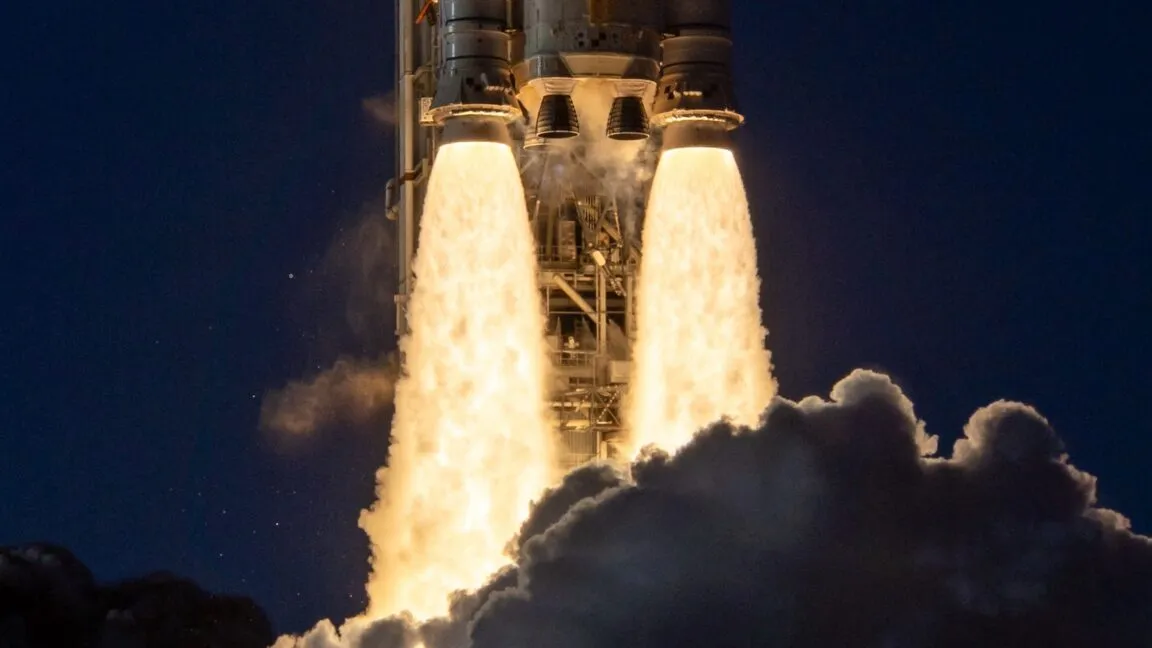
Rocket launch shortage predicted through 2030: Industry analysis
A global rocket launch shortage is expected to persist for much of the next decade, according to a new report from analytics firm Quilty Space. The industry faces a projected shortfall of approximately 150 launches between now and 2030 compared to the current demand from civil space agencies and satellite operators. This deficit could potentially double if United States military demand is included and SpaceX does not extend its Falcon 9 and Falcon Heavy programs. The crisis is driven by developmental delays in new heavy-lift vehicles and the loss of Russian launch capacity following the war in Ukraine.
November 11, 2026
4 min read
Source: ASHENVOW
The scale of the projected launch crisis
The global space industry is approaching a significant capacity gap that may not be resolved until the late 2030s. According to Caleb Henry, director of research at Quilty Space, the launch crisis is more severe than previously estimated and is unlikely to abate until the end of this decade, with a possible resolution only in the late 2030s.
Quilty Space identifies several structural factors contributing to this imbalance. The removal of Russian rockets from the Western market due to the war in Ukraine has significantly reduced available lift capacity. Simultaneously, the rising demand for Amazon's Kuiper constellation and other large-scale satellite networks is placing unprecedented pressure on existing launch providers. Furthermore, the industry is currently waiting on a new generation of heavy-lift vehicles that have faced various developmental hurdles.
Drivers of the capacity shortfall
The shortage is compounded by the fact that many next-generation rockets are still in development phases. Key vehicles currently facing delays include Blue Origin's New Glenn, United Launch Alliance's Vulcan, and several others such as Neutron, Terran R, and Nova. Additionally, the potential retirement of the Falcon 9 from commercial service would remove a massive pillar of current launch availability, further tightening the market.
Blue Origin's New Glenn faces schedule shifts
Blue Origin has announced a minor delay for its New Glenn return-to-flight mission, pushing the target from December 2026 to January 2027. This adjustment comes as the company continues to reconstruct its launch pad at Cape Canaveral, Florida, following a catastrophic explosion approximately six months ago. Despite this delay, Blue Origin has introduced new hardware to support the heavy-lift vehicle, including a new kick stage and a redesigned rocket engine.
The demand for New Glenn's capacity is substantial, with NASA, Amazon, and the U.S. Space Force among those waiting for the vehicle to enter active service. The company is working to restore its launch capabilities to meet this pent-up requirement for heavy-lift services.
Emerging propulsion and launch technologies
New approaches to satellite movement and small-scale launch are emerging as companies attempt to navigate the changing space economy. Argo Space, founded in late 2022 by three former SpaceX employees, is developing satellites that utilize water as a primary resource for in-space operations. This technology aims to reduce the necessity of launching heavy propellants from Earth by utilizing water as a propellant, a coolant, and a radiation shield.
The Argo Space propulsion system functions by using solar power to split liquid water into hydrogen and oxygen gases, which are then burned to generate thrust. While the company's first mission in July failed due to a solar array deployment issue, two additional missions are scheduled for 2027 to demonstrate these water-based thrusters.
| Company | Project/Technology | Primary Goal/Status |
|---|---|---|
| Argo Space | Water-based thrusters | Use water as propellant, coolant, and shield |
| Interstellar Technologies | Zero rocket | Two-stage launcher for 1 metric ton payload |
| CAS Space | Kinetica 2 | Small-scale triple-booster rocket |
In Japan, Interstellar Technologies has secured government support through the Japan Aerospace Exploration Agency (JAXA). The company was selected for the Acceleration of Commercial Rocket Launch Demonstration program under the Space Strategic Fund, which provides grants of up to $76 million per company. Interstellar is using these funds to complete the development of its Zero rocket, a two-stage launcher capable of carrying 1 metric ton to low-Earth orbit, with a first launch targeted for 2027.
China's expanding launch and constellation capabilities
China continues to advance its launch cadence, particularly in the deployment of mega-constellations. The CAS Space startup recently completed the second launch and first operational flight of its Kinetica 2 rocket. This vehicle features a design reminiscent of SpaceX’s Falcon Heavy, utilizing three side-by-side boosters, though it is significantly smaller. Each booster on the Kinetica 2 uses three kerosene-fueled engines, providing a lift capacity of approximately 12 metric tons to low-Earth orbit. CAS Space has indicated plans to eventually recover and reuse these boosters.
The Kinetica 2 mission successfully deployed 18 satellites for the SpaceSail Internet network, also known as Qianfan. This constellation is currently in its growth phase, with 275 satellites already in orbit. The first phase of the SpaceSail network aims to reach a total of 1,296 satellites.
Lunar and navigation objectives
Beyond low-Earth orbit, China has confirmed a roadmap to land astronauts on the Moon within the next three years. This lunar ambition is part of a broader strategic expansion of their space capabilities. Meanwhile, India has also reported a successful mission to bolster its regional navigation infrastructure. The launch of the NVS-03 satellite via a Geosynchronous Satellite Launch Vehicle (GSLV) was intended to replace older satellites that suffered from atomic clock failures. V. Narayanan, head of India's space agency, characterized the GSLV mission as the "most precise launch of any rocket in the world," marking a successful turnaround for a vehicle that has historically faced reliability challenges.



