
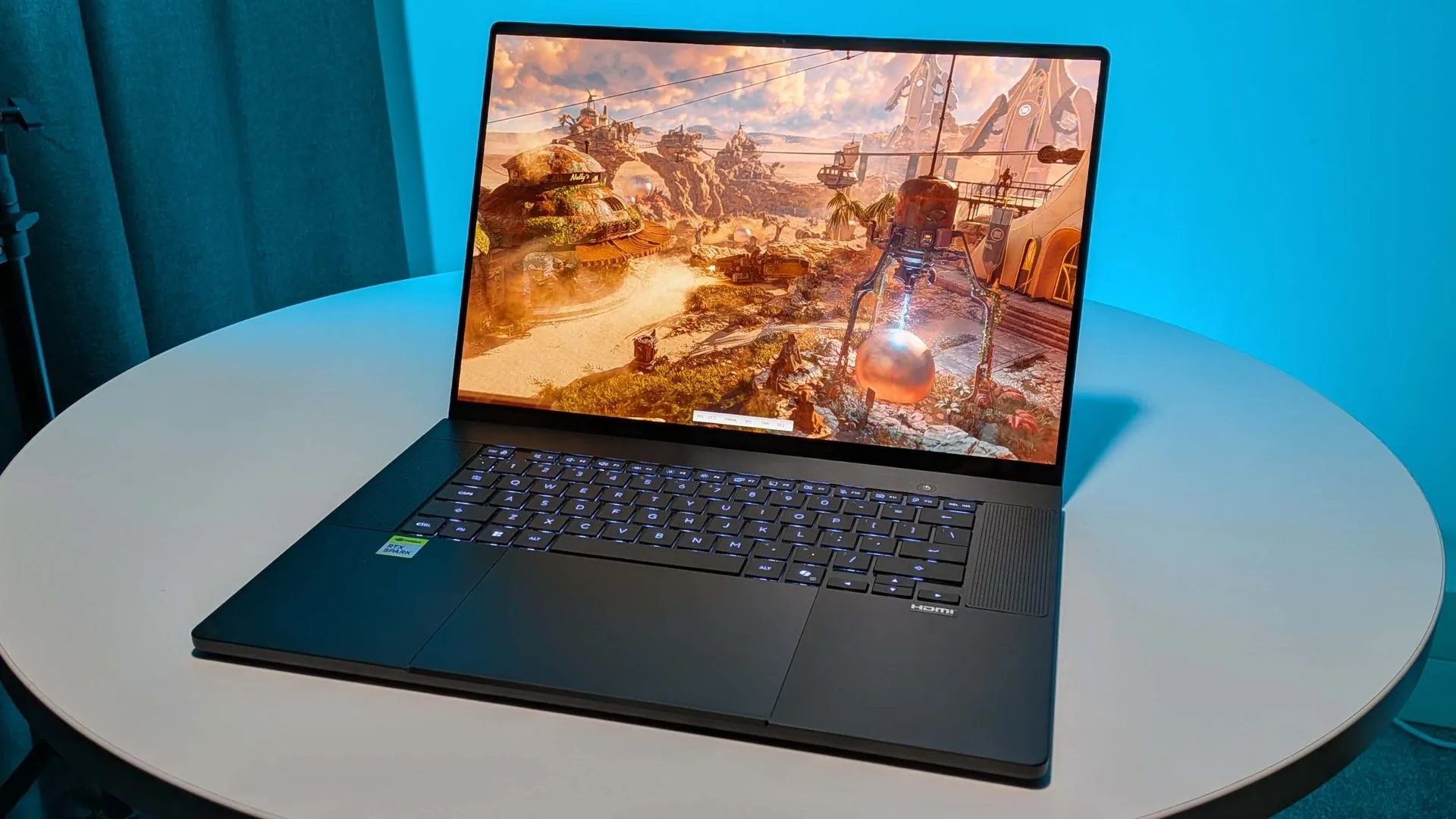
Nvidia RTX Spark Arm gaming laptop: Blackwell GPU performance tested
Nvidia RTX Spark is an Arm-based SoC combining a Blackwell GPU with up to 20 Cortex CPU cores and 128 GB of unified LPDDR5X memory. Designed for AI, content creation, and Windows gaming, entry-level models start at $2700. This review focuses on the Asus ProArt P16, which features the high-spec 20-core N1X variant with 64 GB of memory. While performance sits between a mobile RTX 5070 and desktop equivalents, it remains constrained by memory bandwidth and emulation overhead. We examine the new architecture, gaming benchmarks, and overall suitability for professional users.
October 19, 2026
3 min read
Source: ASHENVOW
What is the Nvidia RTX Spark architecture?
The RTX Spark SoC integrates a Blackwell GPU die with Arm CPU cores on a TSMC 3 nm process. Two variants exist: one with 6144 CUDA cores across 48 SMs and 20 CPU cores, the other with 5120 CUDA cores and 18 CPU cores. Both use 10 performance Cortex-X925 cores and 10 or 9 efficiency Cortex-A725 cores. Memory is unified LPDDR5X-9400 on a 256-bit interface delivering 300 GB/s bandwidth. NVLink C2C provides 600 GB/s bidirectional link between dies. TDP ranges from 45 W to 80 W.
How does RTX Spark gaming performance compare?
Nvidia positions the full-spec chip near mobile RTX 5070 levels rather than the desktop RTX 5070 despite matching CUDA core counts. Lower memory bandwidth and the unified architecture reduce peak throughput compared with GDDR7 systems. Early testing on the Asus ProArt P16 shows playable frame rates in modern titles at 1080p and 1440p, but results vary with emulation overhead for x86 games. The platform benefits from Microsoft Prism improvements and anti-cheat support commitments.
Key hardware specifications
The reviewed unit contains the 20-core N1X chip, 64 GB unified memory and a 512 GB SSD inside a slim aluminium chassis. Display outputs include HDMI 2.1a and DisplayPort 2.0 over USB4. The design draws from creator-focused laptops rather than traditional gaming models.
Is the RTX Spark suitable for PC gaming?
Current pricing and performance characteristics limit appeal for users seeking dedicated gaming hardware. Machines start at $2700, and the Arm transition requires emulation for many existing titles. Established x86 gaming laptops offer higher rasterization performance at similar or lower cost. The platform shows stronger promise for local AI inference and professional workloads where unified memory provides advantages.
What role does AI play in the RTX Spark design?
Unified memory allows rapid allocation between system tasks and GPU-accelerated AI models. Fifth-generation Tensor Cores support demanding local inference workloads. The timing aligns with growing interest in on-device AI as cloud services increase fees. The DGX Spark desktop preceded the laptop version and demonstrated the same N1X silicon in a Linux environment.
Frequently asked questions
What is the starting price of RTX Spark laptops?
Entry-level configurations begin at $2700 with the lower-spec 18-core chip, 24 GB memory and 512 GB storage. Higher-spec 20-core models with 64 GB memory cost substantially more.
Does the RTX Spark run Windows natively?
Yes. Microsoft has removed the Windows-on-Arm label and treats the platform as standard Windows, with ongoing Prism emulation improvements for x86 applications.
How many CUDA cores does the top RTX Spark chip have?
The higher-spec N1X variant contains 6144 CUDA cores across 48 streaming multiprocessors, matching the core count of the desktop RTX 5070 but with different memory characteristics.
Is emulation required for most games?
Many existing x86 titles require emulation. Microsoft and game developers are expanding native Arm support and anti-cheat compatibility, yet full native coverage remains incomplete.
What memory bandwidth does the RTX Spark provide?
Peak memory bandwidth reaches 300 GB/s through the 256-bit LPDDR5X interface, lower than desktop RTX 5070 configurations that use GDDR7.
Key takeaways
Nvidia RTX Spark combines a Blackwell GPU with Arm Cortex cores on a single SoC using unified LPDDR5X memory.
Entry pricing starts at $2700, positioning the platform above most mainstream gaming laptops.
Gaming performance is expected to align with mobile RTX 5070 levels rather than desktop equivalents.
Unified memory architecture favors local AI workloads over traditional gaming use cases.
Windows support has matured, yet x86 game compatibility still relies on emulation layers.
The platform targets creators and AI users more directly than dedicated gamers.
Conclusion
The RTX Spark represents a technically ambitious step toward integrated Arm-based Windows devices with strong AI capabilities. Its gaming credentials are secondary to the unified memory design that benefits professional and inference workloads. For users focused solely on PC gaming, current x86 laptops remain more practical choices. Over the coming months, expanded software support and additional hardware configurations will clarify the platform's long-term role in the laptop market.



