
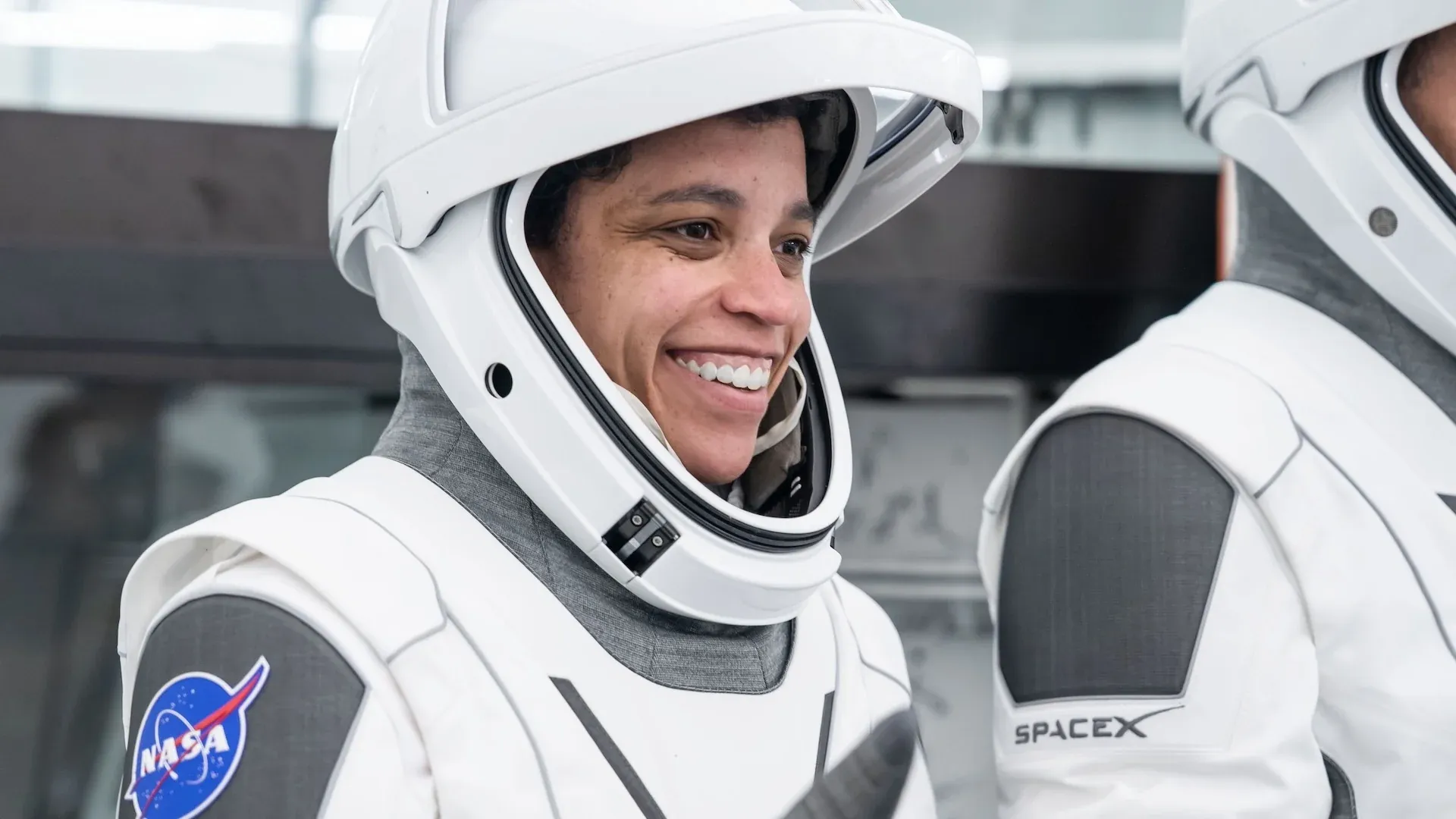
NASA astronaut recruitment: How to apply for lunar missions
NASA astronaut recruitment is officially open for the next class of candidates trained to live and work on the lunar surface. Applications for the new astronaut cohort must be submitted by 11:59 p.m. ET on December 3, with final selections expected in late 2027. This recruitment drive supports America's return to the Moon, the construction of a Moon Base, and the preparation for future crewed missions to Mars. Selected candidates will undergo training at NASA's Johnson Space Center in Houston, Texas.
November 15, 2026
4 min read
Source: ASHENVOW
The scope of the new astronaut class and mission objectives
The upcoming selection process aims to identify individuals capable of supporting long-term lunar habitation and the eventual transition to Mars exploration. According to NASA, these new astronauts will join the agency's efforts to build a Moon Base and lay the operational groundwork for the first crewed missions to the Red Planet.
The recruitment announcement was accompanied by a video featuring several current NASA astronauts, including Jessica Meir, Andre Douglas, Deniz Burnham, Randy Bresnik, Kayla Barron, Jack Hathaway, and Chris Williams. These individuals represent the active corps that will mentor the incoming class.
NASA Administrator Jared Isaacman emphasized the significance of this recruitment cycle in a recent press statement. "This is an extraordinary time to join NASA’s astronaut corps," Isaacman stated. He noted that the selected individuals could potentially walk on the Moon, inhabit the Moon Base, and help develop the systems and operations required to carry crews to Mars.
Current astronaut status and training context
The new recruits will join an existing pool of 32 active astronauts. They will follow in the footsteps of the "Platypi," the class of 2026, who are currently undergoing training at the Johnson Space Center. The selection process is historically rigorous; in 2024, NASA received over 8,000 applications, from which only 10 candidates were ultimately selected.
Academic and professional requirements for applicants
To be eligible for NASA astronaut recruitment, applicants must be U.S. citizens and possess specific advanced academic credentials. The primary requirement is a master's degree in a STEM (science, technology, engineering, or mathematics) field from an accredited institution. NASA has established several alternative pathways for those who do not hold a traditional master's degree in STEM.
The following table outlines the alternative educational and professional qualifications accepted by the agency:
| Qualification Type | Specific Requirement Details |
|---|---|
| Test Pilot Students | Must be currently enrolled in or have completed a Test Pilot School and hold a STEM bachelor's degree. |
| Medical Professionals | Must hold a medical degree and possess professional experience or have completed residency training. |
| Doctoral Candidates | Must have completed at least two years of a STEM-based doctoral program. |
In addition to these educational benchmarks, all candidates are required to have at least three years of professional experience in their respective fields following the completion of their degree. This ensures that the astronaut corps is composed of seasoned experts ready for the technical demands of spaceflight.
Pilot-specific qualifications
For candidates applying under pilot tracks, the requirements extend beyond academic standing to include significant operational flight experience. Applicants must demonstrate considerable time as a pilot-in-command. This experience can be gained across various aircraft types, including high-performance jets, rotary-wing aircraft, or other fixed-wing platforms.
The application process and required documentation
The application procedure requires a comprehensive submission of professional and academic records. Candidates are expected to provide more than just a standard resume; the agency requires specific documentation to verify technical competency and character. Applicants can track the status of their submissions through an online portal provided by NASA.
The mandatory documentation includes:
- Five professional references (noted specifically as references rather than formal letters of recommendation).
- All relevant STEM-related academic transcripts.
- A completed pilot qualifications form, if the applicant is applying for a pilot role.
Once the application is submitted, the agency will move through a multi-year evaluation period. Following the December 3 deadline, the selection process will continue through 2027, culminating in the announcement of the new class. This timeline reflects the intensive vetting required for personnel tasked with high-stakes lunar and Martian operations.
Compensation, location, and job responsibilities
Astronaut positions at NASA are full-time roles that require physical presence and relocation. Remote work is not an option for the astronaut corps, as training and mission support are centralized at the Johnson Space Center in Houston. While NASA may cover relocation fees to Houston, the role demands a permanent commitment to the agency's operational hubs.
The compensation for these positions is set at a fixed annual rate. According to the recruitment details, the salary for the position is $164,395 per year. While the financial aspect is standardized, the responsibilities of the role are highly diverse and extend far beyond simple flight operations.
Core duties of the NASA astronaut corps
Once training is complete, astronauts are integrated into various mission-critical tasks. These duties are essential for both current Earth-orbit operations and future deep-space exploration. The primary responsibilities include:
- Spacecraft Maintenance: Performing essential repairs and upgrades, including extravehicular activities (spacewalks).
- Research and Development: Conducting complex scientific experiments in microgravity environments.
- Mission Support: Providing ground support for Mission Control to ensure safe spacecraft operations.
- Development: Contributing to the ongoing design and maintenance of spacecraft systems.



