
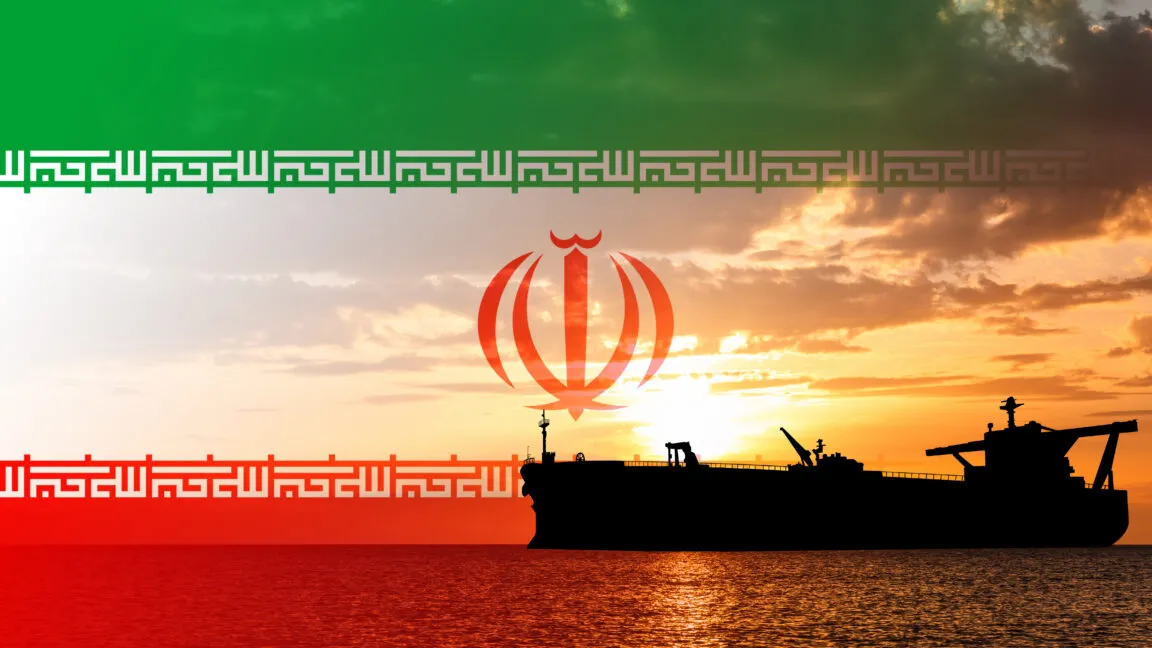
Subsea cables face potential sabotage amid Iran's warnings to Trump
Subsea cables in the Gulf of Oman are facing heightened risks of sabotage as Iranian-linked vessels loiter near critical undersea internet infrastructure. According to maritime intelligence firm Windward, three sanctioned tankers and an Iranian fishing boat were tracked maneuvering near major cable routes in October 2026. This activity follows threats from the Islamic Revolutionary Guard Corps (IRGC) to attack or tax undersea connections in response to US military escalations. With six active cables currently crossing the Strait of Hormuz, the regional instability threatens global data transmission and the connectivity of several Middle Eastern nations.
November 15, 2026
5 min read
Source: ASHENVOW
Maritime intelligence identifies suspicious vessel behavior near cable corridors
Maritime intelligence firm Windward reported in October 2026 that several vessels linked to Iran have been loitering over subsea internet cables in the Gulf of Oman, specifically near the Strait of Hormuz. The firm utilized a combination of ship-tracking data and satellite imagery to monitor the movement of three sanctioned tankers and an Iranian fishing boat. These vessels exhibited patterns that suggest tactical preparation rather than standard commercial transit.
Windward noted that the ships frequently slowed down and looped around multiple cable locations. In several instances, these vessels "went dark" by switching off their Automatic Identification System (AIS) transponders, which are designed to broadcast a ship's position and identity. According to Windward, these behavioral patterns indicate that the Iran-linked ships may be "mapping the cable routes, or placing charges or mines on them while dark."
The intelligence report highlighted that two sanctioned tankers linked to Iran spent several days drifting directly over regional cable corridors. Windward emphasized that both vessels carried no commercial cargo and had no legitimate commercial reason to stop in those specific locations. This pattern of drifting over high-value infrastructure has raised significant concerns regarding the readiness of an imminent kinetic strike against the undersea network.
Patterns of AIS deactivation and loitering
The use of "dark" transit—where vessels intentionally disable AIS transponders—is a common tactic in gray-zone warfare to mask movements from international monitors. By looping around specific coordinates, these vessels can identify the exact placement of undersea lines without leaving a continuous digital trail. This capability is particularly dangerous for the stability of the global internet backbone, as locating and severing a cable requires precise geographic intelligence.
Critical dependencies on the Strait of Hormuz chokepoint
The undersea cable network in the Strait of Hormuz serves as a vital artery for global telecommunications, connecting the Middle East to Europe, Africa, and Asia. Currently, six active cables cross this contested chokepoint, with two additional cables under construction in the region. The vulnerability of these lines has profound implications for both regional stability and international data flows.
The impact of a disruption is concentrated among several nations and global markets. The following table outlines the dependencies associated with the Strait of Hormuz cable corridor:
| Category of Dependency | Affected Entities / Impact |
|---|---|
| Direct National Dependency | Iraq, Kuwait, Bahrain, and Qatar rely entirely on these subsea connections for international connectivity. |
| Global Data Traffic | One-third of India's westbound internet traffic passes through the Persian Gulf and Strait of Hormuz. |
| Infrastructure Projects | The 2Africa cable, involving a consortium including US-based Meta, has faced expansion delays. |
Because these cables act as a primary corridor for data, any successful attack on the infrastructure would likely cause immediate and widespread internet outages across several continents. The concentration of these cables in a single maritime chokepoint makes them an efficient target for asymmetric warfare intended to exert maximum economic and social pressure.
Escalation of Iranian threats against US and Israeli interests
Iran's targeting of subsea cables is part of a broader pattern of retaliation following the outbreak of major conflict with the US and Israel in February 2026. Since the start of the hostilities, Iran has moved beyond targeting military bases and aircraft to attacking commercial shipping, oil refineries, and energy infrastructure. The threat to telecommunications represents a new frontier in their strategy of asymmetric response.
The rhetoric from the Islamic Revolutionary Guard Corps (IRGC) has become increasingly explicit regarding undersea infrastructure. In May 2026, an IRGC spokesperson claimed that Iran would "impose fees on Internet cables" belonging to US tech companies and other owners. However, the threat has since shifted from taxation to direct kinetic action. On October 20, an IRGC spokesperson stated, "Seven major cables run through the Strait of Hormuz, supporting global Internet operations and commercial data transmission. We remind the enemy of this."
These warnings follow aggressive political rhetoric from US leadership. During a speech at the United Nations in New York on September 22, President Donald Trump warned he could "annihilate" Iran, following repeated threats to renew major military strikes. In response to this pressure, Iran has increased its use of drone strikes and attacks on commercial vessels, with October 2026 recording the highest number of ship attacks since the war began.
Impact on global tech infrastructure and cable deployment
The ongoing conflict has already caused tangible damage to the development and maintenance of global internet infrastructure. One of the most significant consequences is the inability of specialized maritime fleets to operate in the region. The limited number of cable-laying ships capable of installation and repair cannot safely enter the contested waters of the Gulf of Oman due to the risk of attack.
This security environment has directly impacted major international projects. For example, the 2Africa cable, which is backed by a consortium including Meta, has been forced to pause its planned expansion. The inability to deploy workers and equipment into the region creates a bottleneck for the growth of connectivity in emerging markets. This delay is not merely a commercial setback but a strategic one, as it leaves existing routes more vulnerable to being overtaxed or severed.
In response to these persistent threats, US technology companies and Gulf nations have begun to shift their long-term infrastructure strategies. There is an accelerated effort to develop alternative cable routes that bypass the Strait of Hormuz entirely. By seeking paths that avoid the Persian Gulf chokepoint, these entities hope to build a more resilient internet backbone that is less susceptible to regional geopolitical volatility. However, such projects require significant time and capital, leaving the current infrastructure exposed in the interim.
The rise of gray-zone warfare on subsea assets
The threats in the Strait of Hormuz are part of a widening global trend where subsea infrastructure is targeted through "gray-zone" tactics—actions that fall below the threshold of open war but cause significant disruption. From the Baltic Sea to the Pacific Ocean, the world's undersea backbone is increasingly viewed as a legitimate target for sabotage. This shift forces a re-evaluation of how nations protect the physical layers of the digital world.



