
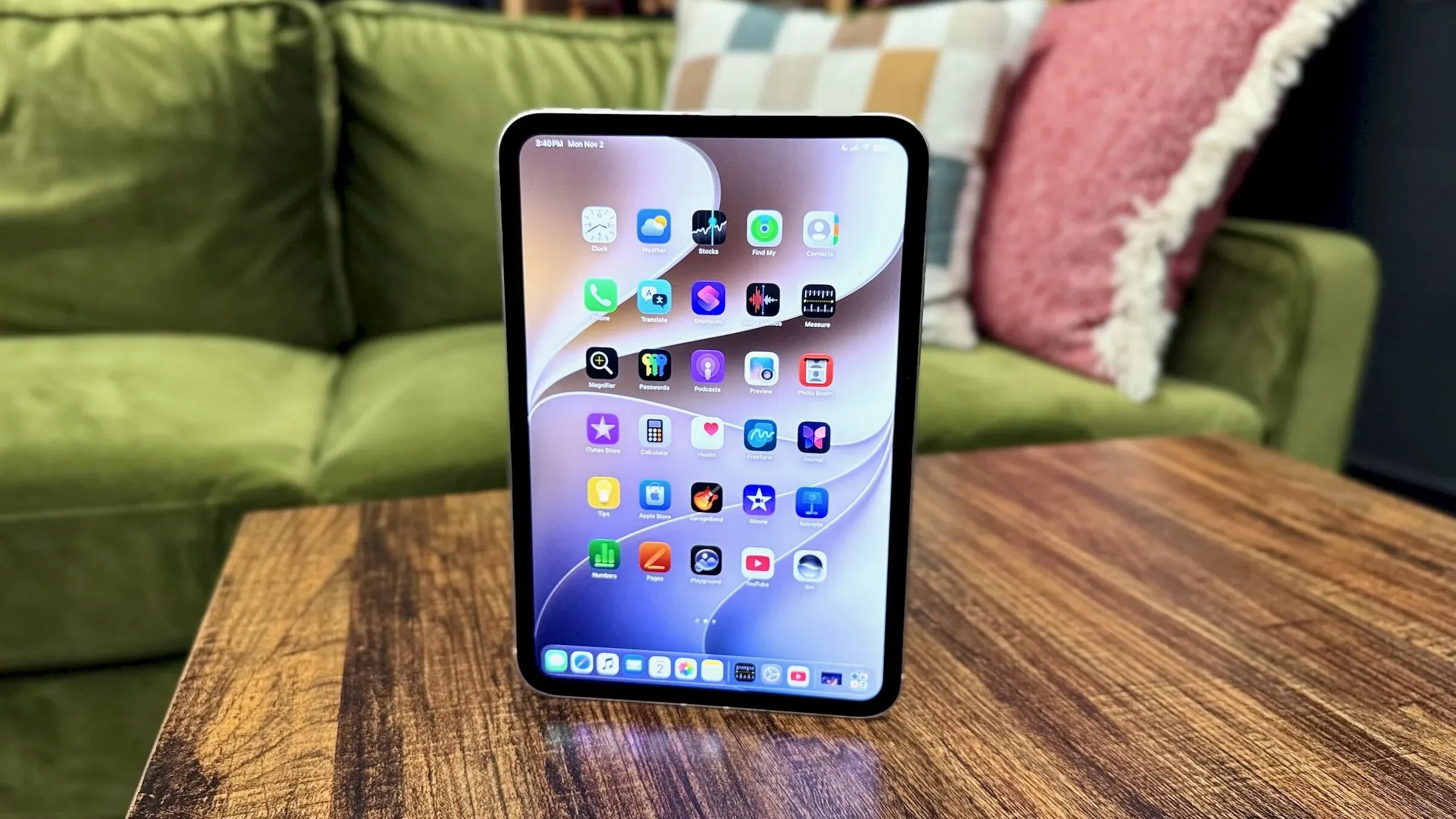
iPad mini review: Is the new A20 Pro tablet worth $699?
The new iPad mini features an 8.5-inch OLED display and the powerful A20 Pro chip, marking a significant hardware leap for Apple's compact tablet. Starting at $699, the device offers premium performance comparable to the iPhone 18 Pro Max but faces criticism regarding its high entry price. While the device excels in portability and display quality, its positioning in the 2026 lineup remains a point of debate for budget-conscious consumers. This article examines the iPad mini's design, display capabilities, A20 Pro performance, and overall value proposition.
November 8, 2026
5 min read
Source: ASHENVOW
How does the new iPad mini design differ from previous models?
The new iPad mini features a remarkably thin profile, measuring just 5.4mm, making it the lightest Apple tablet currently available. This compact form factor is specifically optimized for handheld activities such as gaming, streaming, and web browsing, providing a more ergonomic experience than the larger iPad Air.
Apple has introduced several structural changes to this iteration that impact both durability and usability:
- Acoustic Display Technology: To achieve a fully enclosed chassis, Apple has removed traditional speaker holes. Instead, sound is emitted through the display itself, a move that prevents lint and debris from accumulating in bottom-mounted ports.
- IP67 Rating: The seamless design allows for IP67 water and dust resistance, meaning the device can withstand brief immersion in water.
- Sensor Placement: The 12MP Center Stage camera and the microphone have been relocated to the side bezel, a change that may require a brief adjustment period for users accustomed to previous layouts.
- Biometrics: Despite the hardware advancements, the device continues to utilize Touch ID rather than the Face ID system found on larger models.
The trade-offs of a seamless design
While the Acoustic Display technology provides a cleaner aesthetic and better durability, it represents a fundamental shift in how users interact with the device's audio. The lack of physical speaker grilles is a direct result of the pursuit of an ultra-thin, enclosed body that meets higher environmental protection standards.
Is the OLED Super Retina XDR display a significant upgrade?
The transition to an OLED display is the most noticeable visual improvement in the new iPad mini, offering deep blacks and exceptional color precision. With a peak brightness of 1,200 nits when viewing HDR content, the screen provides a level of clarity that significantly outclasses the standard LCD panels used in older or more budget-oriented models.
When compared directly to the iPad Air, the iPad mini's OLED panel provides superior contrast and more vibrant colors. However, it does not quite reach the professional-grade standards set by the M5 iPad Pro's tandem OLED technology. The iPad Pro remains the preferred choice for film editors and reference-grade color work, especially since the iPad mini lacks ProMotion technology for high-refresh-rate smoothness.
For users seeking the best possible viewing experience in challenging lighting, Apple offers an optional Nano-texture finish. This specialized coating uses microscopic glass-etching to virtually eliminate reflections and glare. When paired with the OLED panel, this technology allows for comfortable content consumption even under direct sunlight, effectively acting as a "magic trick" for outdoor visibility.
How much power does the A20 Pro chip deliver?
The iPad mini is powered by the A20 Pro chip, the same processor found in the iPhone 18 Pro Max and the iPhone Duo. This puts the device in a unique performance bracket, bridging the gap between the iPad Air and the iPad Pro.
Benchmarking data illustrates where the iPad mini sits within the current Apple ecosystem. According to Geekbench 7 testing, the single-core and multi-core performance scores are as follows:
| Device | Single-Core Score | Multi-Core Score |
|---|---|---|
| iPad mini (A20 Pro) | 4,001 | 11,422 |
| iPad Air (M4) | 2,753 | 12,110 |
| iPad Pro (M5) | 3,535 | 15,013 |
The high single-core score indicates exceptional "zippiness" for everyday tasks, while the multi-core performance ensures the device can handle multitasking without slowing down. The A20 Pro chip is also capable of running local AI models and supporting Apple Intelligence features, such as photo editing and visual intelligence.
Performance vs. Practicality
While the chip is incredibly powerful, the device's physical size and lack of Magic Keyboard support mean it is not intended to replace a laptop. It is a high-performance companion rather than a primary workstation for intensive engineering, complex video editing, or heavy photo retouching tasks.
What is the impact of the $699 starting price?
The $699 starting price is a significant point of contention for the new iPad mini, especially when compared to its position in the product lineup. While it is a high-performance device, it is not positioned as a budget option, despite its smaller size.
The pricing structure creates a narrow gap between the Mini and the more powerful iPad Air. For example, the starting price of the Mini is only $50 less than the iPad Air, which may confuse consumers looking for a more affordable entry point. For those requiring higher specifications, the costs escalate quickly:
- High-end configuration: A model featuring 512GB of storage, the Nano-texture display, and the C2 cellular chip can reach $1,249.
- Mid-range options: Users can reduce costs by opting for the Wi-Fi only model or the 128GB storage version, which brings the price back down to the $699 baseline.
In a market where many competent tablets from competitors like Amazon are available for well under $500, the iPad mini is clearly targeted at a premium segment. For most users, the high-end features like local AI support and OLED precision may not justify the premium over more affordable alternatives.
FAQ: iPad mini A20 Pro
Is the iPad mini waterproof?
The iPad mini features an IP67 rating, which means it is resistant to dust and can withstand brief immersion in water. While it is durable enough for accidental splashes or short periods underwater, it is not recommended for intentional submersion like a dedicated waterproof device.
Does the iPad mini support the Magic Keyboard?
No, the iPad mini does not support the Apple Magic Keyboard. Due to its compact size and design, it is intended for handheld use and portable interaction rather than serving as a laptop replacement with a full keyboard setup.
How does the display compare to the iPad Pro?
The iPad mini features a high-quality OLED display with 1,200 nits peak brightness, but it lacks the tandem OLED technology and ProMotion high-refresh-rate found in the M5 iPad Pro. The Pro remains superior for professional video editing and reference-grade color work.
Can the iPad mini run AI applications?
Yes, the A20 Pro chip is specifically designed to support Apple Intelligence. This includes the ability to run powerful local AI models, visual intelligence, and advanced photo editing features directly on the device without relying solely on the cloud.
Is the Nano-texture display worth the extra cost?
The Nano-texture finish is an optional upgrade that costs an additional $200. It is highly effective at eliminating glare and reflections through microscopic glass etching, making it an excellent choice for users who frequently use their tablet in bright or outdoor environments.
Key takeaways
- The iPad mini features a lightweight 5.4mm design and an 8.5-inch OLED display.
- It is powered by the A20 Pro chip, providing high-performance multitasking and local AI support.
- The device includes IP67 water and dust resistance via its new Acoustic Display technology.
- A starting price of $699 places it in the premium category, making it less accessible than budget tablets.
Conclusion
The new iPad mini is a technical triumph, combining an industry-leading OLED display with the formidable A20 Pro chip in an incredibly thin, portable chassis. It excels as a premium handheld device for media consumption, gaming, and AI-enhanced tasks. However, its high entry price and narrow differentiation from the iPad Air create a challenging value proposition for the average consumer. While it is arguably the best compact tablet on the market, its target audience appears limited to those seeking high-end performance in a small form factor, regardless of the significant cost.



