
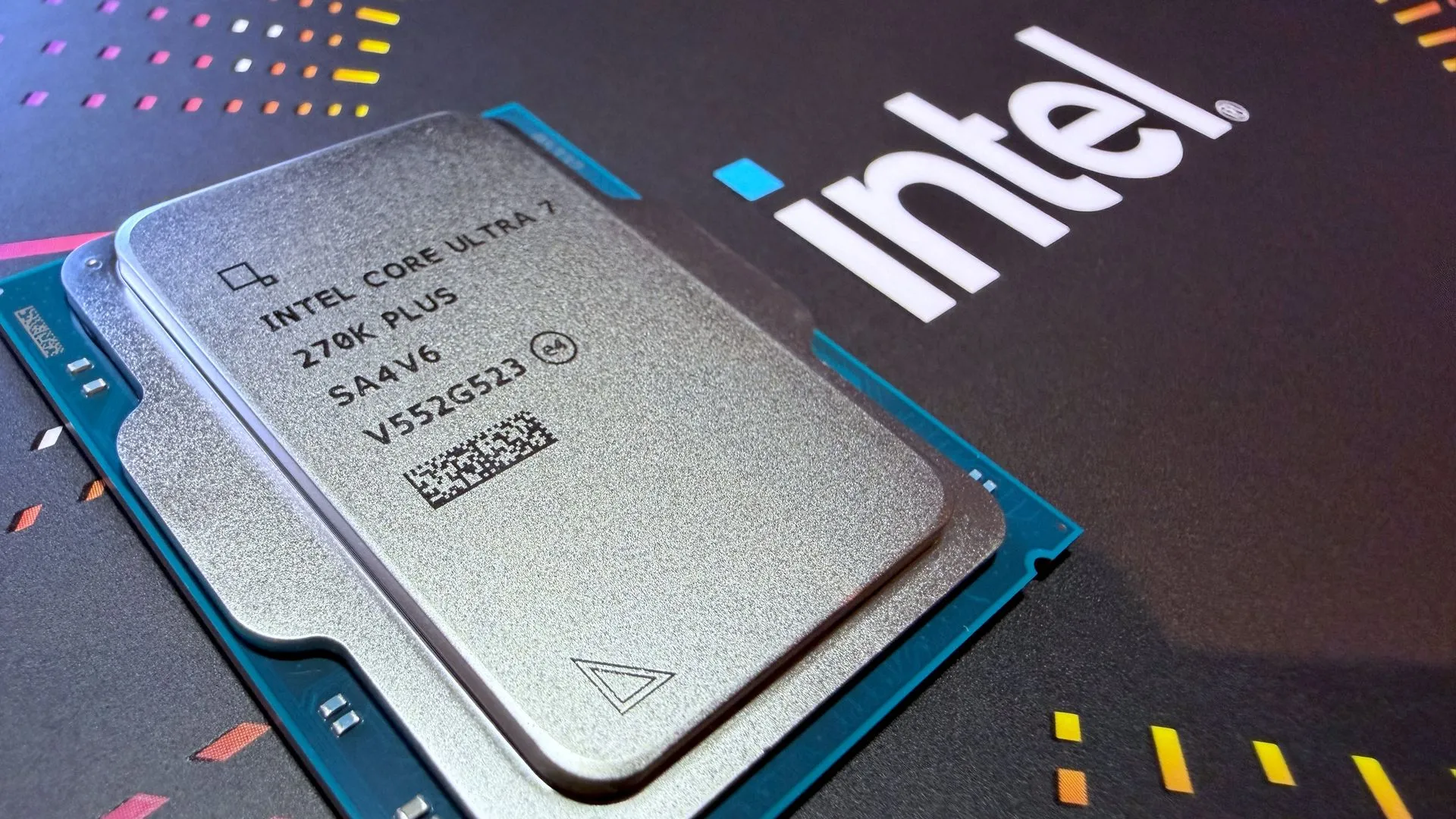
Intel Nova Lake BFC Chips Rumoured to Feature Large Cache
Intel Nova Lake BFC chips introduce a large last-level cache on selected Core Ultra processors. The rumoured line-up includes the Core Ultra 9 4970K BFC with 8 performance cores, 16 efficiency cores, 4 low-power efficiency cores, 32 execution units, and a 125 W TDP. Three models feature bLLC built directly into the die, differing from AMD's stacked 3D V-Cache used in the Ryzen 7 9800X3D. This cache targets gaming workloads requiring larger on-die storage. The range spans from the Core Ultra 9 4970K BFC down to the Core Ultra 5 4650KF. Most variants maintain a 125 W PL1 with a 250 W PL2. Launch is expected in early 2027.
October 19, 2026
4 min read
Source: ASHENVOW
What are the rumoured Intel Nova Lake BFC specifications?
The leaked table lists eight models that follow the Core Ultra naming scheme yet adopt a 4000-series numbering system. The flagship Core Ultra 9 4970K BFC carries 8 performance cores, 16 efficiency cores and 4 low-power efficiency cores together with 32 execution units. Its thermal design power sits at 125 W. Three entries receive the bLLC designation: the 4970K BFC, the 4900 BFC and the 4870K BFC. The Core Ultra 9 4900 BFC stands out because it drops to 6 performance cores and a 65 W TDP while retaining the cache feature. Lower models such as the Core Ultra 5 4650KF omit both the cache and the integrated graphics. All listed parts share the same 125 W PL1 rating except the 65 W variant.
How does Intel bLLC differ from AMD 3D V-Cache?
AMD places its 3D V-Cache on a separate die stacked above or below the main chip. Intel integrates the big last-level cache directly into the silicon die. The source indicates this built-in method avoids the height and thermal constraints of stacking. Gaming performance gains from larger cache because modern titles frequently access large data sets. Intel has trailed AMD's X3D series since 2022, so the Nova Lake addition marks the first direct response. The die-level placement may allow different latency characteristics, although the source provides no comparative benchmarks.
Which models receive the cache feature?
Only the three BFC-labelled SKUs receive the extra cache. The Core Ultra 9 4970K BFC, Core Ultra 9 4900 BFC and Core Ultra 7 4870K BFC are the affected parts. The remaining five models follow standard cache sizes. The 4900 BFC variant pairs the cache with reduced core count and lower power, suggesting use in compact professional systems or small-form-factor gaming builds.
What power limits apply to the Nova Lake generation?
Most models list a 125 W PL1 rating identical to current-generation Intel desktop processors. Earlier rumours mentioned a theoretical 700 W ceiling and doubled PL2 limits that would require an extra 8-pin connector, yet those figures applied only to high-core-count two-tile designs. The current leak shows the standard Core Ultra models staying within existing power envelopes. A 250 W PL2 value remains probable for the 125 W parts, consistent with prior Intel behaviour.
When is the expected Intel Nova Lake launch date?
The source states that the processors should reach the market at the beginning of the following year. This timing aligns with typical Intel cadence after the Arrow Lake refresh. No firm month is given, and the information remains based on a single leaker post.
Frequently asked questions
Will the Core Ultra 9 4900 BFC target gamers or professionals?
The 65 W TDP and retained cache point toward compact workstations or small gaming systems rather than high-power desktops. The source suggests either professional workloads or SFF gaming rigs as likely use cases.
Does the bLLC feature appear on every Nova Lake model?
No. Only the three models marked BFC receive the big last-level cache. The other five SKUs follow conventional cache configurations.
How does the 125 W TDP compare with current Intel CPUs?
The rating matches the PL1 limit of recent Core Ultra desktop processors. Sustained power draw is therefore expected to remain similar for the standard models.
Is the 700 W figure relevant to these chips?
The higher figure applied only to rumoured many-core two-tile variants, not the eight models listed in the current leak.
Are any official benchmarks available yet?
No performance numbers have been released. All details originate from a single social-media leak and earlier unverified reports.
Key takeaways
Intel plans three Nova Lake BFC models that integrate big last-level cache on the die.
The Core Ultra 9 4970K BFC tops the range with 8P/16E/4LP-E cores and 32 EUs at 125 W.
The Core Ultra 9 4900 BFC pairs the cache with a 65 W TDP and fewer performance cores.
Power limits for standard models stay at 125 W PL1, matching current-generation parts.
Launch remains scheduled for early 2027 according to the leaked information.
Intel's die-level cache design differs from AMD's stacked 3D V-Cache approach.
Conclusion
The leaked Nova Lake specifications show Intel finally addressing the cache advantage held by AMD X3D processors since 2022. Three models gain the bLLC feature while power limits remain consistent with existing desktop CPUs. The 65 W variant expands possible use cases into smaller systems. Release timing at the start of 2027 gives Intel several months to refine the platform before volume availability. Further official details will be required to confirm cache sizes, latency and real-world gaming gains.



