
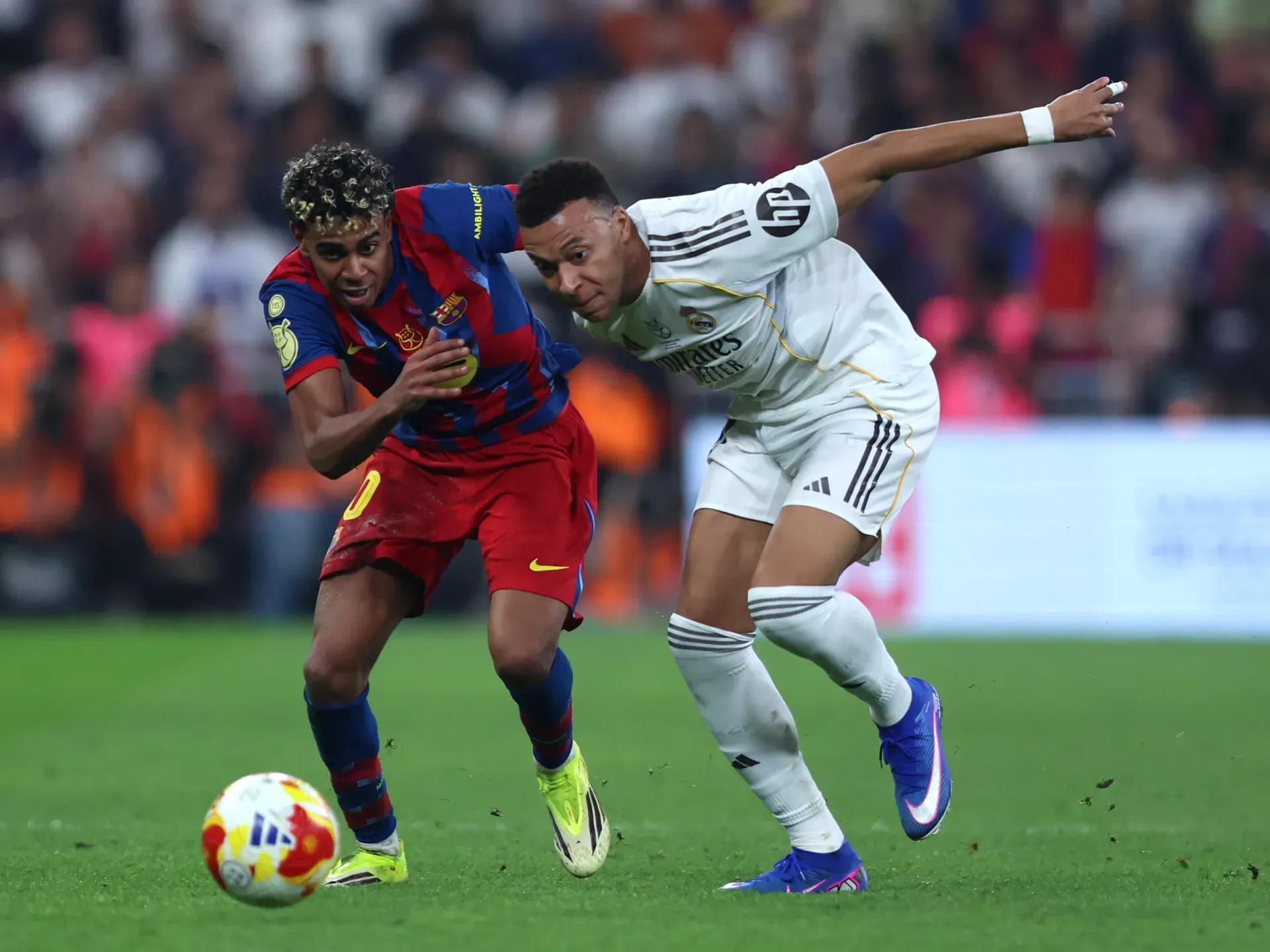
El Clasico camera coverage: 40 cameras for Yamal and Mbappe
El Clasico camera coverage for the upcoming Barcelona vs Real Madrid match will utilize up to 40 cameras at Camp Nou Stadium. This high-tech production plan includes ultra-high-definition (4K) filming, slow-motion replays, and individual player tracking for stars like Lamine Yamal and Kylian Mbappe. According to Mundo Deportivo, the expanded setup aims to provide superior visual detail just one day before the Ballon d'Or winners are announced. This article examines the technical requirements of La Liga's highest-rated matches, the role of advanced optics in VAR decisions, and the evolution of football broadcasting technology.
October 27, 2026
5 min read
Source: ASHENVOW
Why are 40 cameras required for El Clasico?
The massive scale of El Clasico camera coverage is dictated by the official classification system used by Spain's top-flight league, La Liga. While standard matches involving major clubs like Barcelona or Real Madrid fall under "Category A"—requiring a minimum of 22 cameras—the rivalry between these two giants triggers the "A+" designation.
For these "A+" matches, La Liga mandates a deployment of between 35 and 40 cameras. These units are not placed randomly; they follow a pre-defined shooting plan that specifies exact locations and coverage angles to ensure no part of the pitch is left unmonitored. This technical blueprint is shared with the referees' technical committee and the Video Assistant Referee (VAR) team, providing them with a comprehensive map of available image sources to assist in reviewing critical on-field decisions.
Understanding La Liga match classifications
The distinction between Category A and A+ is fundamental to how broadcasting resources are allocated in Spanish football. A Category A match ensures a professional baseline of coverage, but the A+ tier is reserved for high-stakes derbies, such as El Clasico or the Madrid Derby. This tiering allows the league to justify the significant financial and logistical investment required to deploy dozens of specialized camera operators and high-end equipment for the world's most-watched club fixtures.
How does advanced technology improve the viewing experience?
The technical objective of the 40-camera setup is to move beyond standard broadcasting by incorporating cinematic and high-resolution elements. The production plan for this El Clasico includes the use of long-range and cinematic lenses, alongside a shift from "full HD" to "4K" resolution. This transition provides a level of clarity that allows television directors to zoom into high-action moments without losing significant detail.
Specific technical features include:
- Ultra-High-Definition (4K): Provides superior pixel density for clearer images of goals, collisions, and penalty area incidents.
- Behind-the-Goal Placement: Specialized cameras installed directly behind the nets to capture the perspective of scoring opportunities.
- High-Speed Capture: Equipment capable of recording extremely fast movements for high-fidelity slow-motion replays.
- Individual Player Tracking: Targeted coverage designed to follow the movements of key figures such as Lamine Yamal and Kylian Mbappe.
Can more cameras solve VAR controversy?
While an increase in camera quantity is intended to improve oversight, it does not inherently guarantee a resolution to every controversial moment. The effectiveness of El Clasico camera coverage depends heavily on the spatial relationship between the event and the lens. Even with 40 cameras, a lack of clarity can occur if the event happens too far from the equipment or if the lens direction is not optimized for that specific zone.
This limitation was highlighted during a recent Real Madrid vs Sevilla match. Despite the use of 26 cameras, officials were unable to clearly determine the nature of an off-the-ball clash between Adra Guler and Peque Fernandez in the 24th minute. This incident has reignited the debate regarding whether increasing the number of cameras is as effective as improving the strategic placement and proximity of existing units to ensure VAR can make definitive rulings.
What is the history of camera innovation in El Clasico?
The pursuit of immersive football broadcasting has seen significant technological leaps during El Clasico matches over the last decade. In 2017, the Spanish League pushed the boundaries of live production by using 40 cameras mounted on cranes and helicopters, specifically employing slow-motion technology to track the movements of Lionel Messi and Cristiano Ronaldo. This massive operation required the coordination of over 400 specialists in photography, directing, and television production.
In the years following, the league experimented with several groundbreaking formats:
- 360-Degree Replays (2016): A system using cameras distributed around the stadium to create three-dimensional images, allowing directors to present "virtual" angles.
- Stereoscopic Scenes: A more advanced version of 360-degree technology using 38 high-resolution cameras to create depth, allowing viewers to see the game from a virtual location near the player.
- Modern Multi-Platform Coverage: Recent iterations have utilized between 32 and 38 cameras, integrating drones, aerial cameras, visual effects, and live data streams to enhance the spectator experience.
Key takeaways
- El Clasico is classified as an "A+" match, requiring 35 to 40 cameras according to La Liga rules.
- The 2026 coverage features 4K ultra-high-definition resolution and cinematic long-range lenses.
- Technological goals include individual player tracking for stars like Yamal and Mbappe.
- Increased camera counts do not always resolve VAR disputes if lens angles and proximity are insufficient.
- Historical innovations include helicopter-mounted cameras and 360-degree stereoscopic replay systems.
FAQ: El Clasico camera coverage
Why does El Clasico need more cameras than other matches?
El Clasico is designated as an "A+" category match by La Liga. While standard high-profile matches (Category A) require at least 22 cameras, the "A+" rating for major derbies mandates a much higher density of 35 to 40 cameras to ensure comprehensive coverage.
Will the new cameras help VAR make better decisions?
The cameras provide more angles and higher resolution (4K) to assist VAR, but they do not guarantee clarity. The effectiveness of a review depends on the lens direction, camera proximity to the incident, and the specific location of the equipment during the event.
What is the difference between 4K and Full HD in this context?
The shift to 4K resolution provides significantly higher detail compared to standard Full HD. This allows television directors to replay dangerous opportunities, goals, and collisions in much sharper detail, making it easier for viewers to see the nuances of a play.
Has this level of technology been used before?
Yes, La Liga has a history of innovation, such as using 40 cameras on cranes and helicopters in 2017. They have also implemented 360-degree and stereoscopic replay systems to provide virtual angles that traditional camera setups cannot achieve.
Who is being specifically tracked by these cameras?
The current production plan includes dedicated coverage and individual player tracking for marquee stars, specifically Lamine Yamal and Kylian Mbappe, to enhance the narrative and visual engagement of the match.
Conclusion
The expansion of El Clasico camera coverage to 40 units represents a significant intersection of sports and high-end television technology. By leveraging 4K resolution, cinematic lenses, and advanced player tracking, La Liga aims to provide an unparalleled viewing experience for a global audience. However, as recent officiating controversies have shown, the quantity of cameras must be matched by strategic placement to truly aid VAR. As broadcasting continues to evolve through drones and stereoscopic imaging, the goal remains to bridge the gap between the stadium atmosphere and the digital viewer.



