
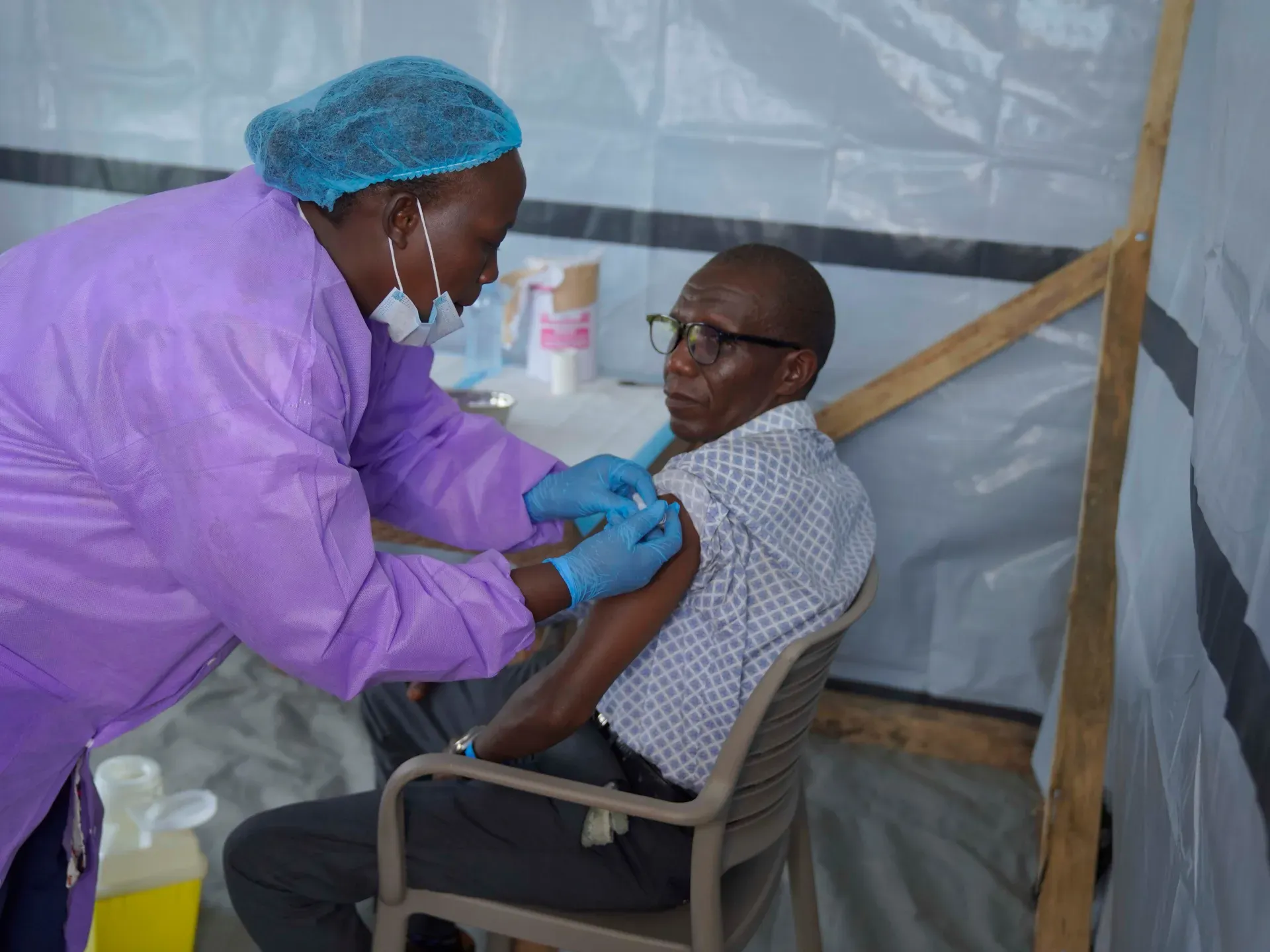
Ebola vaccine clinical trial begins in DR Congo: Tumaini trial details
The Ebola vaccine clinical trial known as the Tumaini trial has officially commenced in the Democratic Republic of Congo (DRC). This initiative aims to evaluate the effectiveness of various vaccine candidates against the Bundibugyo species of the virus, which is driving the current epidemic. According to the WHO, the outbreak has already resulted in more than 9,700 cases and over 4,600 deaths since May. The trial represents a critical effort to expand vaccine efficacy to high-risk populations, including children and pregnant women. This article examines the trial framework, the specific vaccine candidates involved, and the scale of the current African Ebola crisis.
October 27, 2026
5 min read
Source: ASHENVOW
Why is a new Ebola vaccine clinical trial being launched in the DRC?
The primary objective of the Tumaini trial is to determine if existing vaccine technology can provide protection against the Bundibugyo species of Ebola, which is the strain responsible for the current epidemic in the Democratic Republic of Congo. While the Ervebo vaccine is already approved for the Zaire strain, its effectiveness against Bundibugyo remains a critical question for public health officials.
WHO Director-General Tedros Adhanom Ghebreyesus confirmed that the trial has begun in Bunia, the capital of the Ituri province. This region serves as the epicentre of the outbreak. The trial is designed to test whether vaccine candidates specifically designed for the Bundibugyo virus can successfully mitigate the spread of this particular epidemic.
The necessity for this trial is underscored by the sheer scale of the current crisis. The DRC is facing its 17th and most severe Ebola outbreak to date. Since the outbreak was declared in May, the human toll has been devastating, with the WHO reporting over 4,600 deaths and more than 9,700 confirmed cases. This emergency has prompted the WHO to trigger a public health emergency of international concern, marking its second-highest level of global alert.
How does the Tumaini trial framework function?
The Tumaini trial operates as a single trial framework designed to test the safety, efficacy, and immunogenicity of multiple different vaccine candidates simultaneously. This streamlined approach allows researchers to gather data on various technologies under a unified protocol, which is essential in rapidly evolving epidemic situations.
A central component of the trial's methodology is the use of a ring vaccination approach. This strategy involves identifying and immunising contacts of infected individuals who are deemed to be at a high risk of contracting the virus. By creating a "ring" of immunity around known cases, health workers aim to break the chains of transmission within the community.
Inclusion of vulnerable populations
One of the most significant aspects of the Tumaini trial is its commitment to inclusivity. Historically, clinical trials for many infectious diseases have excluded certain demographics, leaving a gap in medical evidence for specific groups. The current trial in the DRC explicitly includes:
- Pregnant women
- Children aged 12 years and older
By including these groups, the trial seeks to generate the rigorous evidence required to ensure that vaccines are both safe and effective for the populations most at risk during an outbreak. WHO emergencies director Chikwe Ihekweazu noted that this evidence is vital for determining the actual protective capacity of the participating vaccines in real-world settings.
What vaccine candidates are being tested in the trial?
The trial is set to incorporate two specific Bundibugyo-specific candidate vaccines that are currently progressing through earlier-stage, smaller-scale clinical testing. These candidates represent two different, cutting-edge approaches to vaccine development: adenoviral vector technology and mRNA technology.
The first candidate is a ChAdOx1 adenoviral vector vaccine, which is being developed by the University of Oxford. The second is an mRNA-based vaccine being developed by the US-based Moderna group. Both of these candidates have received essential financial backing from the Coalition for Epidemic Preparedness Innovations (CEPI). According to a statement from CEPI, these vaccines are expected to enter the Tumaini trial shortly.
| Developer | Vaccine Technology | Current Status |
|---|---|---|
| University of Oxford | ChAdOx1 adenoviral vector | Advancing through early-stage trials |
| Moderna | mRNA technology | Advancing through early-stage trials |
By testing these two distinct platforms, researchers can determine which biological mechanism provides the most robust and reliable immune response against the Bundibugyo strain.
What is the geographic scale of the current Ebola outbreak?
The current Ebola outbreak has achieved the widest geographic spread of any Ebola epidemic recorded on the African continent to date. While the Democratic Republic of Congo remains the primary focus, the virus has crossed multiple borders, affecting several nations in different regions of the continent.
The outbreak has been officially reported in four different countries, spanning eastern, central, and western Africa. This regional spread complicates containment efforts and necessitates a coordinated international response. The movement of the virus across these borders highlights the challenges of managing highly infectious diseases in regions with complex transit and social patterns.
The international community is monitoring the situation closely, particularly as the virus moves into new territories. The combination of the high mortality rate and the increasing geographic reach has made this a priority for global health security organizations, as the potential for further regional destabilization remains a significant concern.
Frequently asked questions
What is the difference between the Zaire and Bundibugyo Ebola strains?
The Zaire strain is the more common species of Ebola for which the Ervebo vaccine is already approved and used. The Bundibugyo strain is a different species of the virus that is currently driving the epidemic in the DRC, requiring different vaccine candidates to ensure effective cross-protection.
Who is funding the new vaccine candidates?
The Coalition for Epidemic Preparedness Innovations (CEPI) is providing the funding for the Bundibugyo-specific vaccine candidates being tested. CEPI is supporting both the University of Oxford's adenoviral vector vaccine and Moderna's mRNA vaccine as they move into the Tumaini clinical trial framework.
Why is ring vaccination used in this trial?
Ring vaccination is a strategy used to target individuals at the highest risk of infection. By immunising the contacts of known Ebola patients, health officials create a buffer of immunity around the virus, which helps to prevent the infection from spreading further into the wider community.
How many people have been affected by this outbreak?
The current outbreak in the DRC has been extremely severe. According to the WHO, there have been more than 9,700 reported cases and more than 4,600 deaths since the outbreak was declared in May 2026, making it the worst in the country's history.
Will children be included in the Ebola vaccine trials?
Yes, the Tumaini trial is specifically designed to include children aged 12 years and older. This is a critical step in ensuring that medical evidence is available for younger populations, who are often excluded from earlier stages of clinical vaccine research.
Key takeaways
- The Tumaini trial in the DRC tests vaccines against the Bundibugyo Ebola strain.
- Over 4,600 deaths and 9,700 cases have been reported in the current outbreak.
- The trial includes children over 12 and pregnant women to improve medical evidence.
- Oxford and Moderna are providing candidate vaccines using adenoviral and mRNA technology.
- The outbreak spans four African countries, marking its widest geographic spread to date.
The path toward epidemic control
The commencement of the Tumaini trial marks a pivotal moment in the fight against the Bundibugyo Ebola epidemic. By moving beyond the Zaire-specific protections of the Ervebo vaccine and testing diverse technologies like mRNA and adenoviral vectors, the global health community is taking a more sophisticated approach to viral containment. The success of this trial will not only impact the current crisis in the Democratic Republic of Congo but will also provide a blueprint for responding to future outbreaks of different Ebola species. Achieving widespread, effective immunity remains the most viable path to ending the cycle of infection and death across the continent.



