
Doom running on DNS: How a database mimics a computer engine
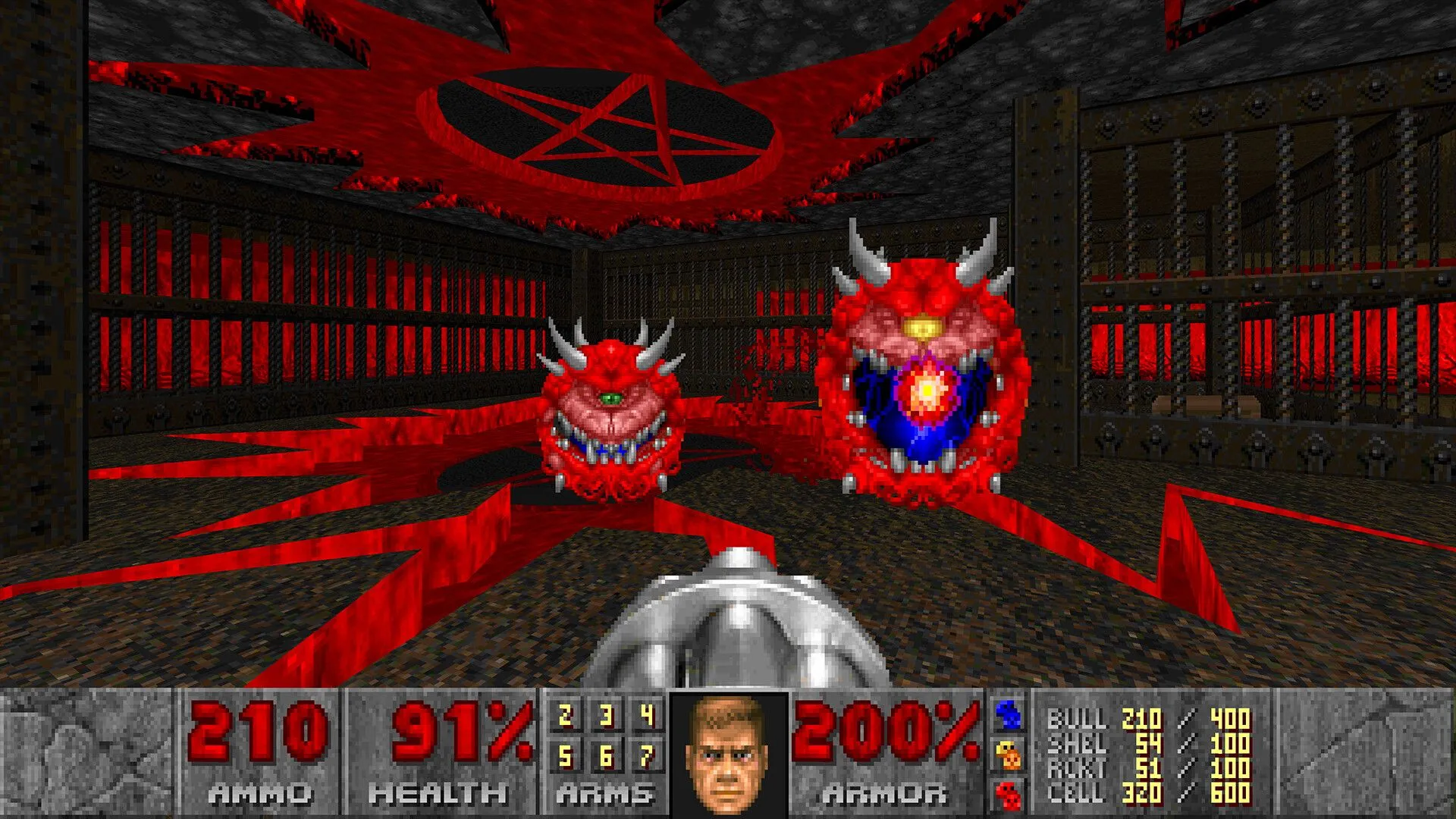
Doom running on DNS has become a reality through a highly unconventional technical experiment by Corey Quinn. By utilizing a Domain Name System (DNS) database as a makeshift computational engine, Quinn has successfully executed the classic game within a system designed for URL translation. This feat relies on a massive dataset of 6.4 million truth tables to simulate logic. While the performance is far from playable, the project demonstrates the extreme flexibility of DNS protocols. This article examines the technical architecture of the project, the role of DNS UPDATE, and the reactions from industry pioneers.
October 19, 2026
5 min read
Source: ASHENVOW
How can a DNS database function like a computer?
The core of this experiment lies in treating a DNS database not as a simple directory of IP addresses, but as a massive, pre-computed lookup table. Corey Quinn, who spearheaded the project, explains that he compiled Doom for a 32-bit environment where both arithmetic and memory reside within the DNS structure. Instead of a central processing unit (CPU) performing real-time calculations, the system relies on the database to act as a 'librarian' that provides answers to specific queries.
To achieve this, the project utilizes a staggering 6.4 million rows of truth tables. In traditional computing, a CPU follows instructions to manipulate data; in this DNS-based version, the 'instructions' are essentially pre-calculated outcomes stored as DNS records. When the game requires a specific calculation, it queries the DNS, which returns the pre-computed result from its vast library of entries.
The distinction between emulation and database lookup
It is crucial to understand that this is not a case of DNS pretending to be a CPU. According to Quinn, the instruction decoding is handled by a compiler before the process even begins. The BIND software—a widely used DNS implementation—does not actually execute code. Instead, it simply performs key-value reads and conditional writes. The complexity is shifted entirely to the data layer, where the 6.4 million rows provide the necessary logical framework to simulate the game's requirements.
What role does RFC 2136 play in this execution?
The technical breakthrough that allows for any semblance of interactivity is the use of the DNS UPDATE mechanism, defined under RFC 2136. In a standard DNS setup, records are relatively static, used to map names to addresses. However, for a game to function, the state of the world—such as player position or enemy status—must change constantly.
The DNS UPDATE protocol allows for the modification of existing records. This capability is what enables the simulation of variables and conditional logic. By using these updates, the system can mimic the 'if this, then that' structure essential to software code. Paul Vixie, a pioneer in the development of DNS, noted the ingenuity of this application, stating that it is the best use of RFC 2136 DNS UPDATE he has ever seen, even if the result is a mix of 'deliciously horrible' and 'horribly delicious.'
Why is the performance so significantly delayed?
While the project is a technical success, it is a functional failure in terms of actual gameplay. The speed of a DNS-based computer is hindered by the inherent latency of the protocol. For Doom to be considered playable, it requires a 'tic rate' of 35 per second, which translates to a new game state every 28.6 milliseconds. The DNS implementation, however, operates at a much slower pace.
According to Quinn's measurements, a single update takes approximately 54,000 milliseconds, or 54 seconds. This means the system is roughly three orders of magnitude slower than what is required for a real-time experience. The delay is a direct result of the overhead involved in querying a database of millions of rows and performing updates through a protocol designed for stability and distribution rather than high-speed computational throughput.
How does this compare to previous Doom 'ports'?
The history of Doom is filled with bizarre and impressive technical feats. The game has previously been successfully run on hardware as diverse as vapes, motherboard BIOS, and even pregnancy tests. However, those instances usually involve porting the code to extremely limited hardware architectures.
The DNS project differs because it moves away from traditional hardware entirely. Rather than squeezing code into a tiny chip, it expands the logic into a massive, distributed database. While previous ports focused on the challenge of extreme scarcity, this project focuses on the challenge of extreme abstraction—using a service meant for internet routing to perform the heavy lifting of logic and memory management.
Frequently asked questions
What is DNS and how does it work?
The Domain Name System (DNS) is the internet's directory. It translates human-readable URLs, like google.com, into the numerical IP addresses that computers use to communicate. While typically used for routing, it can also store various types of text records that can be queried like a database.
Is the DNS version of Doom actually playable?
No, the game is not playable in a traditional sense. Because a single update takes about 54 seconds, the game cannot maintain the 35 frames (or tics) per second required for real-time movement. It is a proof-of-concept rather than a gaming product.
Who is Corey Quinn?
Corey Quinn is the developer behind this experiment. He is known for exploring the boundaries of cloud and network technologies, as evidenced by his work compiling Doom to run on a DNS database using 6.4 million rows of truth tables.
What is a truth table in this context?
In this project, truth tables are pre-computed sets of data that represent all possible outcomes of logical operations. By storing these in the DNS, the system can 'calculate' results simply by looking up the answer to a specific input, rather than performing math in real-time.
Where can the code for this project be found?
Corey Quinn has made the code available to the public on GitHub. This allows other developers and enthusiasts to examine how the compilation and DNS interaction were structured for this specific experiment.
Key takeaways
- The project uses 6.4 million rows of truth tables to simulate logic.
- DNS UPDATE (RFC 2136) is used to change variables in the game.
- The system is roughly 1,000 times slower than playable speeds.
- The BIND software performs key-value reads rather than executing code.
Synthesis and perspective
The feat of running Doom on a DNS database is a masterclass in technical lateral thinking. It pushes the boundaries of what a protocol is 'intended' for, proving that with enough pre-computed data and the right implementation of RFC 2136, even a routing system can mimic the logic of a computer. While the 54-second latency renders it useless for gaming, the project serves as a profound demonstration of the flexibility of distributed systems. It highlights a fundamental truth in computing: if you can represent logic as data, you can technically run any program on any sufficiently large database.



