
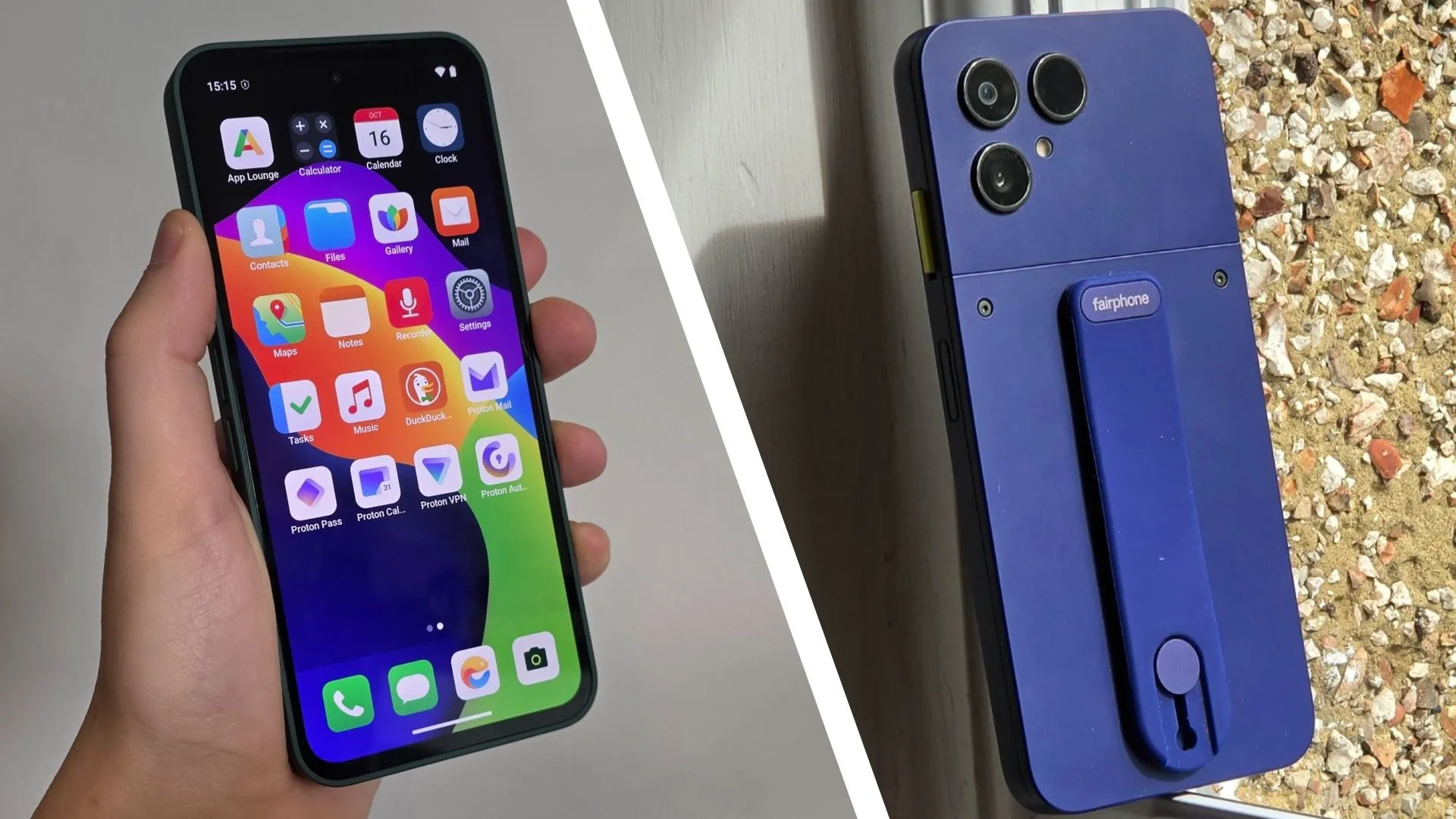
De-Googling with Fairphone 6 Plus: Is /e/OS the Answer?
De-Googling with Fairphone 6 Plus involves using the /e/OS operating system to remove proprietary Google services, tracking, and built-in apps from a modular hardware device. While /e/OS is an Android fork that maintains app compatibility, testing reveals significant friction in user experience and hardware performance. The /e/OS configuration is sold exclusively through Murena for $699.99 (£583), compared to the standard Fairphone 6 Plus at $649.99 (£569). This transition requires replacing core services like Gmail, Maps, and Search with privacy-centric alternatives such as Proton and DuckDuckGo, often at a higher monthly cost.
November 13, 2026
4 min read
Source: ASHENVOW
The technical framework of /e/OS and Murena hardware
The /e/OS Fairphone 6 Plus functions as a privacy-centric alternative to standard Android devices by utilizing a custom mobile OS that strips away Google's data-tracking infrastructure. Because /e/OS is technically a fork of Android, it retains the ability to run many Android-compatible applications, which helps mitigate one of the primary hurdles of moving away from the Google ecosystem. This specific hardware and software combination is distributed via Murena, a provider specializing in de-Googled solutions.
For users attempting to de-couple from Google, the initial setup offers several immediate privacy advantages. The system includes an "App Lounge" for software installation that does not require a login, facilitating a level of anonymity that standard Android devices cannot match. Additionally, the OS features an Advanced Privacy widget designed to manage security settings through a single interface.
Privacy management features in /e/OS
The Advanced Privacy widget serves as a centralized hub for real-time security adjustments. Users can utilize the widget to perform several specific privacy actions:
- Blocking in-app trackers to prevent third-party data collection.
- Hiding the device's IP address.
- Disguising the user's physical location on the fly.
The interface also includes a graphical representation of data leaks that the system has successfully shielded from the user over a rolling 30-day period, effectively gamifying the privacy protection experience.
Navigating the functional trade-offs of a de-Googled OS
Transitioning to /e/OS introduces several software limitations that differ significantly from the standard Android experience. One of the most notable friction points is the lack of interface customization; unlike standard Android, which allows users to arrange apps freely across multiple pages, /e/OS adopts a rigid layout where apps automatically fill pages, limiting user control to folders and basic reordering. This design choice mirrors the Apple iOS approach rather than the traditional Android one.
Beyond the interface, the ecosystem of alternative applications presents its own set of challenges. While privacy-focused services exist, they often lack the deep integration and data density found in Google's suite. The following table compares the transition from Google services to common privacy alternatives used during testing:
The financial aspect of de-Googling is another critical consideration. While many Google services are provided at no direct cost to the user, premium privacy alternatives often require monthly fees. For instance, while a free tier of Proton Mail is available, the full experience can cost approximately $12.99 (£10.39) per month, representing a recurring expense that adds up over time.
Hardware performance and the Fairphone 6 Plus experience
The physical device used for de-Googling, the Fairphone 6 Plus, presents hardware-specific challenges that can compound the difficulties of switching operating systems. While the phone is praised for its modular, eco-friendly construction and repairability, its internal specifications may not satisfy users accustomed to flagship-level performance. The device is powered by the Snapdragon 7s Gen 4 chipset, which has been noted to start sluggishly before reaching a stable level of general use.
These performance issues are particularly noticeable when compared to high-end Android devices. Users may encounter the following hardware limitations during daily operation:
- Chipset Latency: The Snapdragon 7s Gen 4 can experience initial sluggishness in task processing.
- Camera Quality: The camera system is functional but does not reach the standard of flagship competitors.
- General Speed: The overall responsiveness may lag behind premium devices like the Samsung Galaxy Z Fold 8 Ultra.
For users who prioritize sustainability and modularity, the Fairphone 6 Plus offers a unique value proposition. However, for those seeking a seamless transition, the combination of a specialized OS and mid-range hardware can create a "double-whammy" of friction, where both software and hardware require significant user adaptation.
Comparing de-Googling paths: /e/OS vs. GrapheneOS vs. iOS
The de-Googling market is not monolithic, and users generally fall into different categories based on their technical proficiency and tolerance for friction. The choice of device and OS often depends on whether a user wants a turnkey solution or a highly secure, customized environment. The /e/OS Fairphone 6 Plus occupies a middle ground that may not satisfy either extreme of the privacy-seeking spectrum.
For those with higher technical confidence, GrapheneOS on a Google Pixel device is a common alternative. While this still involves using Google hardware, the software provides more robust privacy and security features than /e/OS. Furthermore, newer Pixel models like the Pixel 10 Pro and 10a offer superior hardware performance compared to the Fairphone 6 Plus. Conversely, users seeking the least amount of friction often move toward the Apple ecosystem. While an iPhone does not technically meet the definition of a "de-Googled" device, its privacy-centric marketing and integrated ecosystem provide a simpler transition for the mildly privacy-conscious consumer.
Summary of de-Googling options
The following comparison outlines the different approaches to reducing Google's influence on mobile usage:
- The /e/OS Path: Focuses on removing Google services from modular hardware. Offers high privacy and sustainability but suffers from software jankiness and hardware performance limitations.
- The GrapheneOS Path: Targeted at advanced users. Provides superior security and privacy on Google Pixel hardware, offering a more robust technical solution at the cost of using Google-designed silicon.
- The Apple Path: The "easy route" for those wanting better privacy than standard Android without the need to manage complex software forks or alternative app ecosystems.
| Google Service | Privacy Alternative | Potential Trade-off |
|---|---|---|
| Gmail | Proton Mail | Limited free tier; requires subscription for full features. |
| Google Maps | Third-party apps | Reduced coverage and public transport integration. |
| Google Search | DuckDuckGo | Different search algorithm and result familiarity. |
| Play Store | App Lounge | Reported "jankiness" and difficulty in app discovery. |



