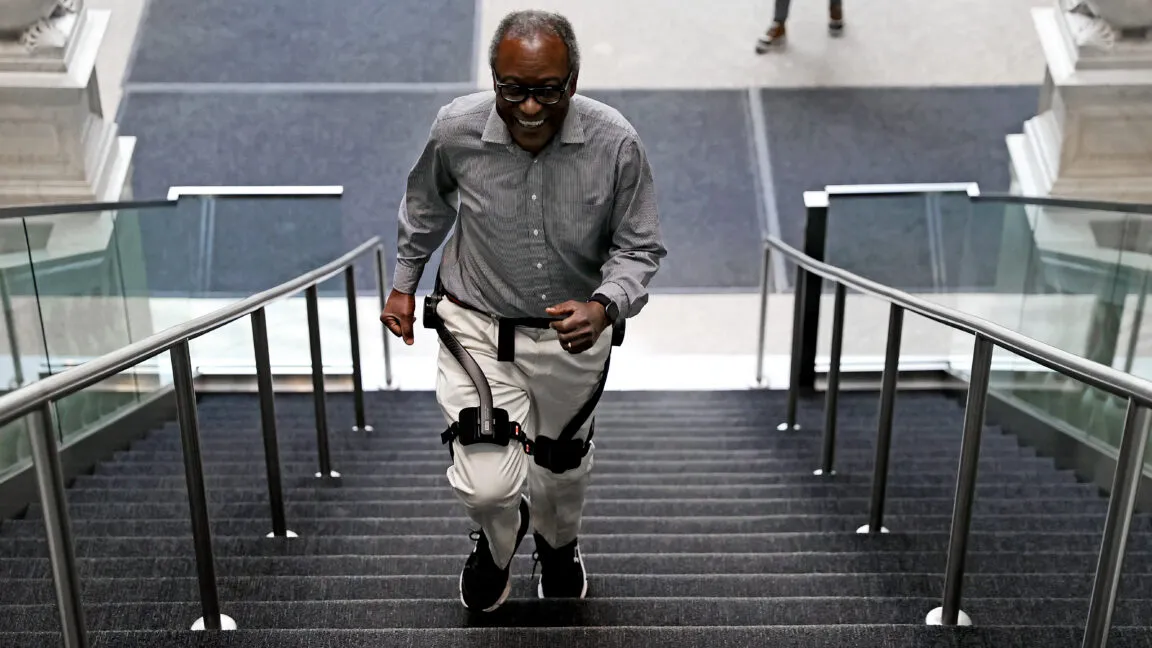
How does exoskeleton technology enhance human physical performance?
Exoskeletons function by generating external forces that allow a wearer to become stronger, move with greater speed, or endure physical exertion for longer periods. These devices consist of a lightweight mechanical frame that is ergonomically attached to the user's body, typically at the waist, trunk, or limbs. The core mechanism relies on actuators—mechanical components that convert electrical energy from batteries into physical movement.
The intelligence of a modern exoskeleton lies in its control units and sensor arrays. These components work in tandem to determine the precise trajectory and force required for a specific movement. For example, if the onboard sensors detect a user transitioning from walking to running, the system automatically accelerates its supportive movements. Similarly, if the device senses the onset of user fatigue, it can increase its power output to compensate for the diminishing physical strength of the wearer. This adaptive capability ensures that the machine acts as a partner to the human body rather than a rigid attachment.
The role of sensors and actuators
Actuators act as the "muscles" of the device, while sensors act as the "nervous system." Without high-speed feedback loops, an exoskeleton would be a rigid, cumbersome weight rather than a fluid assistive tool. In modern, active robotic exoskeletons, the actuators are coordinated by control units embedded within the frame. These units define the trajectories of the movements and dictate exactly how much force is applied to the wearer’s body.
The sophistication of these systems has increased as robotic motors, sensors, and control systems have become more affordable and accessible over the last decade. Modern control units are increasingly becoming more adaptive; some are even equipped with algorithms that learn from a user's actual working behaviors. This allows the device to provide more intuitive, customized support that evolves alongside the user's specific physical needs and movement patterns.
Where is exoskeleton technology being used today?
The practical application of human exoskeletons has expanded rapidly across several high-stakes sectors, including logistics, emergency services, and defense. In industrial settings, companies such as IKEA have utilized SuitX exoskeletons for several years to assist warehouse staff with the repetitive handling of heavy materials. These specific models are designed to attach to the torso and upper limbs to support the back and shoulders, reducing the physical toll on workers.
Major automotive manufacturers, including Ford, Boeing, and Mazda Toyota, have also integrated this technology into their assembly lines to manage strenuous tasks. In the realm of emergency response, search-and-rescue teams, such as those in the US Pacific Northwest, are testing powered devices to boost endurance during wilderness searches. A Finnish project known as ExoPELA also demonstrated that exoskeletons could significantly reduce muscle strain during firefighting and rescue operations, providing noticeable benefits in real-world tasks.
Perhaps most notably, the technology has entered the battlefield. In early 2026, the Ukrainian military reported that soldiers were using Hypershell exoskeletons on the front lines. According to Colonel Vitalii Serdiuk, speaking to Ukrainska Pravda in March, these devices help soldiers carry artillery shells more efficiently. The test results indicated that soldiers wearing the devices become less fatigued, work faster, and maintain combat effectiveness for longer durations.
What are the different categories of exoskeleton assistance?
Exoskeleton assistance is generally classified into three distinct functional categories based on the level of support provided to the user. The specific configuration used depends entirely on the intended environment and the physical needs of the individual.
- Power Augmentation: This mode is designed to increase the raw force capabilities of the user. It is the primary mode used in industrial and military applications, such as the Hypershell units used in Ukraine or the SuitX models used by IKEA, where the goal is to carry heavier loads or strengthen lower-body movement.
- Assist-as-needed / Resist-as-needed: Often utilized in clinical and rehabilitation settings, this mode provides support to the body only when necessary. This setting helps patients recover lost motor functions by encouraging them to use their own muscles while providing a necessary safety net of support.
- Full Robotic Control: In this mode, the exoskeleton assumes complete control over part of the body. This is typically reserved for medical applications where users have lost significant motor function, such as individuals with spinal cord injuries who require the device to facilitate walking.
What challenges must be overcome for future development?
Despite significant progress driven by more affordable robotic motors and sensors, several technical barriers remain before exoskeletons can become ubiquitous. Current limitations revolve around power supply, interface methods, and material science.
The most immediate hurdle is energy density. Because modern exoskeletons rely on battery power, the need for frequent recharging and the weight of the batteries themselves create a constant trade-off between endurance and practicality. While the energy density of batteries is steadily improving, the integration of power sources remains a significant design constraint that affects the overall practicality of the devices.
Furthermore, the method of interaction between the human and the machine is evolving. While current devices rely on external sensors to detect movement, researchers are investigating ways to operate exoskeletons via direct signals from a wearer's muscles or brain. However, this presents significant challenges, as it may require invasive neural interfaces and highly complex, user-specific calibrations to function effectively.
The evolution of materials and robotics
To address the issues of weight and comfort, research is shifting toward "soft" exoskeletons. Unlike the rigid frames used in heavy industry, these emerging devices are constructed from textile or rubber-like materials that can be integrated directly into clothing, footwear, or protective equipment. This shift allows for a more seamless integration into daily wear.
This evolution mirrors the broader history of robotics. Research into walking exoskeletons during the 1960s and 1970s contributed to the development of the first humanoid bipedal robots. Today, the relationship has come full circle: the intense interest in humanoid robotics is now accelerating the development of the very actuators and batteries that will advance the wearable robotic technologies of tomorrow.
Frequently asked questions
How much does the exoskeleton market cost?
The exoskeleton sector is currently valued at approximately $500 million. Industry analysts predict that this market could double or even triple in size by the mid-2030s as the technology becomes more accessible for both commercial and clinical use.
Can exoskeletons be used for medical rehabilitation?
Yes, exoskeletons are widely used in rehabilitation through "assist-as-needed" settings. These devices provide targeted support to help patients regain lost motor functions and train their bodies to recover strength through controlled, repetitive movements.
What is the difference between active and passive exoskeletons?
Active exoskeletons, as discussed here, use robotic motors and actuators to generate power and assist movement. While the source focuses on these powered versions, the primary distinction is the use of external energy to augment human strength.
How do soldiers use exoskeletons in combat?
Soldiers use devices like the Hypershell to assist with heavy lifting, such as carrying artillery shells. According to Colonel Vitalii Serdiuk, this reduces fatigue and allows personnel to maintain their combat effectiveness for longer periods during operations.
Will future exoskeletons be controlled by the brain?
Research is currently exploring the possibility of using brain or muscle signals to control exoskeletons. However, this remains a significant challenge that may require invasive interfaces and extensive calibration for each individual user.
Key takeaways
- The global exoskeleton market is valued at $500 million and is expected to grow significantly by 2035.
- Industrial leaders like IKEA, Ford, and Boeing use exoskeletons to reduce worker strain and assist heavy lifting.
- In Ukraine, Hypershell exoskeletons help soldiers carry artillery shells and maintain combat effectiveness.
- Exoskeleton functions range from power augmentation to full robotic control for medical rehabilitation.
- Future developments aim to integrate soft materials and direct neural or muscular control interfaces.
The future of human augmentation
Exoskeleton technology is transitioning from a niche robotic concept to a vital tool in global industry and defense. While current models face challenges regarding battery life and weight, the convergence of humanoid robotics and advanced material science suggests a trajectory toward more seamless integration. As these devices evolve from rigid frames to soft, adaptive systems capable of responding to neural signals, the boundary between human physical limits and mechanical assistance will continue to blur, fundamentally altering how we work, fight, and recover.