
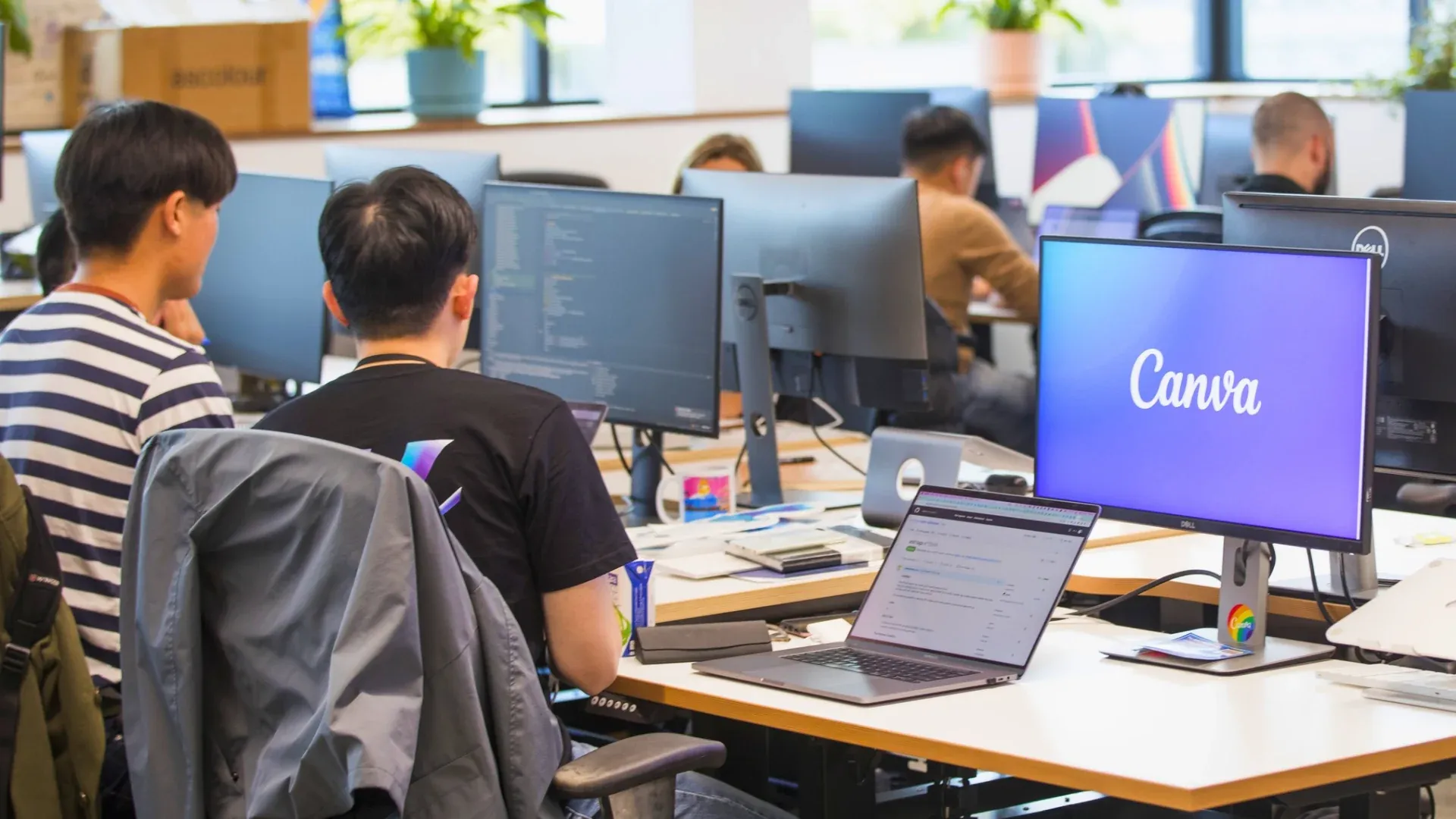
Canva mass layoffs: 1,271 roles cut during AI restructuring
Canva mass layoffs are set to impact up to 1,271 employees, representing approximately 22 percent of the company's total workforce. CEO Melanie Perkins announced the significant restructuring on November 4, 2026, citing a need to refocus the business for the next decade. This decision follows a period of slowing growth and a substantial decline in the company's internal valuation. The restructuring involves consolidating teams, centralizing product development in Sydney, and managing the high costs associated with integrating advanced AI capabilities into the design platform.
November 8, 2026
5 min read
Source: ASHENVOW
Why is Canva conducting mass layoffs now?
Canva is implementing its first major workforce reduction to address a significant slowdown in growth and to restructure its operational model. CEO Melanie Perkins described the current period as the company's most difficult year in its thirteen-year history, noting that growth has decelerated for the first time in a decade. This shift follows a period where the company saw 38 percent growth in the previous financial year, but has since seen expectations for revenue growth revised downward from 30 percent to 20 percent.
The restructuring is designed to return Canva to its original philosophy of operating with small, empowered teams. By consolidating multiple departments and providing broader responsibilities to employees with specific subspecialties, the company aims to increase decision-making speed and ownership. This organizational change is intended to prepare the platform for the next decade of competition and technological evolution.
The shift in growth and revenue expectations
The decision to downsize is closely linked to changing financial metrics. While Canva previously reported over 265 million monthly active users, reports from July indicated this number had fallen to 208 million. This contraction in the user base, combined with the downward revision of revenue growth forecasts, has necessitated a more lean approach to operations to maintain long-term viability.
How has AI implementation impacted Canva's finances?
The high cost of developing and implementing artificial intelligence has been a primary driver behind Canva's lowered revenue projections and restructuring needs. Although there is strong market demand for AI-powered design tools, such as the Magic Studio and the Canva AI 2.0 platform, the actual deployment of these technologies has been more expensive and time-consuming than the company originally anticipated.
Melanie Perkins noted in August that while the company has successfully reduced the cost per AI task by 90 percent since the launch of Canva AI 2.0, these savings have not been sufficient to offset the broader financial pressures. The expense of maintaining cutting-edge conversational text-to-design capabilities has placed a strain on the company's margins, contributing to the need for a more efficient organizational structure.
What is the impact on Canva's market valuation?
Canva has experienced a significant contraction in its estimated market value over recent months. In August 2026, the company's internal valuation was slashed by $7.9 billion, dropping from $38.9 billion to $31 billion. This decline was mirrored by some of the company's financial backers, who reduced their own valuations of the firm by 17 percent, moving from $42 billion down to $34.9 billion.
This loss in valuation reflects broader market concerns regarding the company's growth trajectory and the capital-intensive nature of its pivot toward AI. The combination of a shrinking monthly active user count and lowered revenue forecasts has created a more cautious outlook for investors, forcing the company to prioritize profitability and structural efficiency over rapid, unchecked expansion.
How will the restructuring affect employee roles and locations?
The restructuring will lead to changes in job functions, potential relocations, and new office attendance requirements. A significant portion of Canva's product teams will be centralized in Sydney, Australia. Consequently, some employees will be asked to relocate to this hub to ensure better collaboration within the consolidated teams.
For those not required to relocate, the company is implementing new hybrid work policies. Starting in January, hybrid workers globally will be expected to spend two to three days per week in their local offices. This move is part of the broader strategy to move away from highly specialized, siloed roles toward more integrated, multifunctional teams.
Support packages for departing staff
To mitigate the impact on the 1,271 potentially affected workers, Canva has announced a comprehensive severance and support package. Impacted employees will receive a minimum of six months' salary and are permitted to keep their work MacBooks. Additionally, the company is offering several professional development and transition resources:
- One-on-one career coaching and a one-year subscription to LinkedIn Premium.
- 12 months of access to the employee assistance program and healthcare (where applicable).
- The establishment of the Canva Collective Fund, offering $10,000 grants to departing staff interested in starting their own ventures.
- A waiver of the one-year vesting cliff for new workers to ease financial transitions.
The Canva Collective Fund is unique in that the company will not take any equity or ownership in the projects funded by these grants. Applications for these entrepreneurial grants are scheduled to close on December 14.
Frequently asked questions
How many people are being laid off at Canva?
Up to 1,271 people are potentially affected by the current restructuring. This represents approximately 22 percent of Canva's total workforce. The company is moving toward a model of smaller, more empowered teams to improve operational efficiency and decision-making capabilities.
Why did Canva's valuation decrease so significantly?
The valuation drop, which saw the company's internal value fall from $38.9 billion to $31 billion, was driven by slowing user growth and lowered revenue forecasts. Additionally, the high costs associated with implementing AI technologies have impacted investor confidence and the company's overall financial outlook.
What is the Canva Collective Fund?
The Canva Collective Fund is a support initiative providing $10,000 grants to laid-off employees who wish to launch their own businesses. Canva will not claim any ownership or equity in these new ventures. The deadline for grant applications is December 14.
Will Canva employees be required to work in the office?
Yes, Canva is implementing new hybrid work requirements. From January, hybrid employees will be expected to work from the office two to three days per week. Furthermore, more product teams are being centralized in Sydney, which may require some staff to relocate.
How is AI affecting Canva's business model?
AI is a major focus for Canva, but its implementation has been more expensive and slower than planned. While the cost per AI task has dropped by 90 percent since the release of Canva AI 2.0, the overall expense of these tools has contributed to reduced revenue growth projections.
Key takeaways
- Canva is laying off up to 1,271 employees, roughly 22% of its workforce.
- The restructuring aims to centralize product teams in Sydney and consolidate roles.
- Canva's internal valuation dropped from $38.9 billion to $31 billion in August.
- AI implementation costs have contributed to a downward revision in revenue growth forecasts.
- Laid-off staff will receive six months' salary and potential $10,000 entrepreneurial grants.
The future of Canva's design ecosystem
The current restructuring marks a pivotal transition for Canva as it moves from a decade of rapid expansion into a more mature, AI-centric phase. While the immediate impact of the layoffs and the reduction in valuation is significant, the company's focus on reducing the cost of AI tasks and reorganizing into smaller, more agile teams suggests a strategic attempt to stabilize its long-term margins. The success of this transition will depend on whether these structural changes can effectively offset the high capital requirements of generative AI while reclaiming the growth momentum lost in recent months.



