
6 Best Touchscreen Gloves for 2026: Comparison and Review
Touchscreen gloves allow users to operate smartphones in cold weather without exposing bare skin to the elements. The best touchscreen gloves for 2026 vary by utility, ranging from the highly accurate Glider Gloves, which use conductive copper yarn for full-hand interaction, to specialized waterproof or heated models. Testing conducted in 30- to 40-degree Fahrenheit weather shows that while conductivity is essential, factors like material thickness, grip, and weather resistance significantly impact usability. Selecting the right pair depends on whether you prioritize precision, warmth, or protection against rain and snow.
November 13, 2026
4 min read
Source: ASHENVOW
Optimizing your smartphone for glove use
Before selecting a specific pair of gloves, users can improve device responsiveness by adjusting internal software settings. Increasing touchscreen sensitivity helps mitigate the lack of direct skin contact. For Android users, this involves navigating to Settings, then Display and touch, and toggling 'Increased sensitivity' on. On iPhones, the process requires going to Settings, selecting Accessibility, then Touch, and setting Haptic Touch or 3D & Haptic Touch to 'Fast.' Additionally, users should explore 'Touch Accommodations' within the Accessibility menu to further refine how the device registers inputs through fabric.
Top performers for precision and daily use
The Glider Gloves Touchscreen Gloves are rated as the best overall option due to their high level of control and accuracy. Unlike gloves that only work at the fingertips, this Canadian manufacturer integrates conductive copper into the yarn, enabling users to pinch to zoom, swipe, and tap using any part of the hand. The design features a soft, brushed interior and textured silicone grip sections on the palms and fingers to prevent the device from slipping.
While highly responsive, these gloves have specific limitations regarding environmental protection and thermal insulation:
- Thermal capacity: They are not thick enough for extreme cold.
- Water resistance: They are not waterproof and are unsuitable for snow.
- Sizing: They may feel small initially but tend to loosen with regular wear.
For those seeking a knitted aesthetic with high warmth, the Moshi Digits Touchscreen Gloves provide a comfortable alternative. These allow for accurate typing with all fingers and thumbs. To compensate for the naturally slippery nature of knitted fabric, Moshi incorporates a wavy pattern of rubber strips to enhance grip. However, testers noted that the inner microfleece lining can occasionally separate from the outer layer, and the loose weave may be prone to fraying if caught on objects.
Specialized protection: Waterproof and Heated options
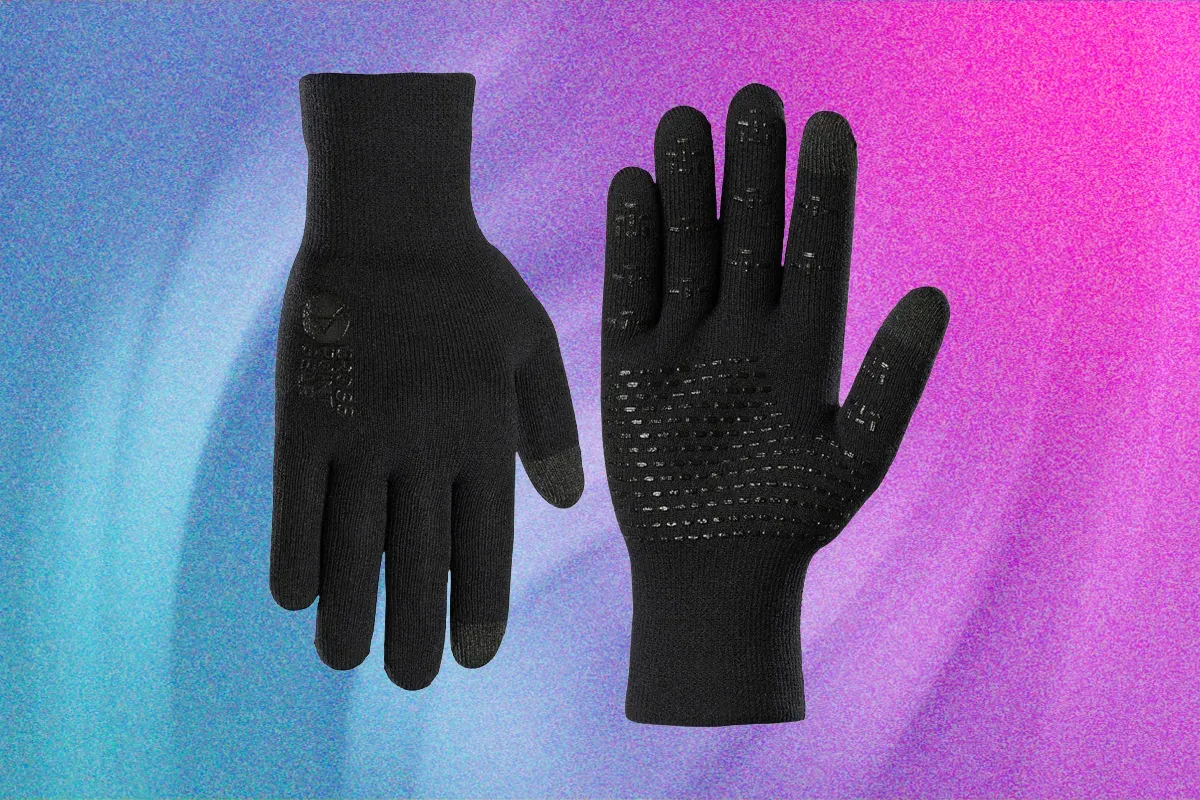
Weather-specific needs require specialized construction, such as the three-layer approach found in the Cross Point Gear Waterproof Knit Gloves. These are designed for high-activity outdoor use, such as cycling or walking in heavy rain. The construction consists of a dense knit exterior, a breathable Artex membrane to block water, and a moisture-wicking interior liner. While the outer layer may become saturated in heavy downpours, the membrane ensures hands remain dry even during brief submersion.
Comparing weather-resistant and thermal gloves
When choosing between waterproof and heated models, users must balance battery dependency against environmental protection. The following table summarizes the key characteristics of these specialized options based on testing:
| Feature | Cross Point Gear (Waterproof) | Venustas (Heated) |
|---|---|---|
| Primary Benefit | Water ingress prevention | Active thermal regulation |
| Construction | Artex membrane + 3 layers | Fleece lining + battery packs |
| Touchscreen Use | Effective typing and swiping | Good tapping; difficult typing |
| Key Trade-off | Outer layer gets soaked | Requires frequent charging |
The Venustas Heated Gloves offer a different solution for extreme cold by utilizing three heat settings controlled by a color-coded button. These gauntlets feature a fleece lining and a non-slip palm. While the fingertips are capable of basic tapping and swiping, the bulkiness of the gloves makes detailed typing difficult. Users must also manage the battery packs located in zipped compartments on the cuffs; the lowest setting provides up to 10 hours of warmth, while the high setting is limited to approximately three hours.
Style and dexterity: Leather and fingerless designs
For users who prioritize professional appearance or maximum dexterity, leather and fingerless models offer distinct advantages. The Kent Wang Deerskin Touchscreen Gloves are designed for a polished look suitable for office environments. Made from wrinkle-resistant deerskin, they feature a permanent touchscreen-friendly treatment. While they provide comfort via a cashmere lining, the presence of seams at the fingertips requires a snug fit and some practice to achieve typing accuracy.
If typing speed and biometric security are the primary concerns, the Heat Company Heat 2 Softshell Gloves provide a fingerless solution. These feature a unique fold-over design with magnetized sections that allow the user to expose only the thumbs. This is particularly useful for unlocking phones via fingerprint scans or speed-typing. These gloves are wind- and water-resistant and include goatskin leather palms for durability.
Maximizing fingerless glove utility
The Heat Company model functions as a hybrid between a glove and a mitten. The design includes:
- Mitten top: A section that covers the fingers and includes a pocket for hand warmers.
- Thumb cover: A separate section with sewn-in magnets to keep it out of the way when the thumb is exposed.
- Layering potential: For extreme temperatures, these can be paired with Merino Heat Tube Liners to add warmth without sacrificing dexterity.



