
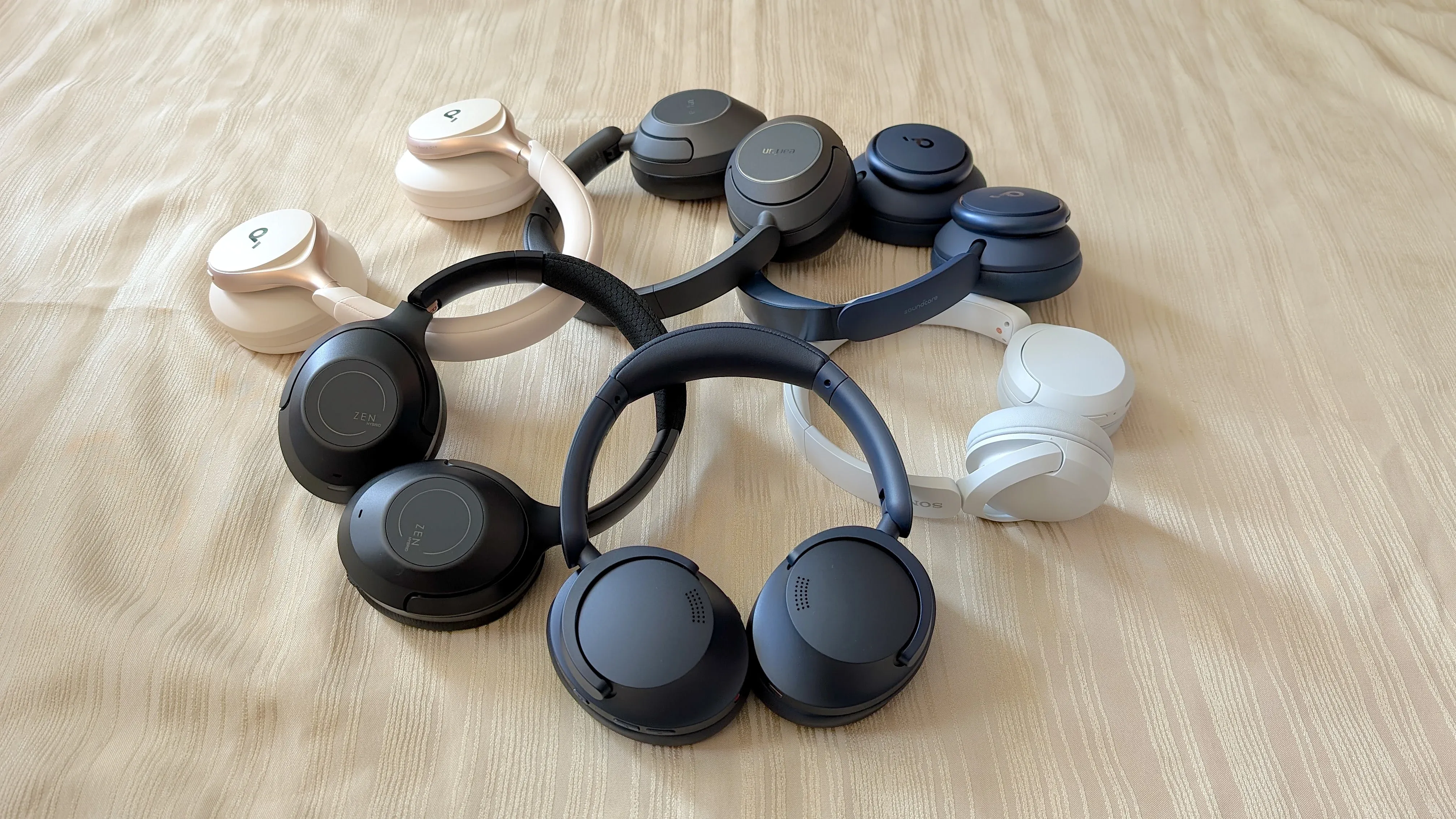
Best budget headphones under $100: Top picks for 2026
Finding high-quality budget headphones does not require sacrificing essential audio features or comfort. While premium models like the Sony WH-1000xM6 command prices near $450, several highly capable alternatives exist for a fraction of that cost. This guide analyzes the best affordable options currently on the market, comparing their performance against flagship models to help you find the best value. We will explore how budget brands compete with industry leaders and what technical trade-offs you should expect when choosing lower-priced audio gear.
November 8, 2026
4 min read
Source: ASHENVOW
Understanding the value of budget headphones
Budget headphones can offer significant functionality that rivals much more expensive flagship models. While many consumers gravitate toward high-end labels, the gap between premium and affordable audio is narrowing. High-quality sound and essential features are no longer exclusive to the $400+ price bracket.
The market is currently seeing a surge in performance from brands such as JLab, Anker, and JBL. These manufacturers are producing models that challenge the dominance of established giants. Even Sony, a leader in the premium sector, offers bargain entries that provide exceptional value for those unwilling to pay a luxury premium. By focusing on core audio drivers and efficient battery management, these brands deliver a competitive experience for the everyday listener.
Choosing an affordable pair does not necessarily mean accepting inferior performance. In many instances, budget-friendly noise-cancelling headphones can provide longer battery life and a more pronounced sonic punch than high-end alternatives like the AirPods Max. The key is knowing which specific models prioritize the features that matter most to your listening habits.
Budget vs. high-end headphones: Key differences
The primary distinction between price tiers usually involves the refinement of sound and the sophistication of software features. While budget models are highly capable, they often lack the absolute precision found in luxury hardware.
Generally, higher-end headphones are more likely to provide superior sound quality, specifically characterized by undistorted bass. They also tend to offer longer playtime and advanced technological integrations. For example, state-of-the-art adaptive Active Noise Cancellation (ANC) is more common in premium tiers, allowing the device to adjust to environmental noise in real-time.
There are also practical differences in hardware design and specialized software. Budget headphones are known to leak sound more frequently than their pricier counterparts, which can impact privacy in quiet environments. Additionally, premium models often include advanced features like:
- Spatial Audio: Provides an immersive 3D soundscape for movies and music.
- TalkThru Technology: Found in some JBL flagship models, this instantly reduces music volume and amplifies ambient voices for easier conversation.
- Advanced ANC: More precise isolation from external frequencies.
Despite these gaps, the mission for many consumers is to find "middle-ground" models—on-ear or over-ear designs that borrow standout functionality from expensive flagship versions without the luxury price tag.
Finding the best value in affordable audio
Identifying the best headphones under $100 requires looking beyond the brand name and focusing on specific use cases. Whether you prioritize noise cancellation, battery endurance, or sheer sound impact, there is a budget option designed to meet those needs.
When evaluating these picks, consider the form factor. Over-ear models typically offer better passive isolation and comfort for long sessions, whereas on-ear models might be more portable. The goal is to find a device that maximizes its specific strengths. For instance, a budget pair might not offer the most complex spatial audio, but it might outperform a premium pair in total battery life or bass response.
The current landscape proves that "cheap" does not equate to "bad." By selecting from reputable brands like Anker or JBL, users can secure reliable hardware that handles daily commuting, office work, or casual listening with ease. The focus has shifted from paying for a logo to paying for performance-per-dollar.
Frequently Asked Questions
Are budget headphones much worse than expensive ones?
Not necessarily, as budget headphones can offer great sound and even better battery life than premium models. While they may lack advanced features like adaptive ANC or spatial audio, many affordable options provide the essential functionality needed for high-quality daily listening at a much lower cost.
What features are usually missing in cheaper headphones?
Cheaper models often lack high-end extras like spatial audio for 3D sound or advanced TalkThru technology. They may also have less precise noise cancellation and a higher tendency to leak sound compared to luxury models. However, the core audio performance can still be remarkably strong.
Can I get good noise cancellation under $100?
Yes, you can find effective noise-cancelling headphones in the budget category. While they might not feature the most sophisticated adaptive algorithms found in $450 models, many brands like JBL and Anker produce capable noise-cancelling options that provide excellent value for the price.
The future of affordable audio technology
The evolution of the audio market suggests that the divide between budget and premium hardware will continue to shrink. As manufacturing processes become more efficient, advanced features like noise cancellation and long-lasting battery life are trickling down to more affordable models. For consumers, this means more choices and better value. While flagship models will always cater to the audiophile seeking perfection, the mid-range and budget sectors are becoming increasingly robust. Investing in a well-researched budget pair allows listeners to enjoy high-quality sound without the financial burden of luxury branding, making great audio accessible to everyone.



