
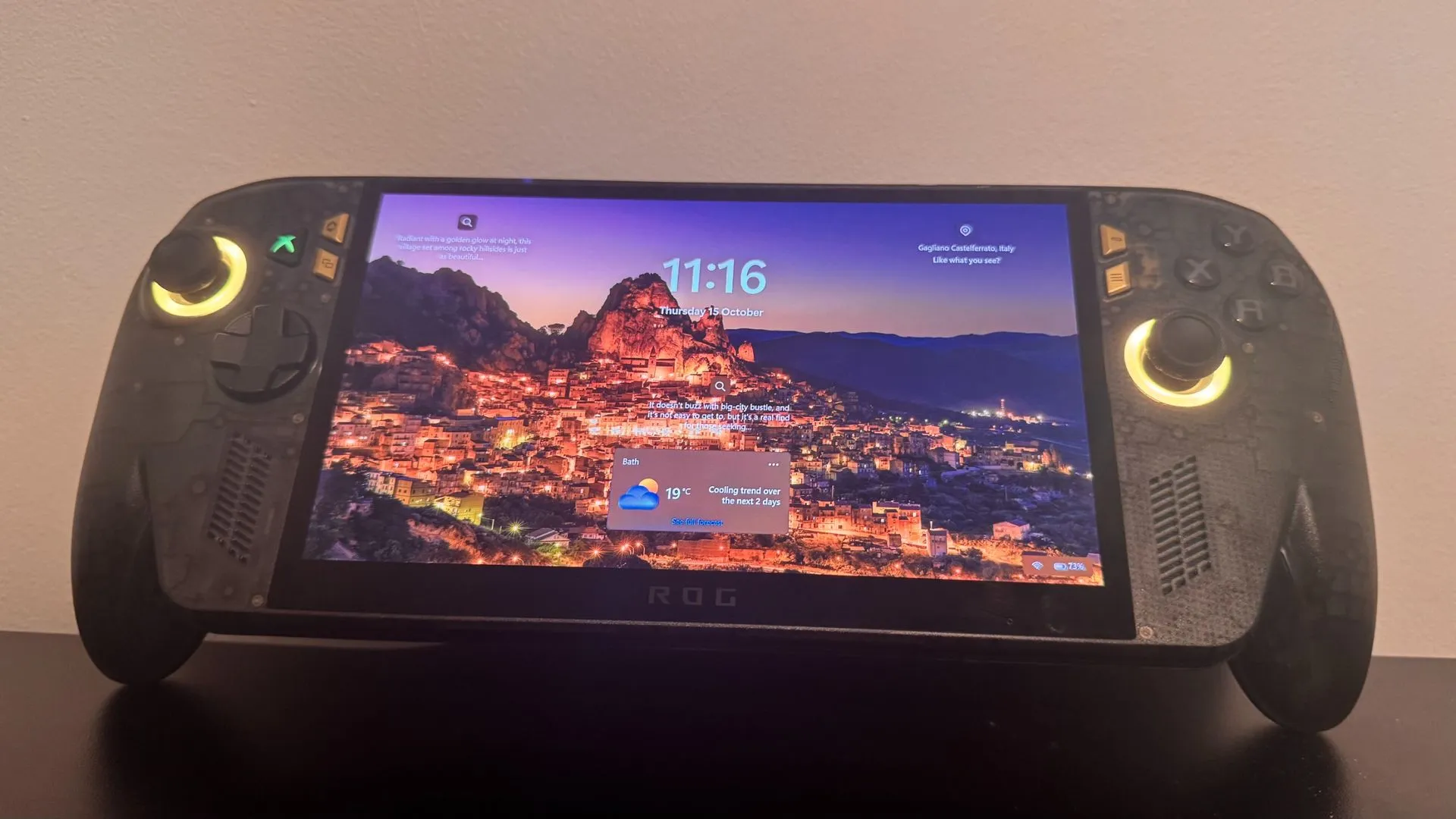
Asus ROG Xbox Ally X20 review: The OLED upgrade explained
The Asus ROG Xbox Ally X20 is a refined handheld gaming PC that adds an OLED display and improved ergonomics to the existing Z2 Extreme platform. The device features a 7.4-inch OLED panel with 1400 nits peak brightness and a 0.2 ms response time, compared with the 7-inch 500-nit IPS screen on the prior model. Both units share the same AMD Ryzen Z2 Extreme processor, 24 GB LPDDR5X memory and 1 TB SSD. The X20 also introduces TMR thumbsticks, a revised cooling system and adjustable D-pad height. At a launch price of $1300 it costs $300 more than the standard Ally X. This article examines the screen upgrade, real-world performance, build changes and value relative to competing handhelds.
October 19, 2026
4 min read
Source: ASHENVOW
What are the main hardware differences between the Ally X20 and the original Ally X?
The Ally X20 keeps the Ryzen Z2 Extreme chip, 24 GB LPDDR5X memory and 1 TB NVMe SSD found in the earlier model. The most visible change is the 7.4-inch OLED panel that replaces the 7-inch IPS display. Peak brightness rises from 500 nits to 1400 nits, and the panel carries DisplayHDR True Black 1400 certification. Physical dimensions increase slightly to 30.0 x 12.1 x 5.13 cm and weight rises from 715 g to 756 g. The new unit adds TMR magnetic thumbsticks, refined triggers and a revised cooling assembly. Storage and battery capacity remain identical at 1 TB and 80 Wh.
How does the OLED screen affect gameplay and battery life?
The OLED panel delivers deeper blacks and higher contrast, which improves visibility in dark scenes common in titles such as Cyberpunk 2077. Response time drops to 0.2 ms, reducing motion blur during fast camera movements. Brightness reaches 1400 nits outdoors, a clear gain over the prior 500-nit limit. Power draw is higher at maximum brightness, so users who keep the screen at peak levels see shorter play sessions than on the IPS model at equivalent settings. The device still supports the same 120 Hz refresh rate and 1080p resolution.
Does the larger chassis change comfort during long sessions?
The extra width and weight make the X20 feel more substantial in the hands. Textured grips and deeper grooves on the face buttons improve purchase, while the adjustable D-pad can be raised or lowered to suit different play styles. The combination of clickier bumpers and smoother triggers reduces fatigue during extended racing or action games.
What performance results were recorded on the Ally X20?
Benchmarks match those previously measured on the standard Ally X because the processor, memory and storage are unchanged. Average frame rates in Horizon Forbidden West and Cyberpunk 2077 remained within a few percent of earlier figures. Metro Exodus showed slightly lower results, while F1 25 produced lower 1 % lows. The new cooling system keeps surface temperatures lower during sustained loads, but peak performance still requires a sufficiently powerful USB-C charger. The unit ships without a charger, so owners must supply their own adapter rated for at least 65 W to reach the full 35 W TDP mode.
Is the Ally X20 worth the $300 premium over the standard Ally X?
The price difference buys the OLED panel, TMR sticks, improved cooling and minor button refinements. For users who value high-contrast visuals and plan to play in varied lighting, the upgrade is noticeable. Those satisfied with the IPS screen or on a tighter budget will find the standard Ally X sufficient. In the UK the value equation shifts further because competing devices such as the MSI Claw offer similar performance for less additional cost.
Frequently asked questions
Does the Ally X20 include a charger in the box?
No charger is supplied. Owners must provide a USB-C power adapter capable of at least 65 W to access the full performance modes advertised by the manufacturer.
Can the storage be upgraded after purchase?
The 1 TB PCIe 4.0 NVMe drive follows the M.2 2280 form factor and remains user-replaceable, consistent with the design of the previous Ally X model.
How does the X20 compare with the Legion Go 2?
The X20 offers a brighter OLED panel and a more compact chassis, while the Legion Go 2 provides a larger screen and different control layout. Both use comparable AMD processors, so frame-rate differences stem mainly from software optimisation rather than raw silicon.
Is the microSD reader faster on the new model?
The X20 adopts a UHS-II microSD Express reader, which supports higher sustained transfer speeds than the standard microSD slot on the earlier Ally X.
Will future driver updates improve performance?
Because the processor is identical to the prior model, any future driver gains will apply equally to both devices. The X20 does not receive exclusive silicon-level improvements.
Key takeaways
The Ally X20 adds a 7.4-inch 1400-nit OLED panel while retaining the Ryzen Z2 Extreme processor and 24 GB memory.
Physical refinements include TMR thumbsticks, a new cooling system and an adjustable D-pad.
Performance numbers remain essentially unchanged from the standard Ally X due to identical core specifications.
The device launches at $1300, a $300 increase over the previous model.
No charger is included, requiring users to supply a 65 W or higher USB-C adapter for full-power operation.
The OLED upgrade provides the clearest visual benefit for users who play in varied lighting conditions.
Conclusion
The Asus ROG Xbox Ally X20 delivers a targeted set of refinements centred on display quality and ergonomics rather than raw speed. The OLED panel and revised controls create a more premium experience for owners who can justify the added cost. For buyers seeking maximum value or already satisfied with IPS visuals, the standard Ally X continues to offer nearly identical gaming capability at a lower price. Future software updates are expected to benefit both models equally given their shared hardware foundation.



