
AST SpaceMobile Blacklift rocket: ambitious medium-lift plans for 2028
The AST SpaceMobile Blacklift rocket is a newly announced medium-lift launch vehicle designed to provide the company with unconstrained access to orbit. AST SpaceMobile aims to begin commercial launches with the Blacklift by late 2028, targeting a capacity of 20 metric tons to low-Earth orbit. This move follows difficulties in securing reliable launch capacity for its massive BlueBird direct-to-cell satellites. To accelerate development, the company has entered a $1.3 billion agreement with Firefly Aerospace to secure engine technology and engineering support.
November 14, 2026
4 min read
Source: ASHENVOW
The technical specifications and objectives of the Blacklift rocket
AST SpaceMobile has announced the development of the Blacklift, a medium-lift rocket intended to lift 20 metric tons into low-Earth orbit. According to a company news release, the vehicle is designed to serve as a "springboard to significantly expand [their] total addressable market." By developing an in-house launch capability, the Texas-based company seeks to move away from a total reliance on external providers and secure more favorable owner’s economics within the space industry.
Abel Avellan, the founder, chairman, and CEO of AST SpaceMobile, stated that the rocket will provide the company with "regular unconstrained access to orbit." This strategic shift comes as satellite operators face a tightening launch market where securing capacity for large constellations requires planning years in advance. The Blacklift represents an attempt to bypass the bottleneck of external launch availability that has impacted many large-scale satellite deployment programs.
Scaling for the BlueBird constellation
The primary driver behind the Blacklift is the need to deploy the company's BlueBird direct-to-cell satellites. These satellites are notably large, requiring significant lift capacity that is increasingly difficult to procure on short notice. While the company maintains existing commercial launch contracts with providers like SpaceX and Blue Origin, the Blacklift is positioned as a long-term solution for the massive scale of their intended constellation.
The $1.3 billion Firefly Aerospace engine agreement
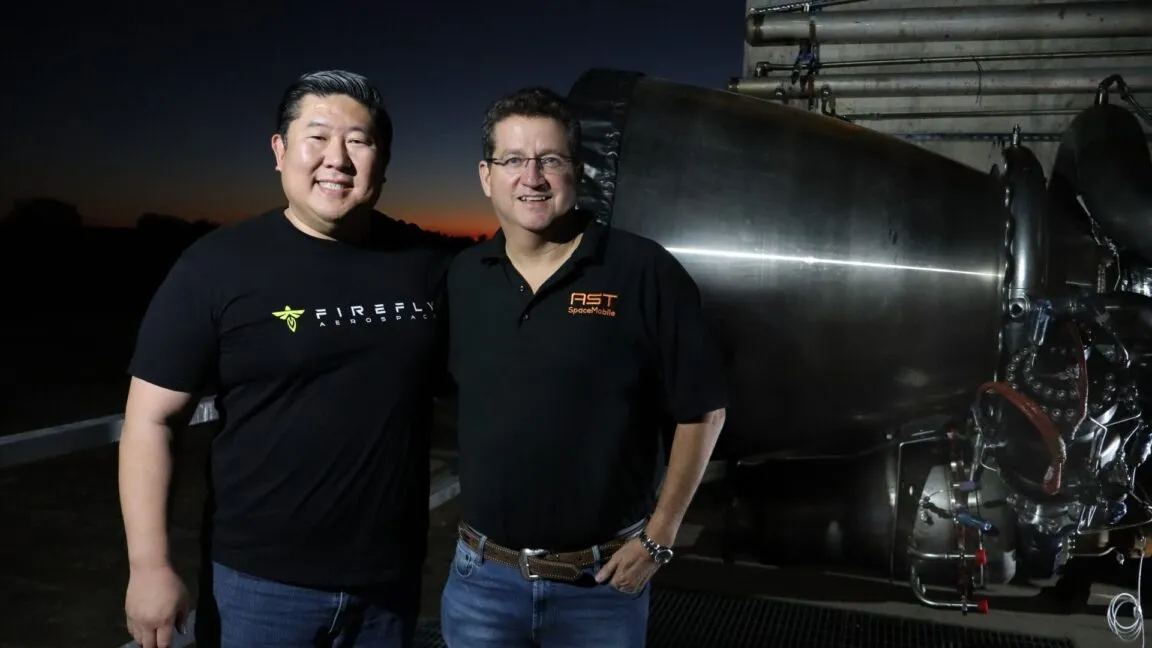
To mitigate the technical hurdles of building a rocket from the ground up, AST SpaceMobile has signed a substantial agreement with Firefly Aerospace. The deal is valued at $1.3 billion and is structured to provide the necessary propulsion and engineering expertise to meet the company's aggressive development goals. This partnership is intended to shave time off the development cycle by utilizing existing engine designs rather than developing new propulsion systems from scratch.
The financial commitment to Firefly is broken down into several key components:
- $800 million for the perpetual license to manufacture the Miranda and Vira (vacuum-variant) engines.
- $250 million for the procurement of 27 Miranda engines and nine Vira engines.
- $250 million for dedicated engineering services over a three-year period.
The Blacklift's first stage will be powered by nine Miranda engines. While acquiring these engines provides a significant head start, industry analysts note that the Miranda engine itself may still be at least two years away from successful flight testing on the Eclipse rocket. Consequently, the reliance on Firefly technology provides a technical foundation but does not eliminate the complexities of integrated rocket assembly and testing.
Historical context of medium-lift development timelines
The 2028 launch target for the Blacklift stands in stark contrast to the historical development timelines of successful medium-lift launch vehicles. Most major commercial launch programs in the 21st century have required between five and nine years to move from a public announcement to a successful orbital launch. AST SpaceMobile's timeline is significantly more compressed than the industry standard established by both startups and established aerospace firms.
| Vehicle / Program | Company | Approximate Development Time | Notes |
|---|---|---|---|
| Falcon 9 | SpaceX | 4.7 years | Fastest record; benefited from Merlin engine experience. |
| Vulcan | United Launch Alliance | 8.7 years | Supported by approximately $2 billion in federal aid. |
| Industry Average | Various | 5–9 years | Includes Neutron, Terran R, and Eclipse. |
Even SpaceX, which holds the record for the fastest development of a medium-lift vehicle, did not operate in a vacuum. When SpaceX announced the Falcon 9 in 2005, the company had already been operating for over three years and was nearing its first launch with the smaller Falcon 1. Furthermore, the initial Falcon 9 had a payload capacity of approximately 10 tons, which is half the capacity proposed for the Blacklift's 20-ton target.
Comparing the Blacklift to recent industry entrants
Other recent attempts to enter the medium-to-heavy lift market highlight the difficulty of the endeavor. Since 2015, companies such as Rocket Lab (Neutron), Relativity Space (Terran R), and Stoke Space (Nova) have announced vehicles with capacities ranging from 7 to 27 metric tons. To date, only the Vulcan rocket from United Launch Alliance has successfully reached orbit among the major recent announcements, and it did so following nearly a decade of development and massive capital investment.
Market pressures and the launch capacity crisis
The decision by AST SpaceMobile to build its own rocket underscores a growing crisis in the global launch market. As more companies attempt to deploy massive satellite constellations, the demand for reliable, heavy-lift capacity is outstripping supply. This scarcity forces satellite operators to compete for limited launch windows, often on terms that are not economically favorable. This trend has seen even well-funded companies considering the massive capital expenditure required to become launch providers themselves.
The announcement also reflects a shift in investor sentiment. As the difficulties of the launch market become more apparent, capital is increasingly being directed toward new entrants in the medium-lift sector. This is evidenced by other ambitious projects, such as Cowboy Space's "Big Iron" rocket, which aims to launch orbital data centers with a projected 2028 flight date. However, these timelines remain viewed with skepticism by many industry observers due to the inherent technical and regulatory risks involved in rocket manufacturing.
Strategic questions regarding Blacklift's necessity
The announcement of the Blacklift raises questions regarding the company's existing launch commitments. AST SpaceMobile has stated that it will continue to use external providers, with current agreements covering the deployment of over 100 BlueBird satellites between 2027 and 2028. This creates a potential overlap between the company's planned use of third-party rockets and its own development program.
If the company already has secured capacity for 100 satellites through 2028, the immediate necessity of the Blacklift is unclear. Critics suggest the rocket may be a move to secure long-term autonomy rather than an immediate requirement for the current deployment phase. However, for AST SpaceMobile, the Blacklift represents a high-stakes attempt to control its own destiny in an increasingly crowded and competitive orbital economy.



