
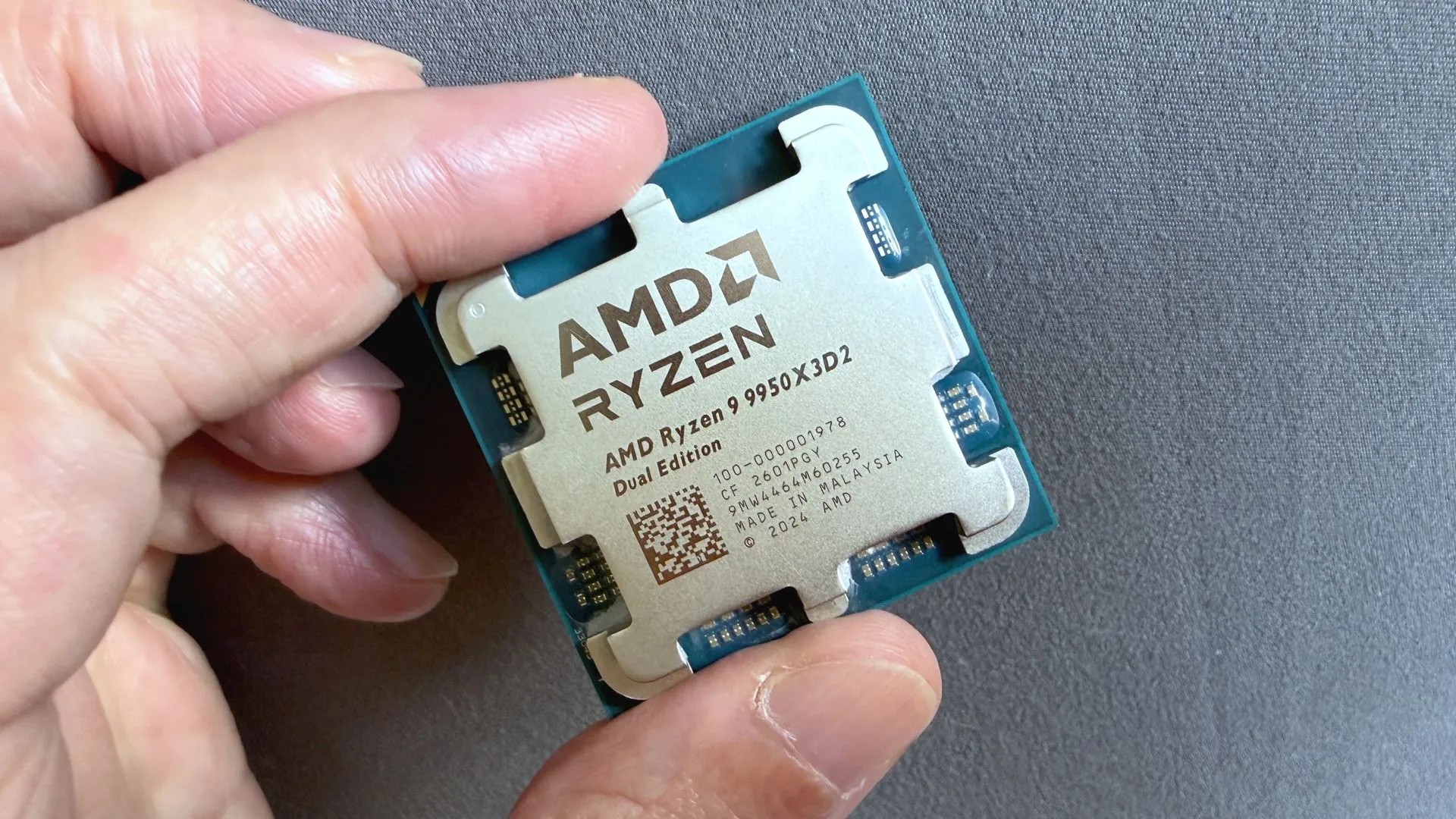
Amazon CPU return scam: Fake Ryzen 9 9950X3D2 bypasses checks
A sophisticated Amazon CPU return scam has emerged involving a hardware swap targeting high-end processors. A Reddit user recently exposed a fraudulent AMD Ryzen 9 9950X3D2 that was delidded and transplanted onto an older Intel chip to deceive return inspections. This fake processor, retailing for roughly $889, successfully bypassed Amazon's quality control processes. The incident highlights growing security concerns regarding high-value component returns. This article examines the technical details of the fraud, the vulnerabilities in current inspection systems, and how consumers can identify counterfeit hardware to protect themselves.
October 19, 2026
5 min read
Source: ASHENVOW
How was the fake AMD Ryzen 9 9950X3D2 constructed?
The fraudulent component was likely created by performing a delidding procedure on a genuine AMD Ryzen 9 9950X3D2 and then mounting that integrated heat spreader (IHS) onto a different, older Intel CPU. This method allows a scammer to present a visually convincing product that carries the correct branding and physical dimensions of the expensive AMD chip while actually containing much cheaper, obsolete hardware.
According to reports from the r/watercooling community on Reddit, the physical discrepancies between the genuine chip and the counterfeit are significant once inspected closely. The process of delidding—removing the metal heat spreader to access the silicon die—often leaves physical traces. In this specific case, the smudging and wearing of the text on the top of the fake chip suggest that the mechanical stress of the delidding process likely damaged the surface finish of the IHS.
The mechanics of the transplant
To execute this scam, the perpetrator must carefully remove the IHS from the $889 AMD chip. Once the IHS is removed, they take an older Intel processor and place it underneath the AMD heat spreader. Because many high-end processors share similar square shapes and metallic finishes, a cursory inspection might not reveal that the underlying architecture has been swapped. This level of deception is specifically designed to exploit the speed-oriented nature of large-scale retail return inspections.
What are the technical giveaway signs of this hardware fraud?
Expert observation of the hardware reveals two primary technical indicators that the chip is not a genuine AMD product: the location of surface-mount device (SMD) components and the pin layout. While the top of the chip looks correct at a glance, the internal and underside configurations tell a different story.
- SMD Placement: On genuine AMD Ryzen chips, the capacitors (SMDs) are never bundled in the middle or located on the underside of the chip. However, the fake chip showed a distinct lack of these capacitors under the IHS, while the underside featured a cluster of SMD components in the center—a characteristic specific to Intel chip designs.
- Pin Layout: The underside of the fake chip featured a pin arrangement that matched an Intel architecture rather than the expected AMD layout for the 9950X3D2.
- Capacitor Visibility: The absence of specific capacitor patterns that should be visible or present in certain areas of the AMD architecture serves as a definitive red flag for enthusiasts.
These differences are far from subtle to those familiar with semiconductor design, yet they are easily overlooked by automated systems or generalist warehouse staff who are not trained to distinguish between specific CPU architectures.
Why did the scam bypass Amazon's return inspection?
The success of this Amazon CPU return scam suggests a vulnerability in how high-value electronics are processed during the return-to-stock cycle. Amazon's current model allows for returned items to be relisted as new products if they pass a standard inspection. This creates an incentive for scammers to target expensive, high-demand components like the Ryzen 9 series.
Inspection processes in large-scale fulfillment centers are often optimized for speed and volume. A technician or an automated system might check for the following criteria:
- Correct Branding: The IHS clearly displays the "Ryzen 9 9950X3D2" text.
- Physical Dimensions: The chip maintains the expected square shape and size.
- Weight and Feel: The component feels like a standard processor.
Because Intel chips have historically been rectangular while AMD chips are square, a quick glance might be deceptive if the scammer uses a square Intel chip or if the inspector is accustomed to seeing various form factors. If the branding is intact and the chip is not physically broken, it may be cleared for resale, allowing the scammer to receive a full refund for a product that has essentially been replaced by junk.
What is the impact of high-value hardware fraud on consumers?
The financial and technical implications of such scams are significant, especially given that the affected component, the AMD Ryzen 9 9950X3D2, carries a retail price of $889. For a consumer, receiving a counterfeit chip means more than just losing nearly $900; it can lead to complete system failure or hardware damage if the underlying Intel chip is incompatible with the motherboard's socket or power delivery system.
This type of fraud also erodes trust in major e-commerce platforms. As scammers move from lower-value items, such as memory modules, to high-end CPUs, the risk profile for online hardware shopping increases. Consumers are forced to become more vigilant, often needing to perform deep inspections of their components immediately upon arrival to ensure they have not been victimized by a return-loop scam.
Frequently asked questions
How can I tell if my CPU is a fake?
You should inspect the underside of the CPU for the correct pin layout and capacitor placement according to the manufacturer's specifications. Additionally, check for any signs of delidding, such as smudged text on the IHS or irregular residue. Comparing your chip to official high-resolution images from the manufacturer is highly recommended.
Is it common for Amazon to sell returned items as new?
Amazon does relist returned items that pass their inspection protocols. While most returns are for legitimate reasons, the system can be exploited by scammers who return fraudulent or tampered hardware. This is why verifying the authenticity of high-value electronics immediately upon receipt is critical for consumers.
What is a "delidded" CPU?
Delidding is the process of removing the Integrated Heat Spreader (IHS)—the metal lid on top of a CPU—to access the silicon die directly. While often done by enthusiasts for better cooling, in this context, it is used by scammers to swap the expensive internal components of a chip.
Can a fake CPU damage my computer?
Yes, a counterfeit CPU can cause significant damage. If a scammer has placed an incompatible Intel chip under an AMD IHS, attempting to install it into an AMD socket could cause electrical shorts, bent pins, or permanent damage to both the motherboard and the processor.
Why are SMD components important for identification?
Surface-mount device (SMD) components, like capacitors, are placed in very specific patterns on different CPU architectures. Because Intel and AMD use different layouts, the presence of Intel-style capacitor clusters on a chip branded as AMD is a definitive indicator of a fraudulent transplant.
Key takeaways
- A scammer used a delidded AMD Ryzen 9 9950X3D2 to hide an older Intel chip.
- The counterfeit chip was valued at approximately $889 at the time of the report.
- Technical giveaways include incorrect SMD placement and mismatched pin layouts.
- The scam successfully bypassed Amazon's return inspection process.
Conclusion
The discovery of the fake AMD Ryzen 9 9950X3D2 highlights a sophisticated evolution in e-commerce fraud. By leveraging the delidding process, scammers are able to bypass standard retail inspections, turning high-value returns into profitable opportunities for deception. As hardware prices for enthusiast-grade components continue to climb toward the $1,000 mark, the necessity for more rigorous, technically informed inspection protocols becomes clear. For consumers, the lesson is one of extreme caution: always verify the physical and technical authenticity of high-end hardware immediately upon delivery to avoid the significant financial and technical risks posed by these counterfeit transplants.



