The Legend of Zelda: Ocarina of Time remake: New visuals
The Legend of Zelda: Ocarina of Time remake arrives on Nintendo Switch 2 on November 5, 2026, offering a high-fidelity reimagining of the 1998 N64 classic. This remake focuses on visual modernization and mechanical refinements rather than a total structural redesign. While the story, dungeon layouts, and boss encounters remain largely identical to the original, the game benefits from a significant graphical upgrade and smoother controls. This article examines how Nintendo balances nostalgia with modern hardware capabilities, analyzing the impact of the new visual style, gameplay adjustments, and the overall experience for both veterans and new players.
November 8, 2026
5 min read
Source: ASHENVOW
How does the new visual style change the experience?
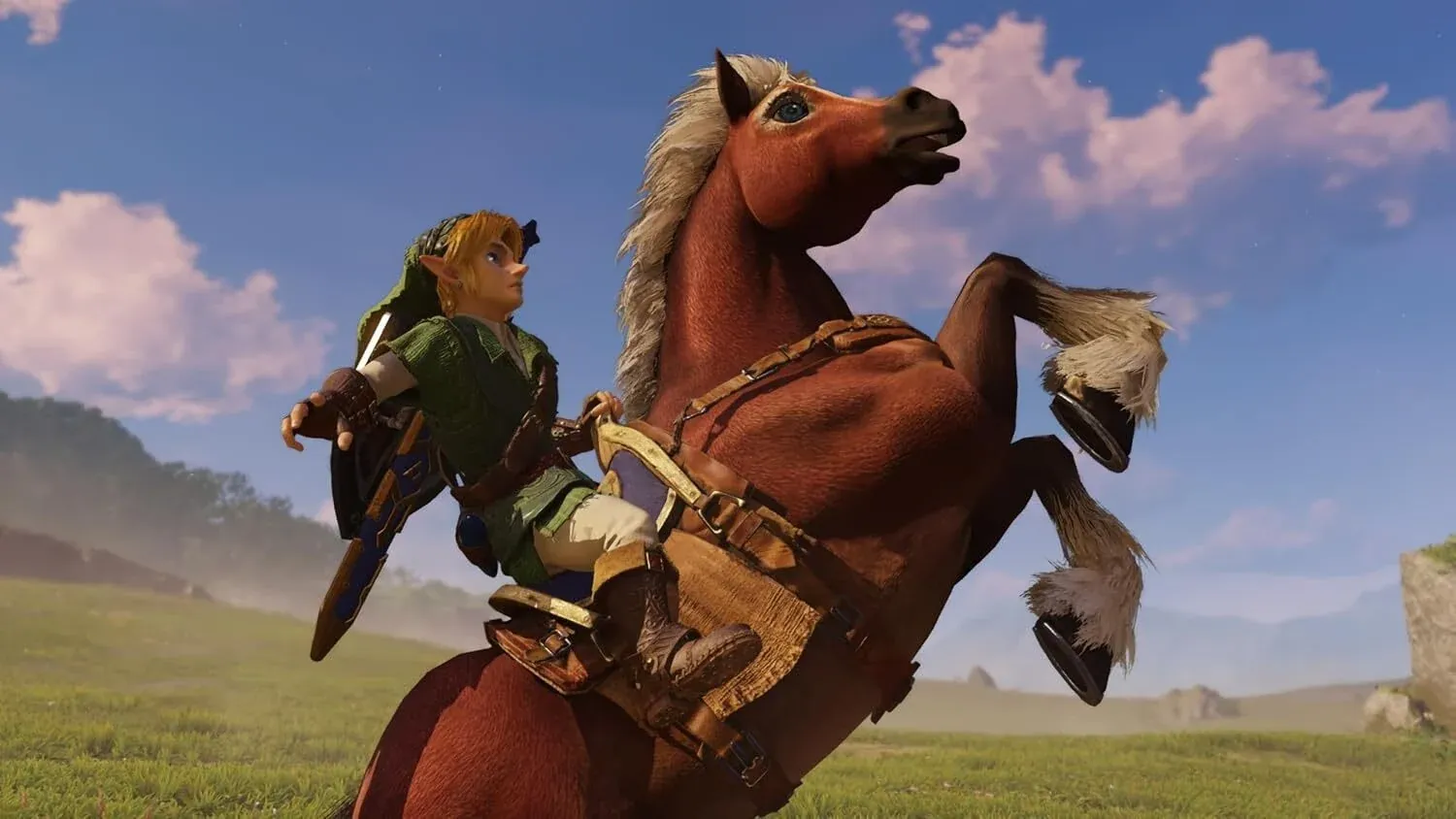
The visual overhaul is the most prominent change in the remake, utilizing a unique aesthetic inspired by high-end puppetry. While character faces retain the stylized, almost cartoonish proportions of the original N64 version, their hair, clothing, and the surrounding environments feature an extreme level of realistic detail. This creates a striking contrast that helps individual character personalities shine through more clearly than in the 1998 release.
Nintendo has leveraged the power of the Switch 2 hardware to implement sophisticated environmental effects. Players will notice realistic water ripples and fog that reacts to their movements, as well as high-quality textures and dynamic sunlight scattering across Hyrule Field. Most importantly, these technical advancements do not compromise performance; the game maintains a near-perfect 60 frames per second, ensuring that the visual fidelity enhances rather than hinders the gameplay.
A balance of stylization and realism
The decision to move toward a puppetry-inspired look allows the game to avoid the 'uncanny valley' often associated with realistic remakes. By keeping the facial expressions exaggerated and cartoonish, Nintendo preserves the wacky and sometimes creepy tone of the original. For instance, NPCs like the Happy Mask Salesman or the windmill musician retain their eccentricities, which feel even more pronounced with the new level of detail in their clothing and textures.
What gameplay improvements were made for Switch 2?
Link's movement has been significantly updated to feel snappier and more responsive compared to the original N64 controls. Nintendo introduced a dedicated jump button to prevent accidental falls and a sprint feature that improves traversal without making the world feel too small. Combat has also seen a qualitative boost; while the core mechanic of locking on and waiting for openings remains, new hit animations make every strike feel more impactful and satisfying.
However, the transition to modern controller layouts has introduced some friction regarding item management. Because the Switch 2 lacks the specific C-button configuration of the N64, Nintendo adopted a system similar to Breath of the Wild. Players can map one item to a universal 'use' button and navigate a quick-swap menu to change equipment. While this is fluid for most tasks, it can make combat encounters that require rapid switching between multiple items feel somewhat awkward.
Is the story and structure fundamentally different?
The core structure of the game remains almost entirely unchanged, following a near one-to-one recreation of the original's narrative and progression. The story, player objectives, dungeon layouts, and boss fights have not been reinvented. Nintendo appears to have operated on the philosophy that the original design was already a masterpiece that did not require a complete overhaul in the vein of a Final Fantasy VII Remake-style reinterpretation.
To assist modern players, Nintendo added a feature called "Threads of Time." This functions as a contemporary quest log, laying out main story and side activities clearly in a menu. This addition serves a practical purpose: it reduces the need for Navi, the player's fairy companion, to constantly interrupt exploration with reminders. While it provides helpful hints for what to do next, it stops short of adding intrusive objective markers on the map, thereby preserving the sense of discovery inherent in the original design.
How has the audio and music been updated?
The legendary musical score has been completely re-recorded using real instruments, supplemented by a tasteful use of digital samples that evoke the original's identity. This approach ensures that the music feels grander and more triumphant while remaining instantly recognizable. Themes like the Gerudo Valley music have received particularly high praise for their updated arrangements.
The auditory experience is designed to complement the visual scale of the world. Running across the expansive Hyrule Field with a fully orchestrated score provides a sense of scale and emotion that was difficult to achieve with the limited hardware of the late 1990s. The music acts as a bridge between the nostalgia of the past and the technical capabilities of the present.
What are the drawbacks of this remake?
Despite the many improvements, some changes have been met with mixed reactions. One notable addition is the inclusion of fully voice-acted cutscenes at critical story moments. While this adds a layer of production value, it also extends the length of cinematic sequences, preventing players from quickly progressing through dialogue. Some players may find that the cartoonish nature of the acting occasionally clashes with the more realistic environmental textures, potentially breaking immersion.
Furthermore, the overall difficulty of the game has seen a slight reduction. Nintendo has redistributed the gameplay friction, making certain puzzles simpler and reducing the impact of enemy attacks. While the game was originally designed with a younger audience in mind, this remake is estimated to be roughly 10 percent easier than the N64 original. For veteran players seeking the high-stakes tension of the 1998 release, the experience may feel somewhat less challenging than expected.
Key takeaways
- The remake launches on Nintendo Switch 2 on November 5, 2026.
- Visuals use a puppetry-inspired style with high-detail textures and 60 FPS performance.
- "Threads of Time" acts as a new quest log to reduce Navi's interruptions.
- Combat and movement are more responsive, though item swapping is less immediate.
- The game is approximately 10 percent easier than the original N64 version.
FAQ: The Legend of Zelda: Ocarina of Time remake
Does the remake change the story or dungeons?
No, the story, dungeon layouts, and boss fights are recreated in a near one-to-one capacity. Nintendo chose to focus on visual and mechanical refinements rather than redesigning the fundamental structure of the game, ensuring the experience remains faithful to the 1998 original.
What is the "Threads of Time" feature?
Threads of Time is a modern quest log that displays all main story and side activities. It provides hints on how to progress through different quest lines, allowing players to manage their objectives without relying on Navi to constantly provide verbal directions during exploration.
How does the combat feel different?
Combat feels more "juicy" and impactful due to improved hit animations. While the lock-on targeting system remains the same, Link's movement is snappier, and the addition of a dedicated jump button and sprint feature makes navigating encounters and the environment much smoother.
Is the game harder or easier than the N64 version?
The remake is generally considered about 10 percent easier than the original. This is due to slightly simplified puzzles and enemies that do not hit as hard, as Nintendo redistributed the gameplay friction to create a more accessible experience.
What is the new art style?
The game uses a visual style inspired by high-end puppetry. This combines stylized, cartoonish character faces with highly realistic hair, clothing, and environmental textures, creating a unique look that showcases the power of the Nintendo Switch 2 hardware.
Conclusion
The Legend of Zelda: Ocarina of Time remake is a visually spectacular tribute to a gaming icon. By prioritizing a faithful translation of the original's design over radical reinvention, Nintendo has created a version that respects the legacy of the 1998 classic while making it accessible for a new generation. While the reduction in difficulty and the new item-swapping mechanics might frustrate some purists, the breathtaking visuals and refined controls make it a compelling experience. It stands as a polished, respectful reimagining that proves why the original's core design remains timeless.