
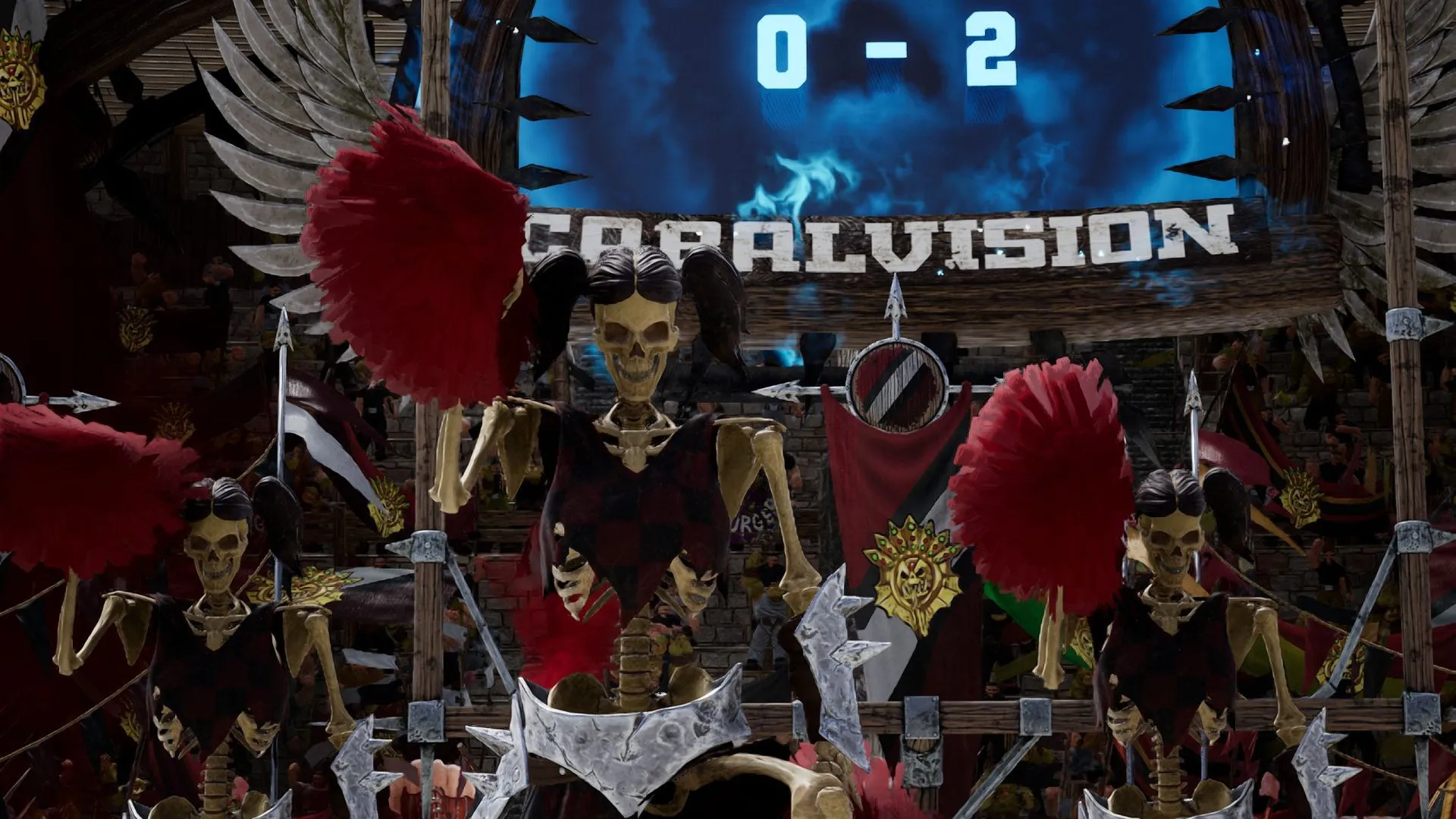
Is Warhammer: Blood Bowl a brand new sequel?
Warhammer: Blood Bowl appears to be an extensive refinement of its predecessor rather than a ground-up reboot. While it carries over significant elements from Blood Bowl 3, such as the campaign structure and core mechanics, it introduces enough transformative features to feel like a distinct step forward. The game acts as a bridge, taking the established foundation and layering on new tactical layers and technical improvements that address long-standing player feedback.
The transition from the previous title is most evident in the user interface and accessibility. New features like a personalized landing page with customizable tiles allow players to jump directly into specific modes or ongoing competitions. Additionally, the player advancement screen now includes community data, showing the percentage of players who select specific skills. This data-driven approach helps players decide, for example, whether to invest in the Guard skill for their mummies based on prevailing meta-trends, reducing the need for external research.
How does the new Rumble Mode change the gameplay?
Rumble Mode is the most significant mechanical addition, offering a condensed, seven-a-side version of the traditional match. Inspired by the tabletop 'Sevens' format and concepts like Rugby Sevens, this mode is designed for faster sessions and higher intensity. By shrinking the pitch and reducing the number of players, the game shifts the tactical landscape significantly.
Key differences in Rumble Mode mechanics
In Rumble Mode, the traditional flow of a Blood Bowl match is altered through several specific constraints and advantages:
- Turn Structure: Each half consists of only six turns, compared to the standard eight in traditional matches.
- Resource Scarcity: Rerolls are twice as expensive, making every failed action more punishing and increasing the frequency of turnovers.
- Field Layout: The absence of a traditional line of scrimmage creates a 'no man's land' between teams, preventing fragile teams from losing multiple players in the opening turn.
- Skill Value: Because rerolls are harder to come by, skills that provide automatic rerolls, such as Dodge, become significantly more valuable.
This mode is not just a limited subset; it is being integrated widely. It is available in the Eternal League, various competitions, and friendlies. Even the initial chapters of the campaign have been updated to default to this seven-a-side format, making the early game more accessible and faster to play.
What are the Season 3 rule updates in the game?
Warhammer: Blood Bowl incorporates the tabletop game's third season rules, which focus on punishing stagnation and encouraging active play. These updates aim to solve the common issue of 'stalling,' where players repeatedly hit opponents without attempting to score, effectively killing the momentum of a match.
One of the most flavorful additions is the audience interaction. If players choose to stall instead of pursuing scoring opportunities, bored audience members may actually throw rocks at the players on the pitch. Conversely, players who avoid stalling can be rewarded with a 10,000 gold bonus at the end of the match. The rules have also been streamlined to make the ball more central to the action.
The 'Secure the Ball' action allows a player to pick up the ball on a 2+ result, provided they sacrifice the rest of that player's activation. Furthermore, updates to the passing rules have removed 'Wildly Inaccurate' results and deflections. These changes are intended to encourage players to actually move the ball down the field rather than simply engaging in endless combat.
How much has the AI improved?
The artificial intelligence in Warhammer: Blood Bowl shows signs of significant progress compared to the 'infamously dopey' AI found in previous iterations. While the beta experience suggests the AI is not yet perfect, there is a noticeable improvement in its tactical decision-making and awareness of the reduced scope in modes like Rumble Mode.
Observers of the beta have noted that the AI is better at selecting the optimal block die when given a choice. More importantly, the AI is beginning to show more varied behavior; instead of defaulting to a standard 'cage' around the ball carrier, it has been seen attempting actual passes. While it can still make questionable decisions—such as attempting a high-risk play before performing a safe action like standing up a prone player—the overall competence level feels higher. The developers at Slitherine appear to be actively targeting AI intelligence as a core pillar of the game's development.
What is still missing from the beta version?
Despite the depth provided by the beta, several key components of the full release remain unaddressed. The current playtest version does not include the two newest teams, the Tomb Kings or the Bretonnians, meaning the full balance of the game cannot yet be assessed. Furthermore, the monetization and progression systems are not yet visible.
Players will have to wait for the full launch to see how the in-game shop and season pass are implemented, and whether there will be any fundamental changes to how teams are monetized. The full release is currently scheduled for the end of the year, following a public playtest on Steam starting October 7.
Frequently asked questions
Is Rumble Mode the same as the tabletop Sevens format?
Rumble Mode is heavily inspired by the tabletop Sevens format but is not an exact replica. For instance, the beta version lacks certain elements like Desperate Measures inducements and the requirement to make a lineman a veteran. However, it successfully captures the faster, seven-a-side essence of the tabletop rules.
Will the new rules stop players from stalling?
Yes, the new rules are specifically designed to discourage stalling. By introducing penalties like audience members throwing rocks and providing financial rewards for active play, the game incentivizes players to move toward the scoring zone rather than just engaging in repetitive combat.
Does the game include the new Tomb Kings and Bretonnians?
Not in the current beta version. While these two teams are confirmed for the upcoming release, they have not yet been implemented in the playtest environment, meaning their specific balance and gameplay mechanics are still under wraps.
Can I play the campaign in traditional mode?
Yes. While the first chapter of the campaign defaults to the seven-a-side Rumble Mode to teach beginners, players can choose to play the remainder of the campaign in either Rumble Mode or through traditional, full-scale matches.
How does the MVP system work now?
The MVP system has been refined to prevent bench players from accidentally earning points. Instead of a random selection, players must nominate six individuals (or four in Rumble Mode) who are then eligible to earn Star Player Points as the Most Valuable Player.
Key takeaways
- Rumble Mode introduces a fast-paced, seven-a-side format with a smaller pitch and higher reroll costs.
- Season 3 rule updates penalize stalling with audience interference and reward active play with gold.
- The AI shows improved tactical awareness, including better passing and block die selection.
- New UI features include community-driven skill popularity percentages and customizable landing pages.
- The full release is expected by the end of 2026, following an October 7 Steam playtest.
Conclusion
Warhammer: Blood Bowl stands as a robust evolution of the series, successfully blending the depth of traditional Blood Bowl with the accessibility of new, faster modes. By integrating Season 3 tabletop rules and addressing AI shortcomings, the game offers a more dynamic and less frustrating experience than its predecessors. While the absence of new teams and the final monetization structure remain unknown, the improvements to tactical flow and quality-of-life features suggest a highly polished title. For fans of the franchise, it represents a significant upgrade that honors the core mechanics while modernizing the gameplay loop.


