
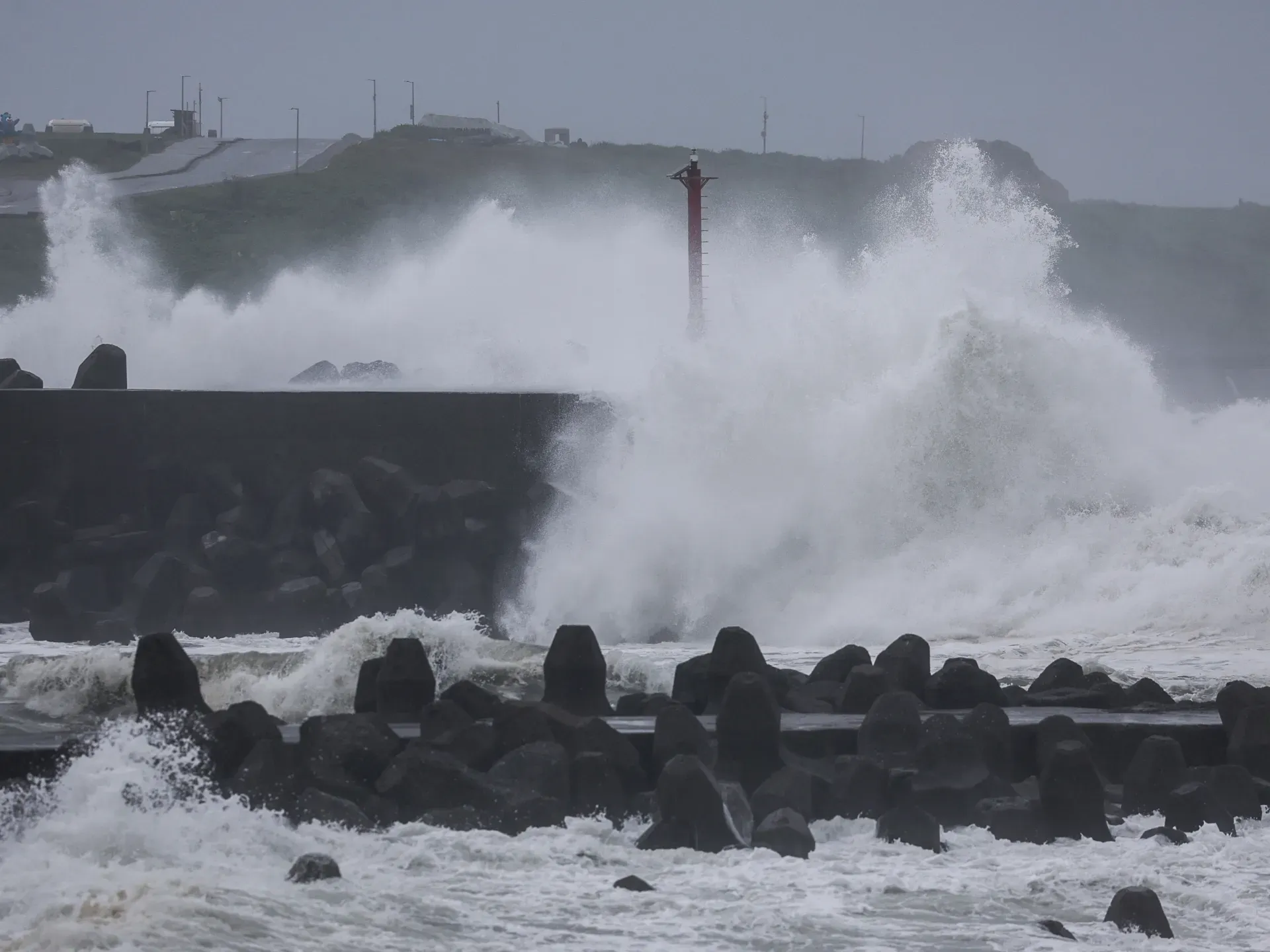
Typhoon Champi hits Taiwan: one dead and 500 people injured
Typhoon Champi has struck Taiwan, resulting in at least one fatality and more than 500 injuries as the storm swept across the island's northeast on Friday. The typhoon triggered significant disruptions, including the evacuation of over 5,000 residents and the loss of power for approximately 56,000 households. Authorities have issued warnings regarding destructive winds and heavy rainfall as the system moves toward China and Japan. This article examines the damage in Taiwan, the storm's trajectory through East Asia, and the influence of the unprecedented El Nino event on Pacific weather patterns.
October 27, 2026
5 min read
Source: ASHENVOW
What is the extent of the damage caused by Typhoon Champi in Taiwan?
Typhoon Champi has caused significant physical and infrastructural damage across northeastern Taiwan, leading to one confirmed death and over 500 injuries. The storm's passage on Friday brought destructive winds that toppled trees and disrupted essential power lines, leaving roughly 56,000 households without electricity. Emergency crews were deployed on Saturday to begin the process of restoring power to these affected areas.
The impact on local residents has been profound, with many reporting intense, frightening conditions during the height of the storm. In Yilan County, where the storm looped, rainfall reached significant levels. According to the Taiwan Central Weather Administration (CWA), Yilan had recorded 650mm of rain since Thursday, with more than 400mm falling on Friday alone. This heavy precipitation led to brief flooding in various regions.
Impact on daily life and local infrastructure
Beyond the immediate physical injuries and deaths, the typhoon has paralyzed much of the local economy and transport. Most shops in northern and central Taiwan remained closed for a second day as the storm moved away from the northeast. The scale of the evacuation was also notable, with more than 5,000 people forced to leave their homes to seek safety from the rising waters and wind.
Personal accounts from residents highlight the varying intensity of the experience. While some, like a librarian named William Yu, suggested the storm felt similar to previous typhoons, others described a much more harrowing experience. A retired teacher in Yilan reported a sleepless night due to the intensity of the wind, while a resident in New Taipei City described the sensation of her scooter shaking violently on a bridge during the peak of the storm.
How is Typhoon Champi affecting travel and other regions in Asia?
Typhoon Champi is currently tracking toward China and Japan, causing widespread disruptions to regional aviation and maritime safety. While the number of flight cancellations has decreased from the nearly 1,000 flights grounded on Friday, the Taiwan Ministry of Transportation and Communications reported that 259 flights remained cancelled as the storm progressed. The system is expected to continue its path toward the eastern coast of mainland China and eventually toward mainland Japan.
In Japan, the storm has already impacted the Okinawa islands. According to the Okinawa Electric Power Company, approximately 8,400 households in the prefecture were without power on Friday afternoon. Additionally, Japanese authorities confirmed that two people sustained injuries due to the typhoon's effects in the southernmost prefecture.
As the storm approaches mainland China, authorities have issued warnings regarding the potential for heavy to torrential rain. State-run broadcasters have identified parts of Jiangsu, Shanghai, and Zhejiang as high-risk areas. In Shanghai, the storm's approach has already necessitated the evacuation of tens of thousands of people and the suspension of several train services.
What is the meteorological profile and predicted path of the storm?
Typhoon Champi has undergone significant changes in intensity since its initial formation. At its peak, the system was classified as a super typhoon, with wind speeds reaching nearly 300 kilometres per hour (186 miles per hour). However, the storm has since weakened. The US Joint Typhoon Warning Center reported maximum winds of 185km/h (115mph) on Friday.
Despite the reduction in wind speed, the threat of heavy rainfall remains a primary concern for meteorologists. The Taiwan Central Weather Administration (CWA) warned that the storm could drop up to 900mm (35 inches) of rain between Thursday and Saturday. Forecaster Lu Kuo-chen noted that the typhoon might slow down near the northeastern tip of Taiwan, a factor that could prolong the duration of the heavy rain and wind impacts on the island.
How is the El Nino phenomenon influencing this typhoon season?
The intensity and frequency of storms like Typhoon Champi are being driven by a supercharged Pacific season linked to the El Nino weather event. El Nino is a natural cycle characterized by the warming of the tropical Pacific Ocean, which can significantly alter global weather patterns. The current event is described by international meteorological bodies as being of unprecedented scale.
According to Celeste Saulo, the secretary-general of the World Meteorological Organization, the current El Nino event could be so strong that it falls "off the monitoring charts" used for the last four decades. This extreme warming is expected to peak in December 2026, with its climatic consequences likely lasting well into 2027 and beyond.
This connection between El Nino and increased typhoon activity highlights the growing volatility of the Pacific weather season. As these natural cycles reach historic levels, the potential for extreme weather events—including super typhoons and massive rainfall totals—continues to pose a significant risk to coastal populations across East Asia.
Frequently asked questions
How many people have been injured by Typhoon Champi?
More than 500 people have been injured due to the impact of Typhoon Champi. This figure includes casualties reported in Taiwan and at least two injuries confirmed by authorities in Japan's Okinawa islands as the storm moved through the region.
What is the current wind speed of the typhoon?
While Champi was briefly a super typhoon with winds near 300 km/h, it has since weakened. The US Joint Typhoon Warning Center reported maximum wind speeds of 185 km/h (115 mph) on Friday during the storm's passage.
Which areas in China are most at risk from the storm?
Chinese authorities have warned that parts of Jiangsu, Shanghai, and Zhejiang are at risk of experiencing heavy to torrential rain. In Shanghai, the threat has already led to the evacuation of tens of thousands of residents.
How much rainfall is expected in Taiwan?
The Taiwan Central Weather Administration warned that the typhoon could drop up to 900mm of rain. In Yilan County, the storm had already delivered 650mm of rain since Thursday, including 400mm on Friday alone.
What role does El Nino play in this weather pattern?
El Nino is a natural warming of the tropical Pacific that supercharges the typhoon season. The current El Nino event is described by the World Meteorological Organization as potentially unprecedented in strength, affecting weather through 2027.
Key takeaways
- Typhoon Champi has caused at least one death and over 500 injuries across the region.
- Approximately 56,000 households in Taiwan lost power due to the storm's destructive winds.
- The typhoon's path includes mainland China and Japan, causing widespread flight cancellations.
- An unprecedented El Nino event is driving extreme weather patterns in the Pacific.
Conclusion
Typhoon Champi represents a significant weather event for East Asia, demonstrating the devastating potential of high-intensity tropical cyclones. With one fatality, hundreds of injuries, and massive power outages in Taiwan, the immediate human and economic costs are substantial. As the storm moves toward China and Japan, the threat of torrential rain and further disruptions remains high. Furthermore, the involvement of an unprecedented El Nino cycle suggests that such extreme weather events may become increasingly frequent and intense, necessitating enhanced regional preparedness for the years ahead.