Trollheim: Gnomes: How neighborly NPCs redefine co-op survival
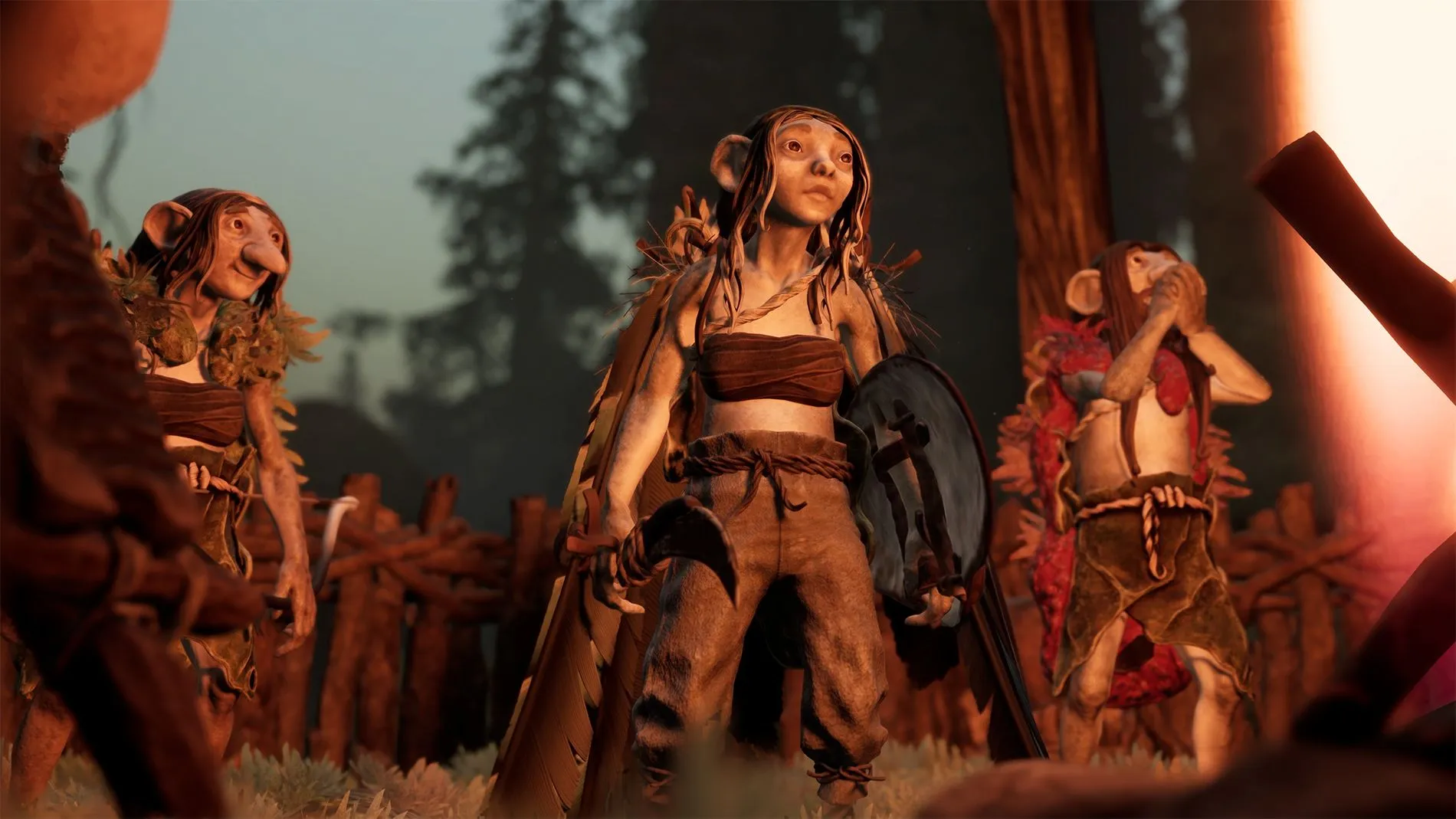
Trollheim: Gnomes is a co-op PvE survival game that shifts the focus from combat to coexistence. Players take on the role of Sprýg Gnomes navigating a dense forest after being displaced from Midgård. Unlike traditional survival titles where mythical creatures serve primarily as resource drops or obstacles, this game treats its inhabitants, known as väsen, as complex neighbors. This approach allows for social interaction, diplomacy, and reputation-based gameplay. This article explores the unique NPC mechanics, the scale-driven survival systems, and the upcoming early access release of Trollheim: Gnomes.
October 19, 2026
5 min read
Source: ASHENVOW
What makes the NPC interaction in Trollheim: Gnomes unique?
The core innovation of Trollheim: Gnomes lies in its treatment of non-player characters (NPCs) as social entities rather than mere combat targets. In many survival games, encounters with large creatures are binary: the player either fights the creature for loot or avoids it to survive. Off-leash Interactive is moving away from this model by introducing a system centered on reputation and behavior.
According to Jojje Dalunde, game director at Off-leash Interactive, the developers do not view the creatures in the forest as traditional enemies. Instead, they are framed as neighbors. This distinction implies that the relationship between the player and the forest's inhabitants is fluid. Players can choose to be "good neighbors" or "bad neighbors," and the väsen—a term encompassing faeries, sirens, and trolls—will react dynamically to these choices.
This reactivity creates a moral dimension to the survival loop. While a troll might yell warnings or throw objects at a gnome, the game suggests these actions are context-dependent. A troll’s hostility might stem from a perceived intrusion on its territory or past negative experiences with gnomes, rather than innate malice. This nuance encourages players to consider the consequences of their actions before resorting to violence.
The spectrum of neighborly behavior
The gameplay loop is designed to support a wide range of social outcomes. If a player chooses a path of aggression, the väsen will respond accordingly, potentially becoming hostile. However, the game does not lock players into a permanent state of enmity. Dalunde has stated that even if a player becomes a "bad neighbor," there are established mechanics to make amends and find common ground with the väsen they have offended.
How do the survival mechanics reflect the gnome perspective?
Survival in Trollheim: Gnomes is heavily dictated by the extreme scale difference between the Sprýg Gnomes and their environment. Being only a few inches tall transforms a standard forest into a daunting, massive landscape. The game implements traditional survival systems such as hunger and cold, but these are filtered through the lens of a tiny protagonist navigating a giant world.
The environment itself acts as both a playground and a threat. The towering trees provide verticality that is essential for both movement and safety. Because the gnomes are so small, the world requires specialized tools for traversal. For example, instead of standard flight mechanics, players use improvised gliders made from leaves or feathers to navigate the canopy. This emphasizes the resourcefulness required to survive in an ecosystem where everything is significantly larger than the player.
The scale also impacts how players interact with the terrain. A simple fallen log or a thick tree trunk becomes a massive architectural feature or a significant obstacle. This sense of scale is central to the immersion, ensuring that the player constantly feels the vulnerability inherent in being a gnome in a forest inhabited by much larger beings.
What are the base-building and traversal possibilities?
Base-building in Trollheim: Gnomes utilizes the verticality of the forest to create unique living spaces. Rather than clearing large patches of ground, players are encouraged to build within the canopy. This approach integrates the architecture into the natural environment, utilizing the height of the trees to create complex, multi-layered settlements.
The building system allows for several creative solutions to living in a high-altitude environment:
- Tree-trunk dwellings: Constructing elegant homes directly into or around the thick trunks of massive trees.
- Canopy connections: Using ziplines to link different tree structures, allowing for rapid movement between different parts of a base.
- Vertical expansion: Utilizing long branches to extend living quarters outward from the main trunk.
Traversal is just as important as construction. The ability to move between these high-altitude homes is facilitated by the aforementioned ziplines and makeshift gliders. This creates a gameplay flow where players are constantly moving between the forest floor and the safety of the heights, managing the risks associated with each level of the environment.
When can players experience Trollheim: Gnomes?
Trollheim: Gnomes is scheduled to arrive in early access later this year. This release phase will allow the developers at Off-leash Interactive to refine the complex social interactions between the gnomes and the väsen based on player feedback. Given the emphasis on reputation and neighborly behavior, the early access period will likely be crucial for balancing how NPCs react to different player archetypes.
The transition to early access will provide the first opportunity for players to test the depth of the survival systems, the efficacy of the base-building mechanics, and the nuances of the social simulation. As the game moves toward a full release, the focus will likely remain on perfecting the delicate balance between being a peaceful resident of the forest and a survivor in a world of giants.
Frequently asked questions
What kind of creatures are known as väsen?
Väsen is the collective term used in the game for the various inhabitants of the forest. This group includes trolls, faeries, and sirens. Unlike typical monsters, these creatures function as neighbors with whom players can interact, negotiate, or conflict depending on their behavior.
Can players change their reputation with NPCs?
Yes, players can make amends if they have behaved poorly. According to the game director, there are specific ways to befriend väsen that a player may have previously offended, allowing them to find common ground and move past past mistakes or accidental hostilities.
How does movement work for such small characters?
Movement is scaled to the gnome's size. Players use makeshift tools like leaf or feather gliders to navigate the air. Additionally, the game features ziplines that allow gnomes to travel quickly between different parts of their tree-based settlements in the forest canopy.
Is the game primarily focused on combat?
While combat is an option, the game is not strictly a combat-focused survival title. The developers emphasize a social approach where players can choose to be good neighbors. The goal is to provide a choice between befriending "monsters" or treating them as enemies.
What is the setting of the game?
The game is set in a dense, dark forest where Sprýg Gnomes seek refuge after being driven from Midgård by Oden. The environment is characterized by massive trees and a significant scale difference between the tiny gnomes and the larger forest residents.
Key takeaways
- Trollheim: Gnomes features a unique NPC system where creatures are treated as neighbors rather than just enemies.
- The game offers a reputation-based mechanic allowing players to choose between being good or bad neighbors.
- Survival elements include managing hunger and cold within a massive, scale-driven forest environment.
- Base-building focuses on verticality, using trees and ziplines to create canopy-based settlements.
- The game is set to enter early access later this year.
Conclusion
Trollheim: Gnomes represents a distinctive shift in the co-op survival genre by prioritizing social dynamics alongside traditional survival mechanics. By framing NPCs as neighbors with whom players can build relationships, Off-leash Interactive introduces a layer of emotional and strategic depth often missing from PvE titles. The combination of scale-driven traversal, vertical base-building, and a nuanced reputation system suggests a rich, immersive experience. As the game approaches its early access launch later this year, it promises to offer players a world where survival is defined not just by what you kill, but by how you live with those around you.