
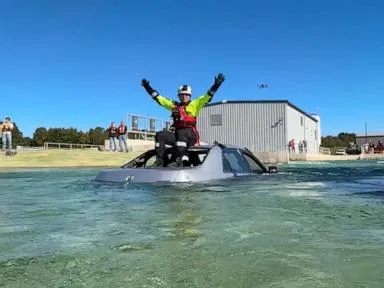
Surviving rising waters: Vital safety tips from first responders
Surviving rising waters requires immediate, decisive action to avoid the lethal force of moving floodwaters and flash floods. First responders emphasize that even shallow, slow-moving water can sweep individuals away or hide dangerous debris. To increase survival rates, experts recommend seeking higher ground immediately and avoiding all contact with floodwaters. These life-saving demonstrations, highlighted by ABC News’ Chief Meteorologist Ginger Zee, focus on the physical mechanics of flood hazards and the specific behaviors necessary to navigate sudden inundation safely. Understanding these risks is essential for staying alive during a storm.
November 18, 2026
3 min read
Source: ASHENVOW
Immediate actions for flash flood survival
The most critical step in surviving rising waters is the immediate pursuit of higher ground before water levels escalate. Flash floods are characterized by their sudden onset, often providing little to no warning before water begins to inundate streets and buildings. During these events, the primary objective is to move vertically—climbing to higher floors or reaching elevated terrain—rather than attempting to outrun the water horizontally through streets or low-lying areas.
First responders warn that the speed of rising water can quickly trap individuals in vehicles or homes. Once water reaches a certain depth, the pressure against doors and windows can make exiting a structure nearly impossible without specialized equipment. Therefore, the window for safe evacuation is much smaller than many people realize.
The danger of rapid inundation
In a flash flood scenario, water does not simply rise; it often surges. This surge carries significant kinetic energy that can compromise the structural integrity of small buildings or displace heavy objects. Understanding that the time between the start of a flood and the point of entrapment is measured in minutes, rather than hours, is essential for effective survival planning.
The lethal mechanics of moving water
Moving water poses a significantly higher risk than standing water due to its ability to exert immense force and hide underlying hazards. Even a few inches of fast-moving water can knock an adult off their feet, leading to drowning or injury from impact. The physical force of the water is compounded by the debris it carries, such as branches, vehicles, or structural fragments, which act as battering rams against anything in their path.
When water is moving, it creates unpredictable currents and eddies that can pull even strong swimmers under the surface. This makes any attempt to wade through floodwaters an extremely high-risk activity. First responders highlight that the visual appearance of water can be deceptive; clear-looking water can be just as powerful and dangerous as murky, debris-filled water.
| Water Condition | Primary Risk Factor | Recommended Action |
|---|---|---|
| Standing/Slow-moving | Drowning, contamination, hidden debris | Avoid contact; stay out of the area |
| Fast-moving/Shallow | Loss of footing, being swept away | Do not attempt to wade; seek higher ground |
| Fast-moving/Deep | Structural impact, heavy debris, high force | Immediate vertical evacuation; avoid all contact |
Vehicle safety during rising water events
Vehicles are among the most dangerous places to be during a flood event because they can easily become floating traps. A common misconception is that a car can safely navigate through shallow water, but the buoyancy provided by the vehicle's air pockets can cause it to lose traction and begin to float even in relatively low depths. Once a vehicle begins to float, the driver loses all steering and braking control, making it impossible to navigate away from deeper sections or obstacles.
If a vehicle is caught in rising waters, the priority is to exit the vehicle immediately if it is safe to do so. If the water is rising too quickly to exit through the doors, first responders suggest preparing to break a side window to escape. Waiting until the water level reaches the windows often results in the pressure making it impossible to open them or break them effectively.
Navigating vehicle entrapment
In extreme cases where the vehicle is being swept away, the risk of being pinned against trees, poles, or other stationary objects is high. The goal is to move to the roof of the vehicle if it is safe, providing a higher vantage point and keeping the individual out of the immediate flow of water while waiting for rescue.
Recognizing environmental warning signs
Surviving rising waters often depends on recognizing the environmental cues that precede a major flood event. Changes in the sound of nearby water, such as a sudden increase in the roar of a stream or river, are immediate indicators of an upstream surge. Similarly, a sudden change in water color—from clear to muddy or brown—indicates that a large volume of water is moving through the system, carrying heavy sediment and debris.
Observing the behavior of local wildlife or the sudden appearance of debris in drainage systems can also serve as early warning signs. However, because flash floods can occur in urban environments due to drainage failure rather than river overflow, these signs may be subtle. The most reliable indicator is official weather warnings and real-time monitoring from meteorological services.