
Shallow-water coral reefs extinction risk: IUCN warns of 2075 collapse
Shallow-water coral reefs extinction risk has reached a critical threshold, with the International Union for Conservation of Nature (IUCN) classifying 96 percent of global reef systems as "critically endangered." According to the IUCN report released on October 22, 2026, these ecosystems face a high probability of total collapse by 2075. This assessment follows rising ocean temperatures and the emergence of severe El Niño events. The report details the scale of the threat to marine biodiversity and the socio-economic consequences for coastal communities.
October 27, 2026
6 min read
Source: ASHENVOW
Shallow-water coral reefs extinction risk has reached a critical threshold, with the International Union for Conservation of Nature (IUCN) classifying 96 percent of global reef systems as "critically endangered." According to the IUCN report released on October 22, 2026, these ecosystems face a high probability of total collapse by 2075. This assessment follows rising ocean temperatures and the emergence of severe El Niño events. The report details the scale of the threat to marine biodiversity and the socio-economic consequences for coastal communities.
Why are 96 percent of coral reef systems classified as critically endangered?
The classification stems from a global assessment by the International Union for Conservation of Nature (IUCN) which identifies an extremely high risk of ecosystem collapse within the next 50 years. By labeling 96 percent of shallow-water coral reefs as "critically endangered," the IUCN is utilizing its highest risk category to signal that total extinction is a tangible possibility by the year 2075.
The assessment was conducted using the "middle-of-the-road" climate scenario provided by UN climate experts. This specific model projects a global temperature increase of 2.7°C above pre-industrial levels by the end of the century. To reach these conclusions, the IUCN analyzed 127 tropical and subtropical coral systems, spanning a total area of 188,362 square kilometres.
This high level of endangerment is not limited to isolated patches but affects major global landmarks. The report specifically names several vital systems currently under threat, including:
- The Great Barrier Reef in Australia
- The Coral Triangle in Southeast Asia and the Western Pacific Ocean
- The Mesoamerican Barrier Reef System
- The Red Sea coral reefs
These regions are not merely biological sites; they are foundational to the stability of marine life and human coastal economies.
How does climate change drive the collapse of coral ecosystems?
Climate change acts as the primary driver of reef degradation by increasing the frequency and intensity of thermal stress events. Corals are highly heat-sensitive organisms, making them exceptionally vulnerable to the warming trends caused by human-induced climate change. As ocean temperatures rise, the delicate symbiotic relationship between corals and their internal algae is disrupted, leading to widespread bleaching.
The mechanics of reef degradation
When corals undergo severe bleaching due to heat, they lose their primary energy source. If the thermal stress persists, the coral dies. The transition from a healthy reef to a collapsed state follows a predictable but devastating pattern. Once the hard corals perish, the physical structure of the reef begins to change fundamentally. The living architecture is replaced by a landscape of algae, rubble, and sponges. This shift represents a loss of the complex three-dimensional habitats required by a vast array of marine life.
The emergence of a "super" El Niño event in 2026 has further exacerbated these risks. El Niño, a natural warming phenomenon, has become more intense, adding additional thermal pressure to ecosystems already struggling with baseline global warming. This compounding effect accelerates the timeline for potential extinction.
What is the impact of coral reef loss on marine biodiversity?
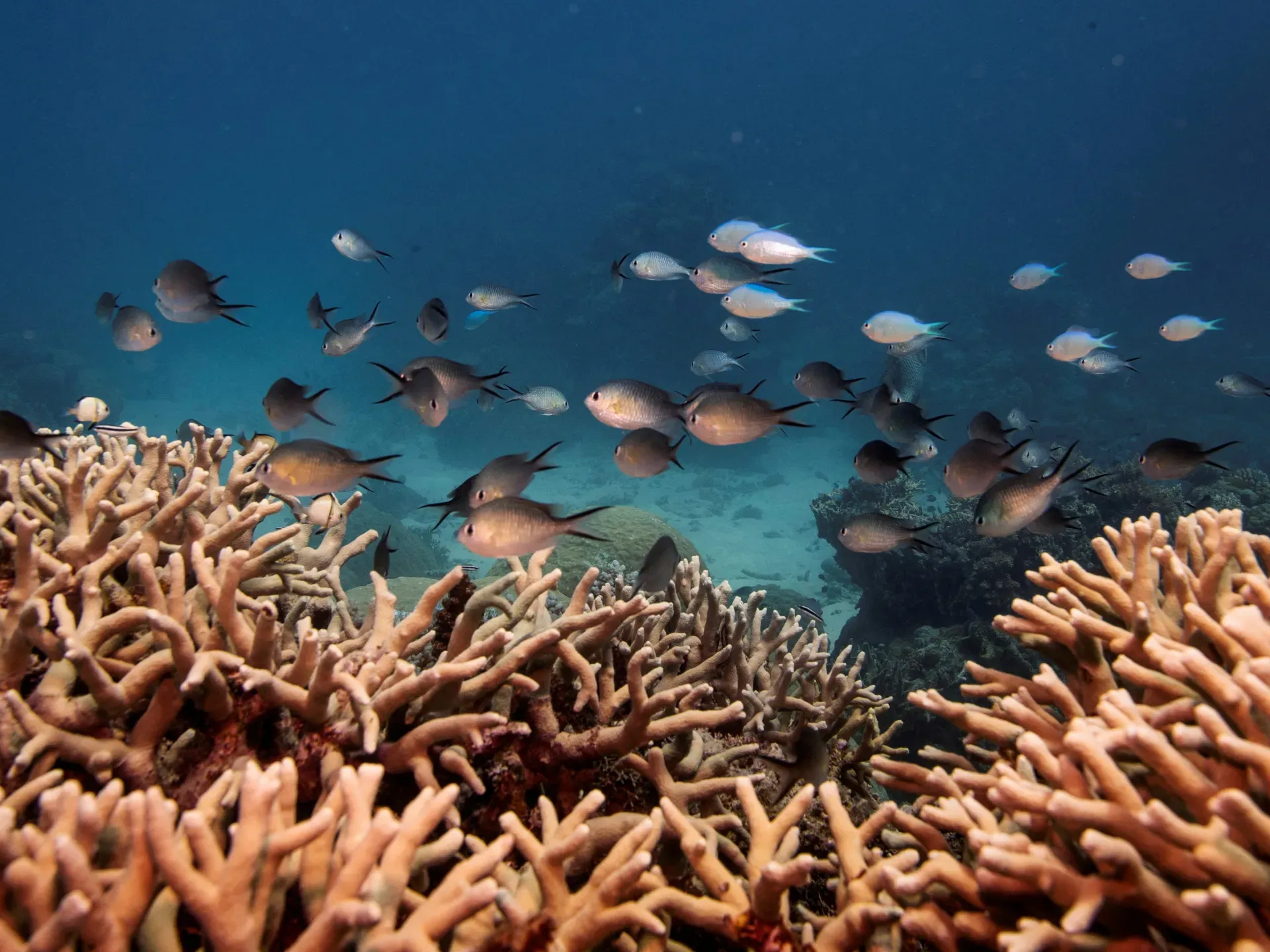
The disappearance of coral reefs would trigger a massive decline in marine biodiversity, as these ecosystems support approximately one-quarter of all marine species. Often referred to as the "rainforests of the sea," coral reefs provide essential habitats for a spectrum of life ranging from microscopic invertebrates to large predatory fish such as grouper.
The loss of these habitats creates a domino effect throughout the marine food web. When a reef collapses and is replaced by algae and rubble, the specialized niches that support diverse species vanish. This loss is reflected in recent scientific findings; for instance, a study published in the journal Nature recently indicated that nearly 44 percent of reef-building coral species are currently facing an elevated risk of extinction due to shifting climatic conditions.
Furthermore, the scale of the damage is already visible in recent data. A year ago, surveys indicated that harmful bleaching had expanded to affect 84 percent of the world's reefs, marking the most intense bleaching event in recorded history. This widespread degradation threatens the very foundation of ocean life.
How do vanishing reefs affect human coastal communities?
The collapse of coral reef systems carries severe socio-economic implications for the billions of people who rely on the ocean for survival. Beyond the biological loss, the degradation of reefs removes essential services that protect and sustain human populations.
Coral reefs serve three primary roles for coastal communities:
- Food Security: Reefs are critical sources of seafood, providing protein and livelihoods for millions of people globally.
- Economic Stability: The tourism industry, which relies heavily on the beauty and biodiversity of reef systems, faces significant decline as reefs degrade.
- Coastal Protection: Healthy reefs act as natural buffers, absorbing wave energy and protecting shorelines from erosion and the impact of intense storms.
As reefs transition into rubble and algae-dominated states, their ability to mitigate storm surges and coastal erosion diminishes. This leaves coastal infrastructure and human settlements increasingly vulnerable to the rising sea levels and more frequent extreme weather events associated with climate change.
Can coral reefs recover from these devastating events?
Despite the grim projections, the IUCN emphasizes that most coral reefs are not yet lost and possess a natural capacity for resilience. Mishal Gudka, the scientific lead of the IUCN Red List of Coral Reef Ecosystems assessment, noted that corals have demonstrated a remarkable ability to bounce back following severe bleaching events.
The survival of these ecosystems depends on identifying and protecting "pockets" of resilient coral. These surviving areas can serve as the biological seeds for future recovery. However, the window for such recovery is narrowing. The IUCN suggests that while the capacity for resilience exists, active intervention and global efforts to mitigate temperature rise are necessary to ensure these pockets can successfully repopulate damaged areas.
The goal for conservationists is to set these resilient ecosystems up for success by reducing local stressors and addressing the overarching threat of global warming, allowing the natural recovery mechanisms of the ocean to function effectively.
Frequently asked questions
What does "critically endangered" mean for coral reefs?
In the context of the IUCN assessment, this is the highest risk category. It indicates that the coral reef systems are facing an extremely high risk of collapse and that total extinction of these ecosystems is a significant possibility within the next 50 years, specifically by 2075.
How does El Niño affect coral health?
El Niño is a natural warming phenomenon that increases ocean temperatures. When a "super" El Niño occurs, it intensifies the thermal stress on corals, leading to more frequent and severe bleaching events, which can prevent corals from recovering between heatwaves and eventually lead to mass mortality.
What happens to a reef when the coral dies?
When hard corals die, the structural complexity of the reef is lost. The ecosystem shifts from a diverse, coral-dominated environment to one dominated by algae, sponges, and coral rubble. This transition destroys the habitats needed by most marine species, leading to a collapse in biodiversity.
Why are coral reefs called the "rainforests of the sea"?
This term refers to the incredible level of biodiversity found within coral reefs. Although they cover a small fraction of the ocean floor, they support roughly 25 percent of all marine species, much like tropical rainforests support a massive proportion of Earth's terrestrial life.
Can coral reefs be saved from extinction?
Recovery is possible because corals have shown an ability to bounce back from bleaching. However, saving them requires protecting resilient coral pockets and addressing the root cause of the threat: human-driven climate change and rising ocean temperatures, to allow natural resilience to work.
Key takeaways
- 96 percent of global coral reef systems are now classified as critically endangered by the IUCN.
- Total extinction of shallow-water coral reefs is a potential risk by the year 2075.
- The assessment is based on a climate scenario projecting a 2.7°C temperature rise by 2100.
- Reef collapse threatens 25 percent of all marine species and vital coastal protections.
- Resilient coral pockets still exist and offer a pathway for potential ecosystem recovery.
Conclusion
The IUCN's 2026 assessment presents a stark warning regarding the future of the world's oceans. With 96 percent of shallow-water coral reefs facing critical endangerment, the window to prevent total ecosystem collapse by 2075 is rapidly closing. The transition from vibrant, biodiverse habitats to algae-dominated rubble not only threatens a quarter of marine life but also endangers the food security and coastal safety of human populations. While the inherent resilience of certain coral species offers a glimmer of hope, large-scale conservation and aggressive climate action remain the only viable paths to preserving these essential marine ecosystems.