
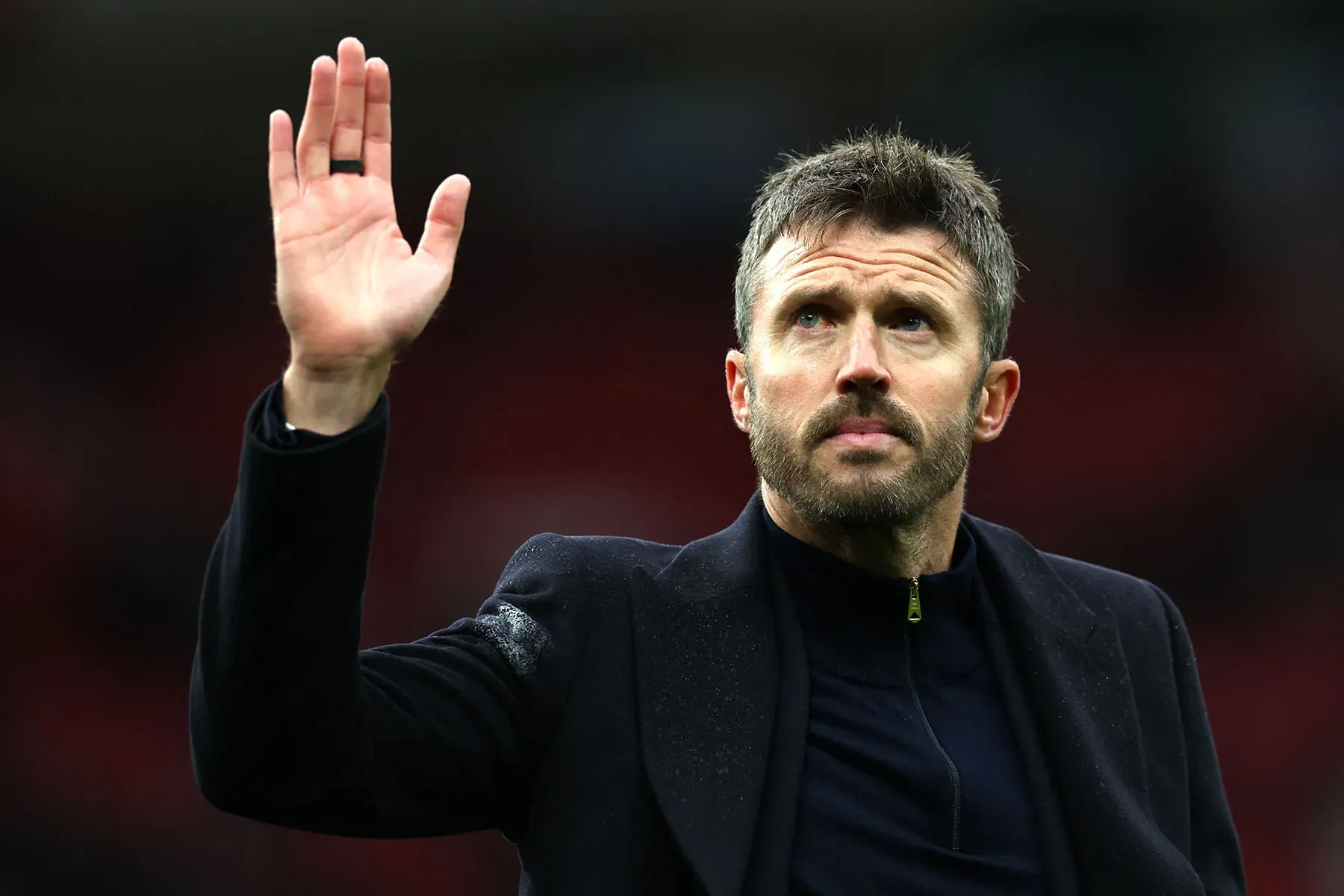
Michael Carrick Manchester United: Is the manager facing dismissal?
Michael Carrick Manchester United manager faces intense scrutiny following a 0-3 home defeat to Bournemouth on October 25, 2026. This loss leaves the 20-time English champions winless in eight Premier League matches and within one point of the relegation zone. Carrick has stated he does not know what his future holds but remains committed to doing what is best for the club. This article examines the fallout from the Bournemouth defeat, the tactical decisions regarding Bruno Fernandes, and the broader crisis at Old Trafford.
October 27, 2026
7 min read
Source: ASHENVOW
Why is Michael Carrick's position at Manchester United under threat?
Michael Carrick's job security has reached a critical point following a heavy 3-0 defeat against Bournemouth at Old Trafford. This result is part of a broader systemic collapse, as the club has failed to secure a victory in eight consecutive Premier League fixtures. The weight of the situation is underscored by Manchester United's current league standing, which has plummeted to just one point above the relegation zone.
The manager's recent comments to Sky Sports reflect a man navigating an uncertain professional landscape. Carrick acknowledged the difficulty of the current circumstances, stating that while he loves his responsibility and the club, the path forward remains unclear. He noted that he would prioritize the interests of Manchester United above his own tenure, though he could not provide a definitive timeline for any potential changes in leadership.
The descent from third place to the relegation battle
The current crisis is particularly jarring when contrasted with the club's performance during the previous campaign. Carrick was officially appointed on a two-year contract in May 2026, following a period as caretaker manager where he successfully guided the team to a third-place finish in the Premier League. That achievement provided a temporary sense of stability, yet the subsequent decline has been rapid and severe.
The gap between the highs of last season and the current struggle to avoid relegation highlights a failure to sustain momentum. Despite the initial optimism surrounding his permanent appointment, the team has been unable to arrest a downward trend that has seen them slide toward the bottom of the table. This volatility has placed immense pressure on both the coaching staff and the squad to find a solution before the season slips further out of reach.
How did the omission of Bruno Fernandes impact the match?
The decision to leave captain and reigning Premier League Player of the Year Bruno Fernandes on the bench was a central point of contention during the Bournemouth match. Carrick opted not to use Fernandes as a substitute, a tactical choice that many observers viewed as a response to recent internal friction. The Portuguese international had previously voiced criticisms regarding the team's tactical approach following a 4-1 loss to Como earlier in the week.
While Carrick maintained that the selection was a "pure football" decision, the refusal to introduce the club's most influential player during a period of tactical struggle has raised questions about squad harmony. The manager defended the choice by stating that certain decisions are made to attempt to change the course of a game, yet the failure to deploy his primary playmaker contributed to the lack of offensive output seen on Sunday.
Internal tensions and tactical disagreements
The tension between the manager and his captain suggests a breakdown in the traditional leadership structure at Old Trafford. When a manager chooses to sideline a player of Fernandes's stature, it often signals either a disciplinary measure or a profound lack of confidence in the player's ability to integrate into the current system. In this instance, the timing—following public criticism of the coaching staff—makes the disciplinary angle difficult to ignore.
This friction is compounded by the fact that United's tactical identity seems to be in flux. If the manager cannot reconcile his vision with the players who are expected to execute it, the technical performance on the pitch will likely continue to suffer. The absence of Fernandes did not just deprive the team of technical skill; it potentially deprived them of the psychological leadership required to navigate a high-pressure match against a side like Bournemouth.
What role has investment played in Manchester United's decline?
Manchester United's inability to arrest its decline has occurred despite recent activity in the transfer market. The club has focused its recruitment efforts on the midfield, adding three players: Youri Tielemans, Andrey Santos, and Carlos Baleba. However, these additions have not translated into the stability or control required to compete at the top end of the Premier League, leaving the team vulnerable to the kind of heavy defeats seen recently.
Carrick has addressed the argument that a lack of investment is to blame for the current run of form. He suggested that while the team needs to improve, the current results do not align with the expectations set by the club's recent progress. He noted that finishing third last season was a significant achievement under the circumstances, implying that the current squad possesses the fundamental components for success, even if they are currently failing to execute them.
The mismatch between spending and performance
The disconnect between the club's transfer spending and its league position is a growing concern for the supporters. While rivals have often outspent United, the specific focus on midfield reinforcements was intended to provide a foundation for a more cohesive playing style. Instead, the team has struggled with defensive transitions and a lack of cohesion that suggests the new signings have yet to find their footing within Carrick's system.
The failure to integrate these players effectively into a winning formula suggests that recruitment alone cannot solve the structural issues at the club. Whether the problem lies in the scouting, the integration process, or the tactical framework provided by the manager remains a subject of intense debate. For United, the focus must shift from merely adding talent to ensuring that the talent present can function as a unified unit under pressure.
How have the supporters responded to the current crisis?
Despite the dismal results on the pitch, the relationship between Michael Carrick and the Manchester United fanbase has shown signs of resilience. Following the loss to Bournemouth, supporters largely directed their frustration toward the players rather than the manager. As Carrick exited the field at full-time, he received significant support from the crowd, a dynamic that he described as having "mixed emotions about."
Carrick expressed a need to digest the support he received, acknowledging that while the fans are standing by him, the reality of the team's performance remains unacceptable. He admitted that the squad has "not been good enough," a sentiment that resonates with a fanbase that is increasingly weary of the club's recent instability. The distinction between the supporters' loyalty to the manager and their anger at the team's performance creates a complex atmosphere at Old Trafford.
The psychological impact of fan support
The continued support for Carrick provides him with a temporary shield, but it is a shield that may not last if the results do not improve. In modern football, the gap between fan sentiment and board-level decision-making can be narrow. While the supporters may be willing to give the manager more time to implement his vision, the club's proximity to the relegation zone makes the situation increasingly untenable for the hierarchy.
For Carrick, this support is a double-edged sword. It provides the emotional capital to continue working, but it also heightens the stakes of his next few matches. If the team fails to find a way to win, the pressure from the fans will eventually shift from the players to the dugout, potentially turning the current atmosphere of support into one of intense demand for change.
FAQ: Michael Carrick Manchester United
Is Michael Carrick being sacked?
Michael Carrick has not confirmed any plans regarding his dismissal. Following the loss to Bournemouth, he stated that he does not know what is next and is simply carrying on as normal, though he acknowledges the difficulty of the current situation and the pressure on the club.
Why did Manchester United lose to Bournemouth?
Manchester United suffered a 0-3 defeat at home, a result that left them winless in eight Premier League matches. The loss was characterized by poor performance and tactical decisions, including the omission of captain Bruno Fernandes from the starting lineup and the substitute bench.
What is Manchester United's current league position?
Following the defeat to Bournemouth, Manchester United has slipped significantly down the table. The club is currently sitting just one point above the relegation zone, marking a severe decline from their third-place finish in the previous Premier League season.
Who are the new midfield signings at Manchester United?
To bolster the squad, Manchester United has recently added three midfielders: Youri Tielemans, Andrey Santos, and Carlos Baleba. Despite these additions, the team has struggled to find consistency and has been unable to arrest their recent run of poor results.
How did Bruno Fernandes react to his benching?
While the source does not detail Fernandes's direct reaction to being left out, it notes that he had previously criticized the team's tactics. His absence from the match was widely viewed as a potential disciplinary response to his recent comments regarding the manager's tactical approach.
Key takeaways
- Michael Carrick remains uncertain about his future following a 0-3 loss to Bournemouth.
- Manchester United is currently winless in eight Premier League matches.
- The club has fallen to within one point of the relegation zone.
- Captain Bruno Fernandes was omitted from the matchday squad entirely.
- Recent midfield signings include Tielemans, Santos, and Baleba.
Conclusion
The situation at Manchester United has reached a critical juncture where tactical decisions, player management, and league standings are all converging on Michael Carrick's future. The 0-3 defeat to Bournemouth serves as a stark reminder of the club's rapid descent from a third-place finish to the brink of the relegation zone. While Carrick maintains a professional stance and enjoys the support of the fans, the lack of on-field progress and the visible tension with key players like Bruno Fernandes suggest that the current trajectory is unsustainable. The coming weeks will likely determine whether the club can find stability or if a change in leadership becomes inevitable.