Hogwarts Legacy DLSS 5 update: Better visuals and speed
The Hogwarts Legacy DLSS 5 update is scheduled for release on November 5, 2026, bringing significant technical refinements to the title. This update addresses two primary concerns: the heavy performance overhead and the visual distortions affecting character models. According to Nvidia, the new DLSS 5 model features 118 million parameters, representing a 24% reduction in size compared to previous versions. This optimization aims to halve the GPU impact and reduce 4K VRAM usage by 20%. This article examines the technical improvements, the impact on character rendering, and the broader implications for Nvidia's neural rendering technology.
October 19, 2026
6 min read
Source: ASHENVOW
How does the new DLSS 5 model improve performance?
The upcoming DLSS 5 model provides a substantial reduction in the computational burden placed on GPUs. Previously, users experienced significant frame rate drops when enabling the feature, a trend notably observed in titles like NBA2K27. While Nvidia originally projected a 60% performance hit for that title, the new model is expected to reduce that overhead to approximately 30%.
This efficiency gain is driven by a more streamlined architecture. Nvidia has refined the training data and reduced the model size to roughly 118 million parameters, which is about 24% smaller than the September version. These architectural changes lead to several measurable benefits for high-end gaming setups:
- GPU Overhead: The impact on the graphics processor is expected to be half of what was seen in the September release.
- VRAM Efficiency: There is a projected 20% reduction in VRAM usage when running at 4K resolution.
- Parameter Reduction: The model uses 118 million parameters to achieve its results, making it more lightweight.
For games like NBA2K27, where the camera often remains zoomed out to capture the top third of the court, a 30% performance hit is considered a much more acceptable trade-off than the previous 60% loss. This shift suggests that Nvidia is prioritizing the balance between visual fidelity and playable frame rates.
Why were character models a major issue for DLSS 5?
The initial rollout of DLSS 5 faced significant criticism regarding its effect on human character models. During the technology's reveal in March 2026, visual artifacts and unintended aesthetic changes became a focal point for the PC gaming community. A prominent example cited by critics was the "yassified" appearance of the character Grace, which became a symbol of the technology's tendency to apply an unwanted "AI beauty filter" to faces.
This visual inconsistency created a divide between the intended environmental enhancements and the actual rendering of characters. Because DLSS 5 uses neural rendering to reconstruct frames, it can occasionally misinterpret facial textures, leading to a look that feels artificial or overly smoothed. This negative publicity has clearly influenced how subsequent developers implement the technology.
The shift in developer implementation
Following the backlash, developers have appears to be taking a more cautious approach to how the neural rendering affects human subjects. Rather than applying the full weight of the AI reconstruction to every pixel, there is a noticeable trend toward masking off character faces or limiting the intensity of the effect on skin textures. This ensures that while the environment benefits from the lighting and material improvements, the characters remain recognizable and grounded in the game's original art style.
What changes can players expect in the Hogwarts Legacy update?
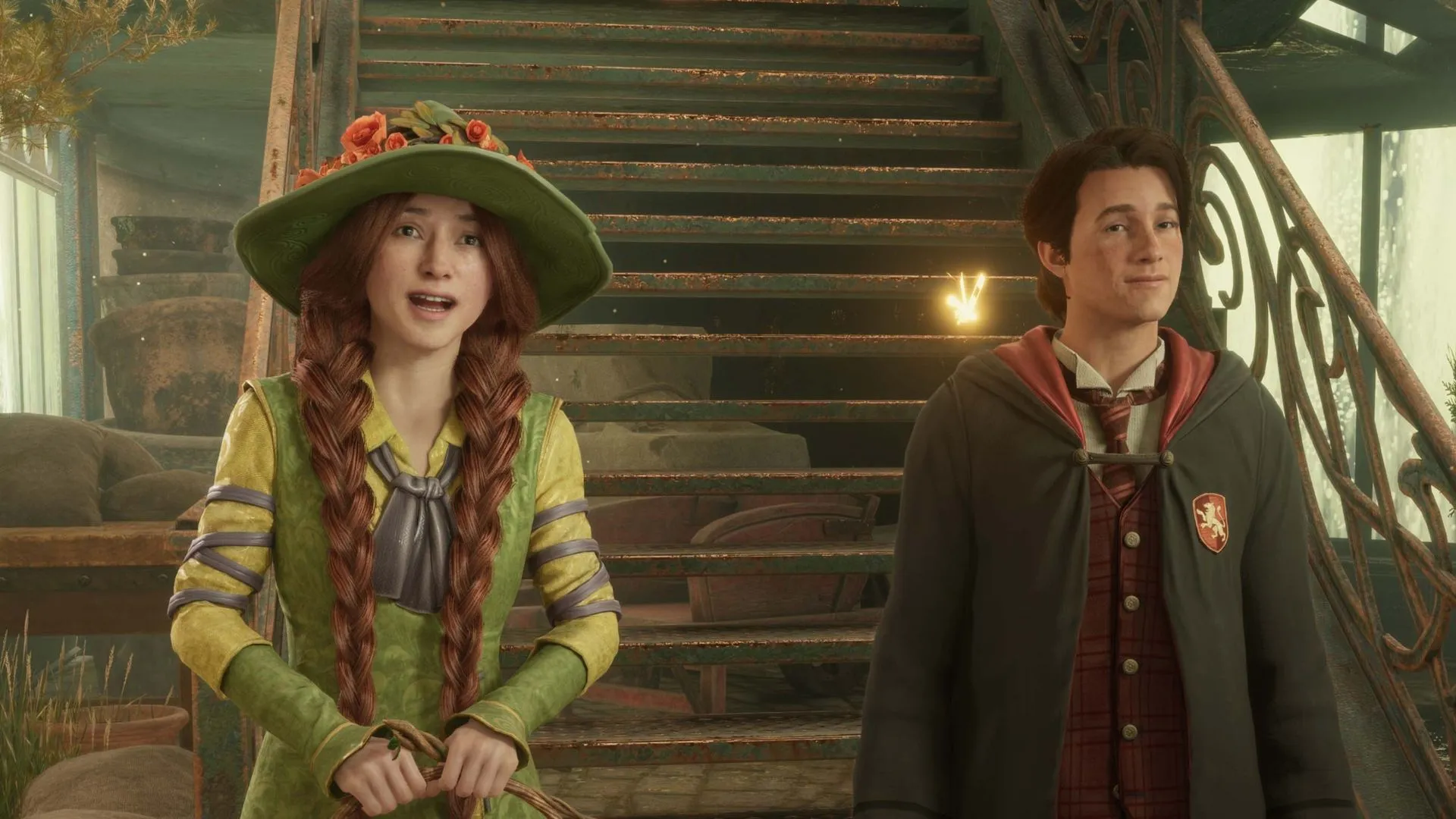
The Hogwarts Legacy DLSS 5 update, arriving November 5, focuses heavily on environmental ambience and material fidelity rather than character modification. Side-by-side comparisons provided by Nvidia suggest that the developers have successfully addressed the previous issues with character distortion. In the new implementation, character features remain unchanged even when the DLSS 5 slider is adjusted.
The primary benefits of the update are concentrated in the following areas:
- Environmental Lighting: Enhanced realism in how light interacts with the magical atmosphere of the wizarding world.
- Material Fidelity: Improved rendering of textures such as stone, wood, and fabric.
- Visual Stability: A significant reduction in the "night and day" difference between DLSS on and off that was seen in earlier versions.
By pulling back the intensity of the neural rendering on characters, the developers have ensured that the "glow up" applies to the world itself, providing a more immersive experience without the risk of distorting the player's connection to the characters.
How does this update fit into the broader DLSS 5 rollout?
Hogwarts Legacy is one of the first major titles to receive a dedicated DLSS 5 update following the initial wave of criticism. While other games revealed during the March announcement, such as Resident Evil Requiem, have not yet released their updates, the success of the Hogwarts implementation may set a precedent. The technology is moving from a phase of raw power and potential visual errors to a phase of refinement and stability.
Another title, the action RPG Where Winds Meet, is also expected to receive a Neural Rendering update in the "near future." Early indications suggest that Where Winds Meet will follow a similar path to Hogwarts Legacy, focusing its DLSS 5 impact on the environment to avoid the character modeling pitfalls that plagued earlier releases. This indicates a broader industry trend where developers are learning to use AI to enhance scenery while protecting the integrity of character assets.
What is the current sentiment among PC gamers?
Despite the technical improvements, consumer interest remains cautious. A recent poll conducted by PC Gamer revealed significant hesitation among the community regarding the adoption of DLSS 5. The results showed that 65% of respondents were simply not interested in trying the technology, while another 17% are waiting for more official releases and proven stability before committing.
The skepticism stems from both the performance costs and the visual unpredictability seen in early adopters. While enthusiasts and modders have been exploring the capabilities of the technology, the mainstream audience remains unconvinced. The upcoming Hogwarts Legacy update will serve as a critical test case: if the performance is stable and the visual artifacts are truly resolved, it may begin to shift the 17% of users who are currently waiting for more evidence.
Key takeaways
- The Hogwarts Legacy DLSS 5 update launches on November 5, 2026.
- Nvidia has reduced the DLSS 5 model size to 118 million parameters, a 24% reduction.
- New optimizations aim to reduce 4K VRAM usage by 20% and halve GPU overhead.
- Developers are now masking character faces to prevent the "AI beauty filter" effect.
- Performance hits for features like those in NBA2K27 are expected to drop from 60% to 30%.
FAQ: DLSS 5 and Hogwarts Legacy
When is the Hogwarts Legacy DLSS 5 update arriving?
The update is scheduled to be released on November 5, 2026. It is intended to provide improved environmental lighting and more stable performance for players using Nvidia's latest neural rendering technology.
How much better is the new DLSS 5 model?
The new model is significantly more efficient, featuring 118 million parameters. This 24% reduction in size helps lower the GPU performance hit and reduces 4K VRAM usage by approximately 20% compared to the September version.
Will DLSS 5 still distort character faces?
In the Hogwarts Legacy update, character faces should remain unchanged. Developers have adjusted the implementation to focus the neural rendering on environmental lighting and materials, effectively avoiding the facial distortions seen in earlier DLSS 5 demonstrations.
Why was there criticism of DLSS 5 initially?
Initial criticism focused on two areas: a massive performance overhead that could drop frame rates by up to 60%, and visual artifacts that applied an unintended "beauty filter" to character models, making them look artificial.
Which other games are getting DLSS 5 support?
While Resident Evil Requiem has not yet updated, the action RPG Where Winds Meet is confirmed to receive a Neural Rendering update in the near future, likely focusing on environmental improvements similar to Hogwarts Legacy.
Conclusion
The evolution of DLSS 5 represents a pivotal moment for Nvidia's neural rendering strategy. By shifting focus from pure scaling to a more refined, lightweight model, Nvidia is addressing the two most significant barriers to adoption: performance costs and visual inconsistency. The Hogwarts Legacy update serves as a crucial proof of concept, demonstrating that AI-driven enhancements can enrich a game's atmosphere without compromising character integrity. As developers move toward more surgical applications of these tools, the technology is likely to become a standard, stable component of the PC gaming experience rather than a controversial experimental feature.