
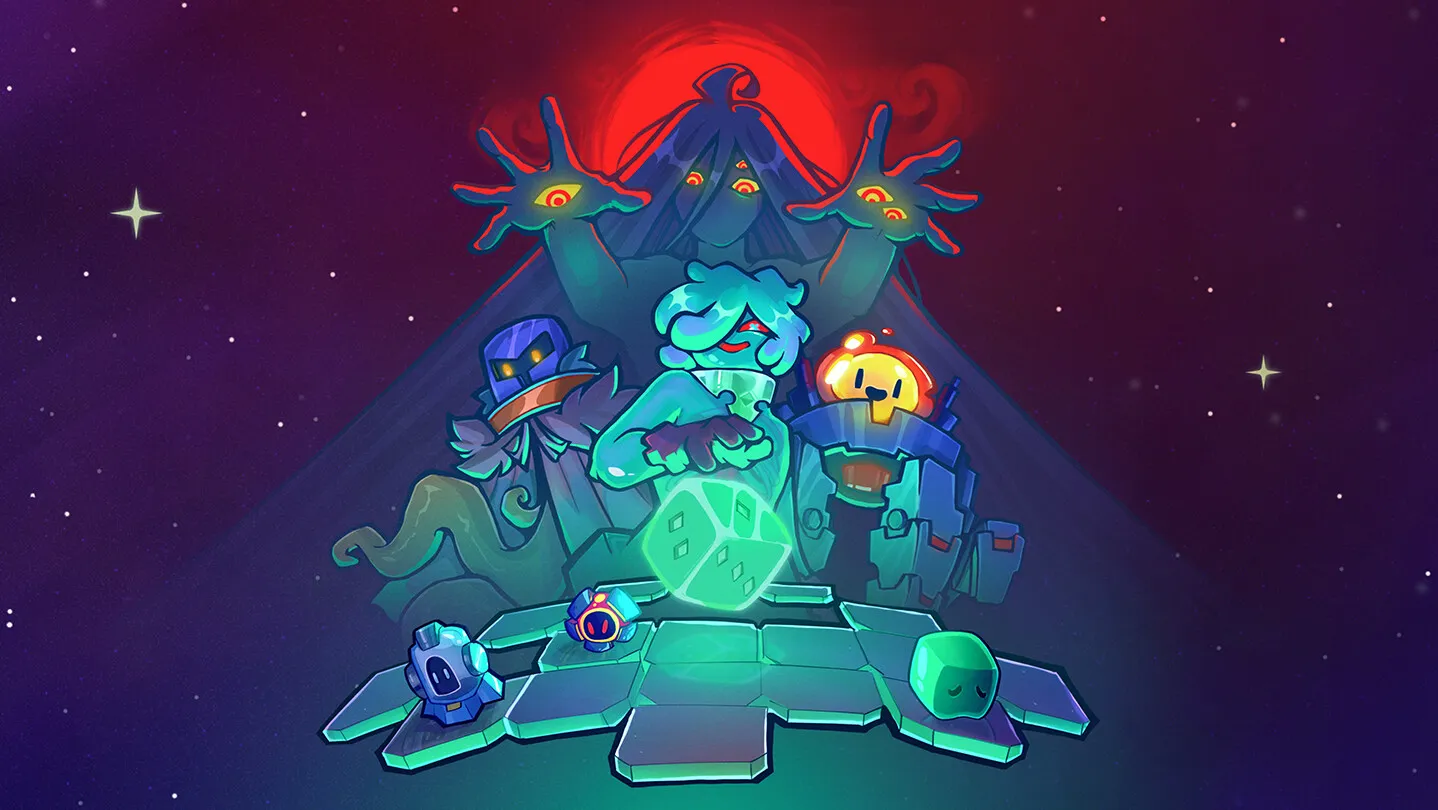
How does the Dicevaders gameplay loop function?
The core loop of Dicevaders revolves around a grid-based system where players act as the captain of an alien invasion force. The primary objective is to reach a predetermined target damage number within a four-turn window to successfully trigger an invasion. Failing to meet this threshold results in a loss of health during subsequent turns, eventually leading to a game over.
The mechanics rely on three dice rolls that correspond to specific columns on a grid. Players draft various units into these columns, and the outcome of the dice roll determines which units are activated. When a unit is activated, its base strength stat is calculated; however, the dice roll also acts as a multiplier. For instance, if a player rolls a six, the unit in that column scores its basic strength, whereas a roll of three might provide a different multiplier depending on the specific dice configuration. This system creates a constant tension between the units drafted and the unpredictability of the dice.
The role of multipliers and columns
In Dicevaders, the relationship between the dice value and the column position is critical. A single die roll of a specific number acts as a multiplier for the units placed in that corresponding column. For example, if a player rolls a pair of threes, the units in the third column receive a 2x multiplier to their strength. This mathematical layer transforms a simple placement game into a complex optimization puzzle where players must predict or manipulate the dice to maximize their scoring potential.
What are the key resource management mechanics?
Dicevaders distinguishes itself from many other roguelikes by offering significant player agency through finite but rechargeable resources. While luck plays a role, the game provides tools to mitigate bad rolls, making the experience feel more like a tactical decision-making exercise than a game of pure chance.
Two primary currencies allow players to manipulate the dice: 'Budge' and 'Chrono'. Budge points can be spent to shift a dice roll up or down by one increment per turn. This means a roll of four can be adjusted to a three or a five, allowing players to align their dice with the units they have positioned on the grid. Chrono, on the other hand, allows for a complete re-roll of the dice. Because these resources are finite, players must decide when it is worth spending them to save a run or when to accept the outcome.
Between turns, players receive cash to invest in new units, artifacts, or additional currency. A helpful feature for budgeting is the ability to 'freeze' an item, allowing a player to secure a purchase for the next turn if they currently lack the necessary funds. This layer of economic management ensures that players are constantly weighing immediate survival against long-term scaling.
How do unit abilities and synergies drive strategy?
The strategic depth of Dicevaders is found in the diverse abilities and synergies available among the various units. Units are not merely static numbers; they possess specific traits that can drastically alter the scoring potential of a turn if positioned correctly on the grid.
Some units feature movement or conditional activation. For example, certain units can teleport across the grid between turns, while others might only trigger a triple attack if they are placed specifically on the bottom row. Other units act as catalysts, randomly activating nearby units to add their strength to the total score. This variety forces players to move away from a single, repetitive strategy and instead adapt to the specific units and artifacts they acquire during a run.
Advanced tactics: Sacrificing and Swarming
Players can employ high-level tactics to optimize their grid. One such method is the ability to sacrifice a single unit between turns to transfer its entire strength stat to another unit. This allows for the creation of "super-units" that can carry a run. Another powerful strategy involves the use of 'Swarmers'—units that share a single, massive strength stat with all adjacent units of the same type. This creates a buffer against bad dice rolls, as a wide range of numbers (such as 3, 4, or 5) might trigger the swarm, ensuring a consistent baseline of damage.
How does Dicevaders compare to other roguelike titles?
Dicevaders shares some aesthetic and thematic DNA with the previous title Starvaders, which featured a more shooter-oriented approach to the roguelike deckbuilder genre. However, Dicevaders shifts the focus almost entirely toward mathematical optimization and grid management, using the alien invasion theme as a stylized skin for a deep numbers-based strategy game.
While some may compare it to recent massive hits like Balatro, Dicevaders offers a different kind of complexity. It does not necessarily attempt to reinvent the genre, but rather focuses on the "sweet spot" of roguelike design: providing high-level synergies and a sense of control that prevents the player from feeling like they are simply wasting time. The game is designed to be self-teaching, guiding players through tutorials that eventually lead to scores in the millions, though the full depth of its mathematical interactions remains a subject of discovery even for experienced players.
FAQ: Dicevaders
What is the main goal in Dicevaders?
The primary objective is to reach a specific target damage number within four turns. Successfully hitting this number triggers an alien invasion, whereas failing to meet the target causes the player to lose health each turn until the game ends.
How can I change my dice rolls?
Players can use two specific resources to influence luck. 'Budge' allows you to move a die roll up or down by one value, while 'Chrono' allows you to perform a completely new re-roll of all three dice.
Can I save items for later turns?
Yes, the game includes a freeze mechanic. If you do not have enough cash to purchase a unit or artifact immediately, you can freeze the item to ensure it is available for purchase on your next turn.
How do unit abilities work?
Units have more than just strength stats; they possess unique traits. These can include teleporting across the grid, attacking multiple times based on their row position, or activating neighboring units to boost the total score.
Is there a way to boost a single unit's power?
Players can sacrifice one unit between turns to transfer its strength stat to another unit. This allows you to concentrate your resources into a single, highly powerful unit to maximize scoring potential.
Key takeaways
- Dicevaders is a grid-based roguelike deckbuilder focused on reaching damage targets through dice rolls.
- Players use 'Budge' and 'Chrono' resources to manipulate dice outcomes and mitigate bad luck.
- Unit synergies, such as Swarmers and sacrificial stat transfers, are essential for high-level play.
- The game emphasizes strategic resource management over pure chance to ensure player agency.
Conclusion
Dicevaders succeeds by providing a robust framework where mathematical strategy outweighs mere luck. By integrating deep resource management with complex unit synergies, it offers a rewarding experience that avoids the frustrations of typical RNG-heavy roguelikes. While it may not feel entirely revolutionary compared to recent genre leaders, its ability to teach players complex scaling through intuitive gameplay makes it a compelling title for fans of deckbuilders. The game strikes a balance between chaos and control, ensuring that every successful invasion feels earned through careful planning and tactical execution.


