Mastering Crusader Kings 3 political strategy and chaos
In this deep dive, we explore the intricate layers of Crusader Kings 3 political strategy required to topple a powerful monarch. Removing an entrenched ruler is never a simple task, requiring a delicate balance of long-term planning and immediate tactical response. Players must navigate the treacherous waters of high-stakes diplomacy while simultaneously preparing for the inevitable outbreak of large-scale warfare. Whether you are building secret alliances or managing the sudden chaos of unexpected plagues, success depends on your ability to adapt to a constantly shifting medieval landscape.
October 19, 2026
5 min read
Source: ASHENVOW
How do you create a senile ruler in Crusader Kings 3?
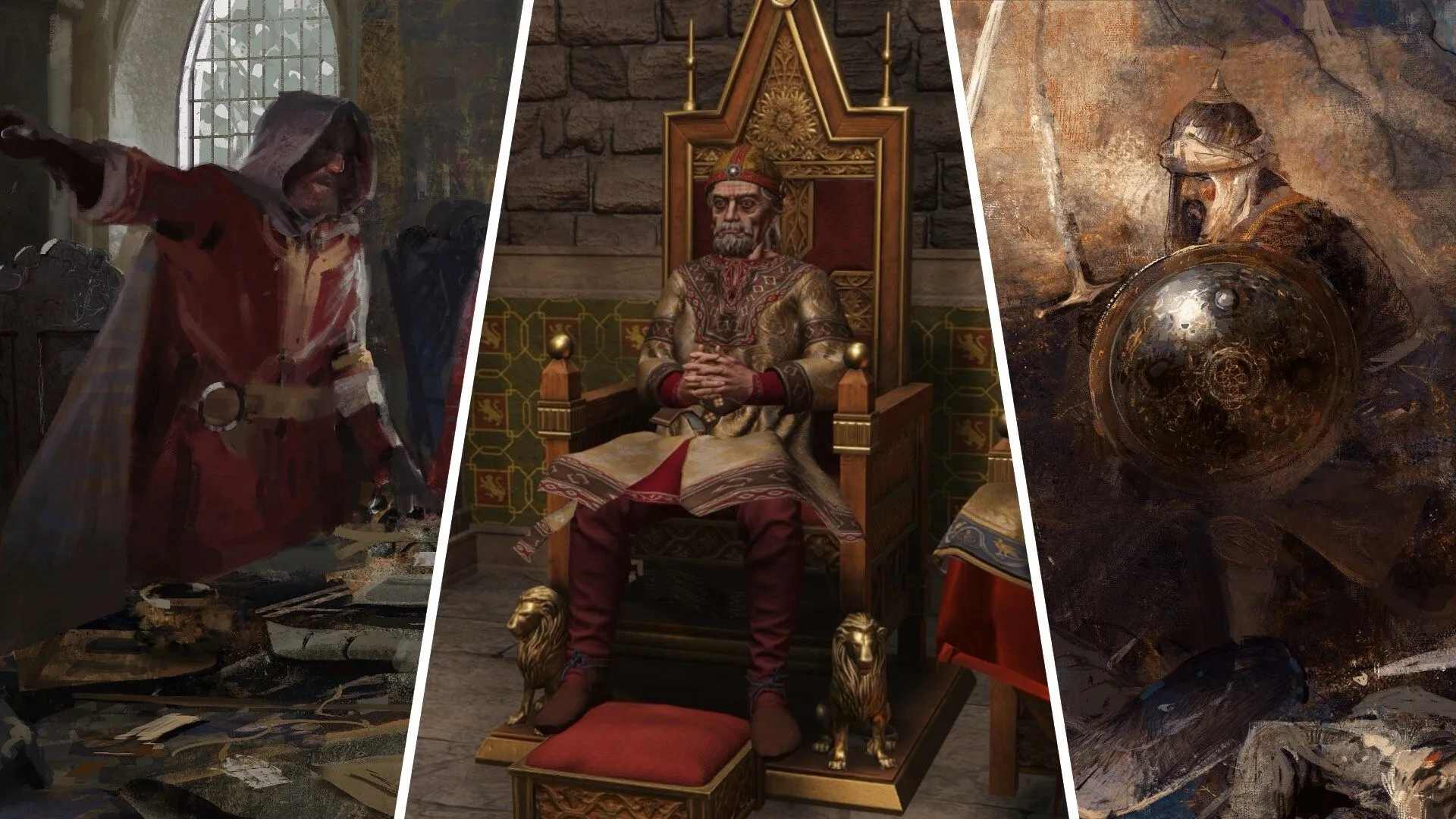
To test the limits of political removal, players can begin by designing a custom character specifically tailored for instability. In this simulation, an 80-year-old ruler named Wenzel was created to serve as the target. The core personality trait assigned was 'lunatic,' placing him in control of the Holy Roman Empire. This setup creates a figure who is inherently difficult to manage and prone to unpredictable behavior.
As the simulation progresses, the ruler accumulates additional negative traits that further complicate the political landscape. These include 'superstition,' 'irritability,' and a 'withering mind.' Such traits are not merely cosmetic; they actively reduce the likelihood of voluntary power sharing or clear succession planning. When a leader is both ancient and deranged, the traditional paths to power—such as being named an heir—become significantly more obscured by the ruler's own mental state and religious preoccupations.
What diplomatic options exist to gain influence?
The primary bloodless path to power involves a combination of flattery, gift-giving, and strategic networking. To build a foundation for a coup or succession, a player must ply the target ruler with gifts to improve their opinion. This serves a dual purpose: it increases the chances of being named a co-ruler and decreases the odds that the ruler's children will redistribute the player's lands upon the ruler's death.
However, influence must extend beyond the sovereign. The strategy involves penning fawning letters to the realm's most powerful vassals—using titles like 'most munificent worshipfulness'—and doling out whatever limited gifts are available to sway them. The goal is to build a coalition of support that can back the player's nomination as the next heir. Success in these schemes depends heavily on the ruler’s existing opinion of the player and the presence of competing heirs who might otherwise seize the opportunity to consolidate power for themselves.
Why do these efforts often stall?
Even when diplomatic efforts seem to be working, they frequently hit a stalemate. In this scenario, while the player successfully garnered favor with influential figures, none were inclined to support a formal transition of power. The ruler, Wenzel, became increasingly distracted by religious superstition, a modifier acquired during the simulation that diverted his attention away from matters of state and succession.
Furthermore, external pressures can derail even the most carefully constructed schemes. The constant influx of letters from the Pope and the inherent instability of the Holy Roman Empire mean that a player's focus is often pulled in multiple directions. Being 'nice' through flattery and gifts may build opinion, but it does not necessarily translate into the political leverage required to force a change in leadership when the sovereign is preoccupied with their own delusions or religious fervor.
Can war or alliances remove the ruler?
When diplomacy fails, the player must turn to military force. However, the numerical disparity in Crusader Kings 3 often makes a direct confrontation suicidal. In this simulation, the ruler commanded an army of 7,000 men, while the player's forces totaled only 1,400. To bridge this gap, the player must secure powerful allies through marriage or political schemes.
One such attempt involved targeting a powerful Tuscan duchess named Matilda. The plan was to leverage her significant military strength to challenge the Emperor. This required navigating complex personal obstacles, such as the player's existing marriage. While marriage is a potent tool for creating alliances, it is also a volatile one; the survival and cooperation of the ally are never guaranteed. In the high-stakes environment of the HRE, an unsanctioned war or a sudden shift in an ally's priorities can quickly derail a long-planned military takeover.
How do disease mechanics affect the plan?
Unforeseen biological crises can completely derail political ambitions. In this instance, the ruler's actions triggered a plague known as 'Wenzel's Cough.' This disease tore through the player's counties and decimated their entire family, including the player's wife, daughters, and sons. The chaos of a plague transforms a political struggle into a desperate fight for survival.
Managing a plague involves isolating the capital and seeking medical intervention. In one extreme instance, a physician's treatment involved being locked in a room with a trillion bees, which unexpectedly provided relief from the symptoms of consumption. While such treatments might remove the 'Dying' warning and allow a player to return to politics, the human cost is often high. The loss of family members and the sheer administrative burden of a dying population can leave a player too distracted to pursue the original goal of deposing the ruler.
Frequently asked questions
Does Crusader Kings 3 accurately model real elections?
The game uses medieval succession systems that differ from modern democratic ballots. Elective succession and council influence replace direct voting, so the mechanics cannot be mapped one-to-one onto contemporary political processes.
Can a player force a ruler to abdicate?
There is no single 'abdicate' button. Instead, players must build influence through opinion, hooks, and navigating complex succession laws. These efforts are frequently interrupted by random events like plagues or sudden changes in the ruler's health.
What happens when the player character dies?
Control passes to a surviving heir. If the player's primary goal was to remove a specific ruler, that goal ends, and the player must restart the political struggle under the new character.
Are plagues started by rulers a normal feature?
While standard disease mechanics usually spread through trade or random chance, the simulation described a scenario where a ruler-linked event directly contributed to the spread of a plague within their own domains.
Is marriage a reliable path to power?
Marriage is a strategic tool for securing military alliances, but its reliability is limited. An ally's death, a change in their political alignment, or their involvement in independent wars can break the alliance at a critical moment.
Key takeaways
- Customization: Creating a ruler with specific negative traits like 'lunatic' or 'superstition' can simulate the challenges of dealing with an unstable leader.
- Diplomacy Limits: While gifts and flattery increase opinion, they do not guarantee a successful succession or the appointment of a co-ruler.
- Military Disparity: Overcoming a much larger army requires the careful cultivation of alliances, often through strategic marriages.
- Biological Interference: Disease mechanics, such as a ruler-triggered plague, can shift the gameplay focus from political maneuvering to basic survival.
- Systemic Constraints: The combination of aging, mental instability, and random health events creates a highly unpredictable environment for political change.
Conclusion
The Crusader Kings 3 simulation demonstrates that removing an entrenched leader is an exercise in managing compounding variables. Whether through the slow grind of diplomacy, the high risk of military alliance, or the sudden chaos of a plague, the player is constantly fighting against the game's inherent systems. The difficulty of navigating these layers—succession, opinion, and health—highlights the complex, often frustrating reality of attempting to steer the course of a medieval empire.