
Bantu expansion: How ancient migrations reshaped Africa
The Bantu expansion was a massive human migration that fundamentally transformed the demography, language, and technology of sub-Saharan Africa. Starting between 6,000 and 4,000 years ago, Bantu-speaking groups moved from West Africa across the continent, introducing sedentary farming, metalworking, and pottery. Today, approximately 350 million people speak one of roughly 500 Bantu languages, and millions more carry Bantu ancestry in their DNA. This movement replaced or integrated with existing hunter-gatherer communities, leaving a lasting legacy in the continent's genetic and cultural landscape.
November 10, 2026
4 min read
Source: ASHENVOW
Technological sophistication in the wake of migration
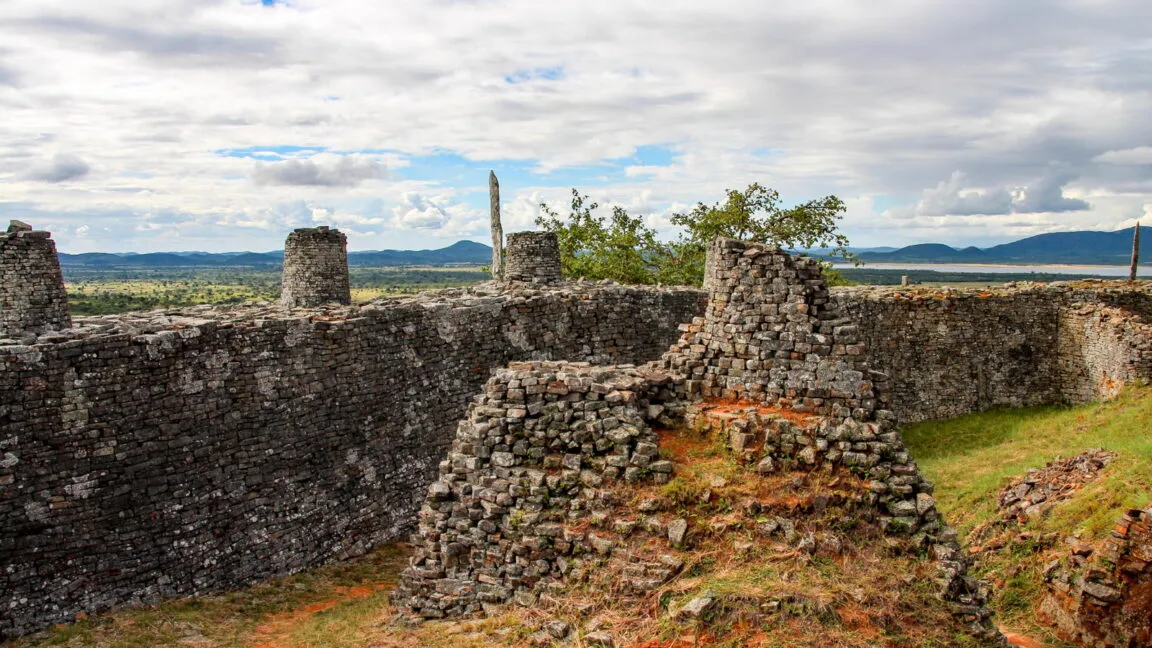
The legacy of the Bantu expansion is visible in the advanced metallurgical skills found in ancient African kingdoms, such as Great Zimbabwe. Between 1000 and 1700 AD, this southern African capital served as the center of a thriving kingdom built by Bantu-speaking peoples who had migrated from West Africa. Archaeologists have uncovered evidence of highly specialized iron production near the city's stone ruins, demonstrating a level of technological mastery that supported large-scale sedentary societies.
At sites like Mashava, located 25 miles northwest of the ruins, researchers have identified clusters of iron-smelting furnaces. These structures were not merely primitive pits but sophisticated engineering feats designed for efficiency and high-temperature output.
Advanced natural-draft smelting techniques
According to archaeometallurgist Ezekiel Mtetwa of Chicago’s Field Museum of Natural History, the design of these furnaces indicates intensive and technologically sophisticated iron production. Unlike many contemporary methods that required constant human labor to pump bellows and force air into the fire, these furnaces utilized natural-draft technology. They were designed to suck air in and expel it through a chimney, maintaining the heat necessary to exceed 2,100° Fahrenheit. This efficiency allowed for the mass production of essential tools, including:
- Iron hoes for advanced agriculture
- Axes for clearing land and woodworking
- Arrowheads for hunting and defense
This ability to produce metal tools facilitated the transition from hunter-gatherer lifestyles to the stable, farming-based societies that characterize much of the Bantu-influenced regions.
Linguistic and archaeological evidence of movement
Linguists and archaeologists have long used the striking similarities between African languages to trace the origins of the Bantu people. The term "Bantu" itself is the plural of "muntu," meaning "human being" in many of these tongues. The linguistic connections are so profound that historical accounts suggest early explorers could communicate between West-central and Southeastern Africa due to these shared roots. Researchers believe the greatest linguistic diversity exists in West Africa, which serves as the likely point of origin for the expansion.
Archaeological findings have provided a physical map that mirrors these linguistic patterns. Across eastern and southern Africa, researchers have identified a "north-to-south progression" in the appearance of specific cultural markers. These markers include:
| Cultural Marker | Description |
|---|---|
| Pottery Styles | Diverse yet similar ceramic patterns found across vast distances. |
| Sedentary Life | Evidence of permanent village structures replacing nomadic patterns. |
| Agriculture | Introduction of Western African crops and domesticated animals. |
| Metalworking | Traces of iron-smelting and tool production. |
Archaeological scientist Shadreck Chirikure of the University of Oxford notes that the chronological sequence of these sites—with northern sites dating earlier than southern ones—confirms this directional spread.
Genetic confirmation of a single expanding population
While some scholars once argued that Bantu culture might have spread through the exchange of ideas rather than the movement of people, modern genetic analysis has largely settled the debate. By studying the DNA of diverse populations, scientists can distinguish between cultural diffusion and actual human migration. The genetic data shows a clear pattern of a single group moving from a central point and diversifying as they settled new territories.
A 2009 study involving the genetic analysis of 2,432 Africans revealed that Bantu-speaking populations in western, central, and southern Africa are significantly more closely related than their geographic distances would suggest. This relationship was further reinforced by a 2024 study that examined the genomes of 1,763 Africans. This more recent research found that genetic diversity is highest among Bantu speakers in West Africa and steadily declines as the distance from that region increases.
"This is a typical signature of a population expanding from one place to another," stated Carina Schlebusch, a geneticist at Uppsala University in Sweden. This genetic "bottleneck" effect—where diversity decreases as a small group branches off to settle new areas—provides biological proof of the massive migratory wave that reshaped sub-Saharan demography.
Tracing the ancestral homeland and migration routes
Despite the strength of linguistic and genetic data, pinpointing the exact archaeological "ground zero" remains a complex task. Current evidence points toward the Grassfields region of Cameroon as the likely Bantu homeland. At the Shum Laka rock shelter, archaeologists have found pottery fragments dating from 7,000 to 6,000 years ago, which become more abundant between 5,000 and 4,000 years ago. While these ceramics are a possible trace of Bantu ancestors, they are not yet considered conclusive proof.
As the migration moved south, the Congo rainforest became a major corridor. Between 2010 and 2023, archaeologist Alexandre Livingstone Smith of Belgium’s Royal Museum for Central Africa conducted expeditions along the Congo River to find evidence of these early settlers. His findings included pottery shards that match styles found further west, dating back 2,000 to 2,300 years.
These shards are interpreted by many experts as evidence of ceramic traditions being carried by Bantu-speaking people as they navigated the dense forest environments. This movement through the Congo represents a critical phase in the expansion, bridging the gap between the West African origins and the eventual settlement of the southern reaches of the continent.