AI vibe coders: Why Alliance Arts cancelled its Steam demo
The developer Alliance Arts has cancelled the scheduled public Steam demo for its upcoming title, Drunken Goddess Reflux, citing fears regarding AI vibe coders. The studio originally planned to release the demo on October 19, 2026, but shifted to closed online play sessions for a limited number of participants instead. This decision stems from concerns that AI-driven tools could be used to rapidly replicate the game's unique presentation and mechanics. This article examines the specific reasons behind the cancellation, the mechanics of the game in question, and the broader threat of AI-assisted game cloning in the indie sector.
October 19, 2026
5 min read
Source: ASHENVOW
Why did Alliance Arts cancel the Drunken Goddess Reflux demo?
Alliance Arts decided to cancel the public Steam demo for Drunken Goddess Reflux primarily to protect the intellectual property and unique gameplay loop of the title from rapid AI-driven replication. The developer expressed specific concerns that the demo's content could be exploited by "AI vibe coders" to imitate or replicate the game's presentation and mechanics before the official launch. By moving to closed online play sessions, the studio aims to maintain a level of control that a public release would not allow.
In addition to the threat of cloning, the studio noted difficulties in managing the distribution of the game's content. The planned demo included specific restrictions on posting and streaming gameplay videos, which Alliance Arts determined would be too difficult to monitor and enforce effectively in a public setting. The shift to limited, private sessions allows the developer to gather feedback without the risk of widespread, unmanaged content leaks or the immediate creation of derivative works.
The shift from public to private testing
The transition from a wide-reaching Steam demo to restricted, closed sessions represents a defensive pivot in modern indie development. While public demos are traditionally used to build hype and community engagement, the risk of losing a unique concept to AI-assisted imitators has become a significant deterrent. Alliance Arts apologized for the short notice, acknowledging that this change might disappoint players who were expecting the October 19 release.
What is the gameplay concept of Drunken Goddess Reflux?
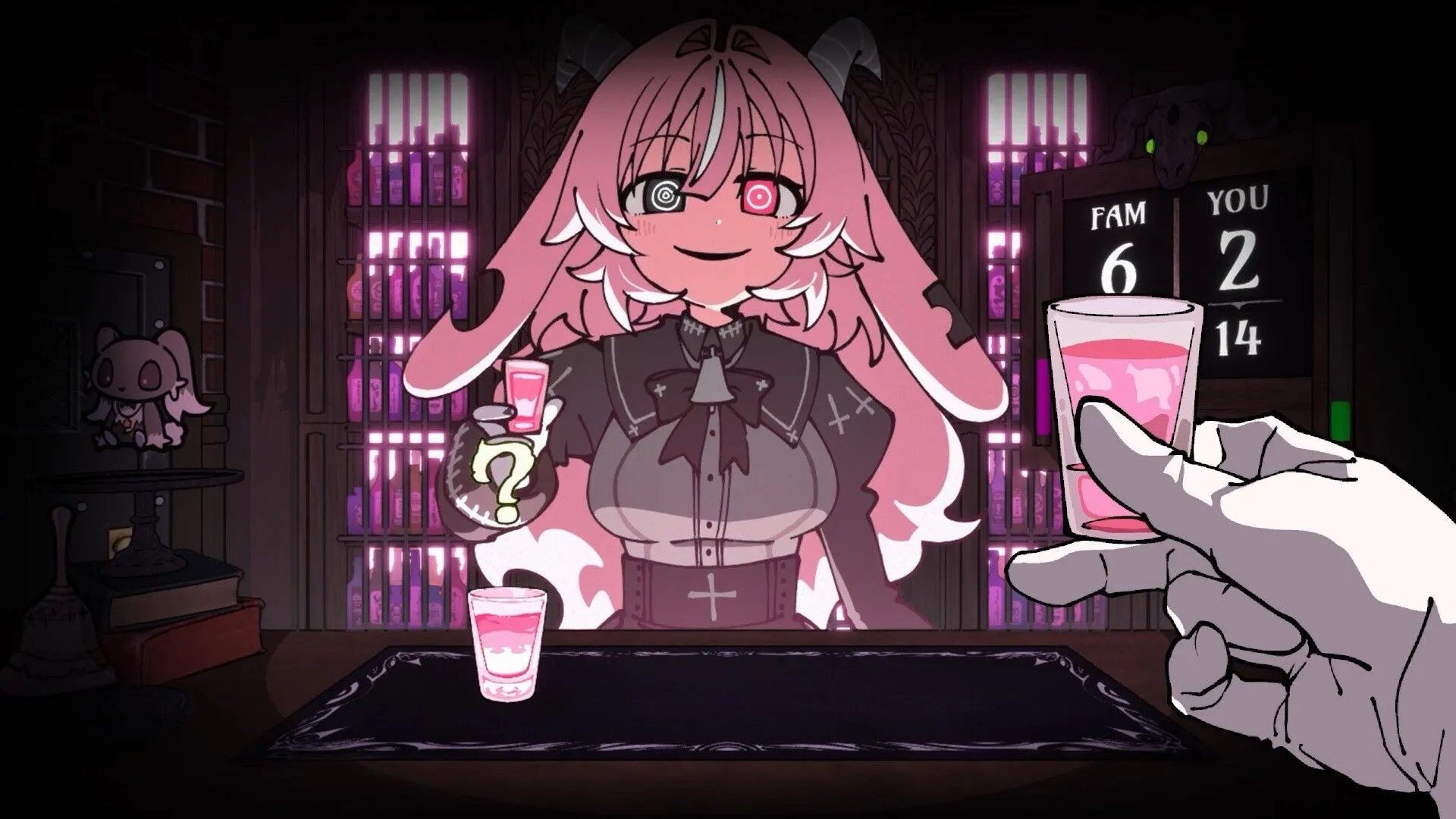
Drunken Goddess Reflux is described as a "shot glass Russian roulette" horror drinking game featuring an anime-style demon girl protagonist. The game's premise involves players competing against a character who oscillates between being affectionate and murderous. The core objective is to intoxicate the character to a point where she "barfs up her soul," blending high-stakes social drinking mechanics with horror elements.
One of the standout mechanics mentioned by the developers is the way the game evolves during play. As players consume more alcohol, the rules of the game are designed to become increasingly strange and unpredictable. This mechanic aims to mirror the disorienting effects of intoxication, creating a gameplay experience that shifts dynamically based on the players' real-world actions. While the concept is niche, it represents a specific attempt to merge physical social activities with digital horror gameplay.
How is AI cloning affecting the indie game industry?
The emergence of "AI vibe coders" and rapid cloning tools is creating a new landscape of risk for independent developers who rely on unique ideas to stand out. Unlike traditional plagiarism, which involves copying assets or code, AI-assisted cloning can ingest the "vibe" or general presentation of a game to produce functional, albeit inferior, imitations in a fraction of the time it would take a human developer to manually replicate them.
The speed of these replications is unprecedented. For instance, a developer previously shared a game prototype online only to witness a cloned version appear within just five hours. This rapid turnaround time leaves little room for the original creator to establish their brand or secure their market position. The threat is not merely about losing sales, but about the saturation of digital storefronts with low-effort, AI-generated copies that dilute the visibility of genuine creative works.
The evolution of game piracy and imitation
While the mobile gaming market has struggled with blatant cloning for years, the advent of generative AI has changed the scale and speed of the problem. Previously, a clone required a team of developers to reverse-engineer and rebuild mechanics. Now, tools capable of interpreting visual and structural patterns allow for much faster imitation. This shift places immense pressure on indie developers who often use early demos as their primary marketing tool.
What are the implications for future game marketing?
The decision by Alliance Arts suggests that the traditional marketing strategy of "early access through public demos" may be becoming too risky for certain genres. To succeed in a crowded market, developers must build communities around their ideas early. However, if the act of sharing an idea provides the very tools needed to steal it, developers may be forced to adopt more secretive, closed-door development cycles.
This creates a tension between the need for community building and the need for intellectual property protection. Without intervention from major platforms like Valve (Steam), developers may find themselves in a defensive crouch, limiting the very visibility they need to survive. The industry is currently waiting to see if digital storefronts will implement firmer stances or better detection mechanisms to combat these AI-driven copycats.
FAQ: AI game cloning and Alliance Arts
Why did Alliance Arts move to closed sessions?
Alliance Arts moved to closed sessions to prevent AI vibe coders from using the demo to quickly imitate the game's presentation and mechanics. They also cited the difficulty of managing restrictions on streaming and posting gameplay videos that would have been necessary for a public Steam release.
What is an "AI vibe coder"?
An "AI vibe coder" refers to individuals or entities using generative AI tools to rapidly replicate the aesthetic, feel, or gameplay mechanics of an existing project. These tools allow for the fast creation of clones that mimic a game's "vibe" without requiring traditional, lengthy development processes.
How does Drunken Goddess Reflux work?
Drunken Goddess Reflux is a horror-themed drinking game involving a "shot glass Russian roulette" mechanic. Players interact with an anime demon girl, with gameplay rules becoming progressively weirder and more unpredictable as the players consume more alcohol during the session.
Has this happened to other developers?
Yes, several developers have reported similar issues. One developer saw their prototype cloned within five hours of being posted online, and McPixel developer Sos Sosowski has highlighted numerous instances where indie works were almost instantly copied by AI cloners and released on Steam.
Will Steam take action against AI clones?
It is currently unclear if Valve or other major storefronts will take a firmer stance against AI-generated clones. The industry is observing whether platforms will implement better protections to prevent the market from being flooded by rapid, low-effort imitations of indie titles.
Key takeaways
- Alliance Arts cancelled the Drunken Goddess Reflux Steam demo to prevent AI-driven cloning.
- The game features a unique "shot glass Russian roulette" mechanic with evolving rules.
- AI tools allow for game imitation to occur in as little as five hours.
- Developers face a conflict between community building and protecting intellectual property.
The future of indie development in the AI era
The situation surrounding Alliance Arts highlights a growing structural vulnerability in the indie gaming ecosystem. As AI tools lower the barrier to imitation, the value of a unique "vibe" or concept is paradoxically both higher and more fragile. Developers are being forced to balance the necessity of public visibility with the urgent need for digital security. Moving forward, the survival of the indie scene may depend heavily on how platforms like Steam evolve to distinguish between genuine creative innovation and the rapid, automated output of AI-assisted imitators.