
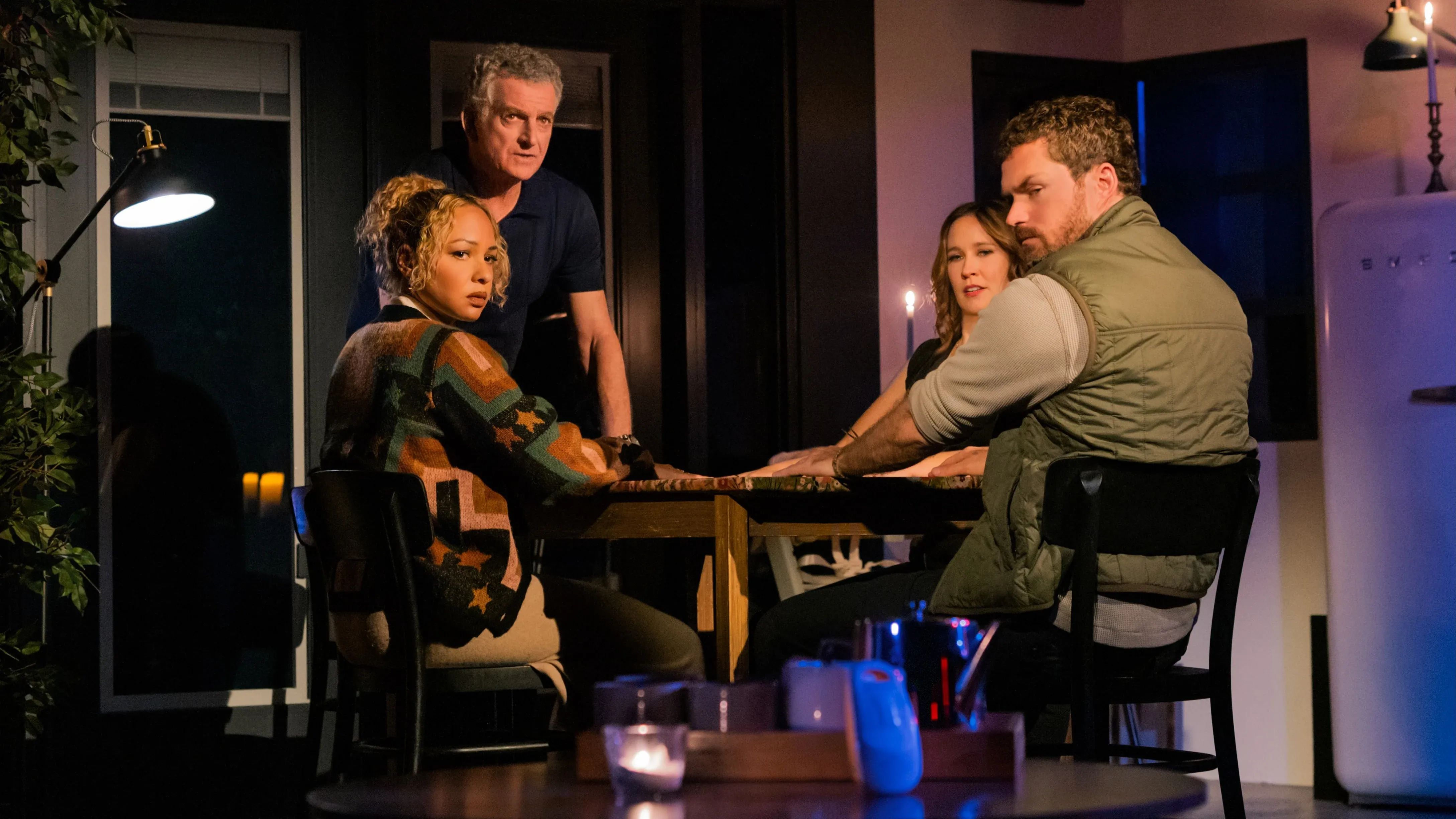
2:22 A Ghost Story review: A new horror theater standard?
Our 2:22 A Ghost Story review explores a production that successfully translates West End tension to the Off-Broadway stage. Unlike the underwhelming transfer of Paranormal Activity, this Danny Robins play delivers a chilling experience through character-driven dread rather than mere spectacle. Starring Jasmine Cephas Jones and Finn Jones, the production utilizes a high-stakes dinner party setting to explore paranormal themes. The play moves beyond simple jump scares by weaving class conflict and personal relationship tensions into its haunting narrative structure.
November 10, 2026
4 min read
Source: ASHENVOW
Comparing 2:22 A Ghost Story to contemporary horror transfers
The production distinguishes itself from other recent West End transfers, such as the Broadway version of Paranormal Activity, by prioritizing psychological depth over repetitive domestic arguments. While both plays share a central premise—a married couple facing potential paranormal activity in their London home—the execution differs significantly in scope and tension. 2:22 A Ghost Story utilizes a smaller, more intimate setting to heighten the sense of claustrophobia, whereas larger productions like The Lost Boys rely more heavily on stage spectacle.
The core similarities between the two works include the skeptic-versus-believer dynamic and the use of sudden jump scares. However, the playwright Danny Robins introduces a more complex social layer to the horror. By placing the supernatural events within the context of a dinner party, the play creates a pressure cooker environment where the fear of the unknown is compounded by the social anxiety of hosting guests.
The mechanics of tension: Setting and social conflict
A primary driver of the play's effectiveness is the interplay between the domestic setting and the underlying class tensions. The set, designed as a living room and kitchen area, serves as a visual representation of the characters' transition into a gentrified neighborhood. The physical space reflects a clash between the old and the new, featuring modern white walls and dark gray cabinets alongside the lingering, gaudy wallpaper of the previous long-term resident.
The social dynamics among the four characters add layers of friction that prevent the narrative from becoming a repetitive loop of marital disputes. The characters' backgrounds create natural points of contention:
- Sam and Lauren: A long-standing friendship between an astronomer and a successful therapist that borders on flirtatious.
- Ben and Lauren: A relationship that faces scrutiny through the lens of social standing.
- Class Divide: Sam’s perceived intellectual superiority over Ben, a blue-collar builder, which creates palpable discomfort during the gathering.
This complexity ensures that even before the paranormal elements are fully realized, the audience is already unsettled by the interpersonal volatility of the group.
Narrative structure and the dinner party device
Danny Robins employs the dinner party as a central device to escalate the supernatural occurrences. The plot is propelled by Jenny’s insistence that something is happening in their child’s bedroom at exactly 2:22 in the morning. This specific temporal trigger creates a countdown effect that hangs over the entire evening.
The role of unseen elements in building dread
One of the most effective techniques used in the production is the reliance on what the audience cannot see. By keeping certain terrifying moments offstage—such as a sinister incident in the bathroom or the tampering of a child's toy—the play forces the audience to participate in the characters' uncertainty. This lack of visual confirmation encourages the dinner guests, and by extension the audience, to debate the reality of the haunting, making the psychological impact more lasting than a direct visual reveal.
Technical execution: Sound design and lighting
The production utilizes aggressive technical elements to punctuate the rising tension, though these are met with varying degrees of success. The sound design is notably loud and piercing, utilizing screams and ominous musical cues, including the track "Angel" by Massive Attack, to signal impending dread. While these elements successfully cause the audience to flinch, some instances can feel like mechanical tricks intended to force a reaction.
| Technical Element | Function in the Play | Effect on Audience |
|---|---|---|
| Red Lighting/Screams | Marks the passage of time during blackouts | Causes communal flinching |
| Digital Clock | Displays the time in bright red letters | Creates a sense of an impending countdown |
| Motion Sensor Lights | Triggers on the back porch | Provides a naturalistic but startling interruption |
Cast performances and character depth
The strength of the production rests heavily on the performances of its four leads, who must navigate the shift from social comedy to intense psychological horror. Jasmine Cephas Jones provides a riveting performance as Jenny, portraying a woman who is not merely frightened but actively furious at the invasion of her home and her husband's skepticism. Her character's complexity is found in the balance between her seething anger and her underlying compassion for Sam.
Finn Jones portrays Sam as an infuriating skeptic, with costume designer Cindy Lin utilizing a "tech bro" aesthetic—jeans and long-sleeve shirts—to subtly signal his self-aggrandizing nature. The supporting cast rounds out the dynamic: Anna Camp provides much of the play's comic relief through her portrayal of the brash, American Lauren, while Martin Marquez delivers sharp comedic timing as Ben, offering a necessary counterpoint to the mounting tension between the other characters.