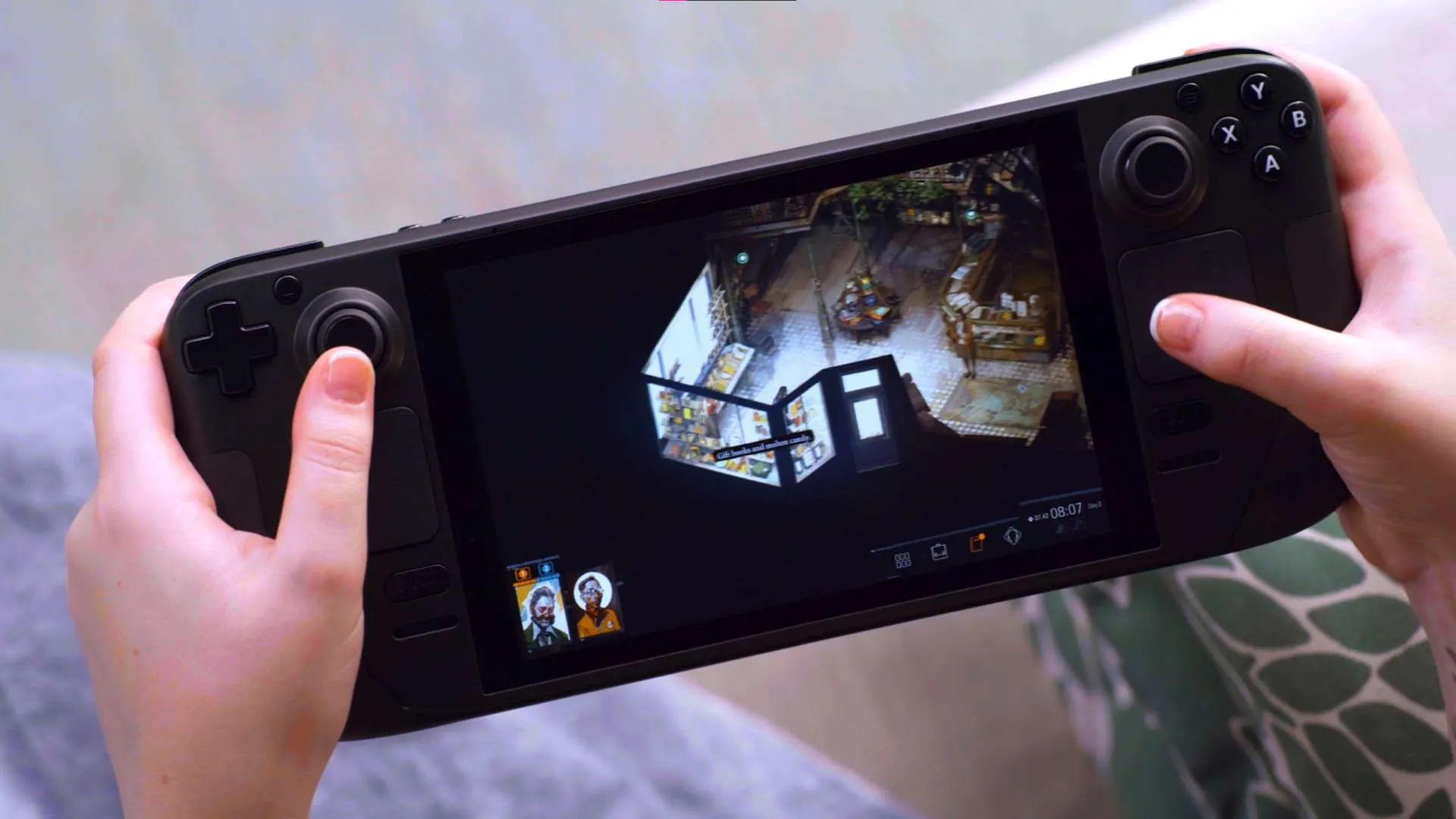
How does the new Steam Deck performance data work?
Valve has implemented a system that allows game developers to access frame rate data as reported by the Steam Deck user base. Instead of relying on laboratory testing or limited internal QA, developers can now observe how their titles perform in the hands of thousands of actual players. This data is presented as a percentage of total sessions, providing a statistical overview of performance consistency across the platform.
The core of this metric is the ability to see how often a game reaches its target frame rate. For instance, if a game is designed to run at the Steam Deck's standard refresh rates, developers can monitor what percentage of the population is actually achieving those smooth framerates. If a significant portion of users are playing at lower, capped frame rates, it serves as a clear signal that the game may require further optimization or more robust graphical settings.
The distinction between LCD and OLED hardware
A critical factor in interpreting this data is the hardware diversity within the Steam Deck lineup. The original LCD models are limited to a 60Hz refresh rate, whereas the newer OLED models support up to 90Hz. Because developers often implement frame rate caps to manage power consumption and thermal output, the statistical data will naturally reflect these hardware differences. Developers must look past the raw numbers to understand whether a low frame rate is due to poor optimization or a user choosing to cap the performance on an LCD device to save battery life.
Why is this data crucial for 'Steam Deck Verified' games?
The 'Steam Deck Verified' badge is intended to guarantee a high-quality experience, yet players often encounter games that struggle despite this certification. The new data stream allows developers to investigate these discrepancies. By analyzing real-world session data, studios can identify if a game that was 'Verified' at launch is beginning to struggle due to new patches, hardware driver updates, or specific in-game scenarios that tax the handheld's APU.
This feedback loop is particularly vital for high-fidelity titles. For example, games like Cyberpunk 2077 have historically utilized dedicated Steam Deck modes to ensure playability. With this new data, developers can fine-tune these specific modes. If the data shows that the majority of players are unable to maintain a smooth 30 fps average or are failing to hit the 60 fps mark, the development team can prioritize specific graphical tweaks or setting adjustments to address the bottleneck.
What are the limitations of the current data collection?
While the data is highly valuable, it is not a perfect reflection of all Steam Deck usage. The primary limitation is that the information is based entirely on data that users willingly share. While Valve reports that "a majority of Steam Deck players have opted in," the data set is still subject to the biases of those who choose to participate in telemetry programs.
Furthermore, the system currently only applies to games that have achieved 'Verified' status. This means the data cannot be used as a primary tool during the initial verification process itself; rather, it is a tool for post-launch iteration and refinement. Developers cannot yet use this data to prove a game is ready for verification, but they can certainly use it to fix a game that is failing to meet the standards the verification promised.
The role of user behavior in performance metrics
User behavior adds another layer of complexity to the statistics. Many handheld gamers are proactive about managing their device's resources. It is common for players to manually lower the frame rate cap to extend battery life or reduce heat. Consequently, a developer seeing a high percentage of sessions at 30 fps might incorrectly assume the game is unoptimized, when in reality, the users are simply optimizing for portability. This requires developers to develop a sophisticated understanding of how to read the bell curve of performance data provided by Valve.
Can this data model be expanded to other handheld devices?
Valve has indicated that the current implementation is intended to be a "starting point for iteration as we learn what sorts of data and presentation are useful." This suggests that the framework is modular and could eventually be extended to other popular handheld gaming PCs. If a sufficient volume of data is collected from other platforms, developers could potentially receive similar performance insights for those devices as well.
The potential for expansion includes devices like the Lenovo Legion Go or even the legacy Steam Machine ecosystem, provided there is enough user participation to create meaningful statistical trends. If developers see that a significant portion of the handheld market is moving toward specific hardware configurations, they will be more likely to invest in deep optimization for those specific platforms. However, this expansion is entirely dependent on two factors: the willingness of users to share their telemetry and the willingness of developers to act on that data by tweaking their games.
How will this impact future game development cycles?
The integration of real-world telemetry into the development cycle represents a shift toward more reactive and data-driven optimization. Traditionally, developers would release a patch based on anecdotal evidence from forums or social media. Now, they can look at hard numbers to see exactly how a performance update has impacted the player base in real time.
This allows for a more surgical approach to game updates. Instead of broad graphical overhauls that might affect all users, developers can identify specific performance dips and target them with precision. As the handheld gaming market continues to grow, the ability to provide a seamless, console-like experience on a PC-based handheld will become a significant competitive advantage for developers.
Frequently asked questions
Does this data help games get the 'Steam Deck Verified' badge?
Not directly. Currently, the data is only available for games that are already part of the Verified program. It is designed as a tool for developers to maintain and improve the performance of games that have already been certified, rather than a tool to assist in the initial verification process.
Is the data provided by Valve 100% accurate?
The data is highly accurate in terms of what the hardware reports, but it is subject to user discretion. Because it relies on users opting in to share their telemetry, it represents a large sample of the community but not necessarily every single Steam Deck owner in existence.
Will this affect how much battery life my Steam Deck has?
The data itself does not affect your battery life. However, the results of this data—such as developers releasing better optimization patches—could indirectly lead to better performance and more efficient resource usage, which can help improve battery longevity during gameplay.
Can developers see my specific personal gameplay data?
No. The data provided to developers is aggregated and statistical. Developers see percentages and averages across the entire player base, such as what percentage of users are hitting 60 fps. They do not receive individual user profiles or specific personal play sessions.
Will other handhelds like the Legion Go get this data?
It is possible, but not guaranteed. Valve has stated this is a starting point for testing. If enough users on other handheld devices opt in to share their data, it could create a large enough dataset for Valve to offer similar insights to developers for those platforms.
Key takeaways
- Valve is providing developers with real-world Steam Deck frame rate and session data.
- The data helps developers see if games are hitting 60 or 90 fps targets.
- This system is currently limited to games with 'Steam Deck Verified' status.
- Developers can use the data to refine graphical settings and optimization patches.
- The tool is intended as a starting point for potential expansion to other handhelds.
Conclusion
The introduction of real-world performance telemetry marks a significant step forward for the handheld gaming ecosystem. By moving beyond static testing and into the realm of live, aggregated player data, Valve is empowering developers to solve performance issues more effectively. While hardware differences and user behaviors introduce complexities in data interpretation, the ability to see how games perform in diverse, real-world environments will ultimately lead to more stable and optimized experiences. As developers refine their titles based on these insights, the gap between desktop gaming and handheld portability will continue to narrow.