
What is the mission of the Super Intelligence Force?
The Super Intelligence Force is tasked with coordinating federal government efforts to ensure the United States maintains global leadership in the field of super intelligence. According to a post on Truth Social, President Donald Trump characterized the scale of this technological shift as being potentially larger than both the Industrial Revolution and the advent of the Internet. The primary objective is to protect American interests and enhance the lives of citizens through technological supremacy.
The charter for this new entity specifically focuses on a dual-track approach to governance. It mandates the development of response plans for threats enabled by super intelligence (SI) while simultaneously acting as a shield against excessive regulation. The administration intends to prevent 'regulatory capture,' a phenomenon where industry players exert undue influence over the agencies meant to oversee them, thereby stifling competition and innovation. This mandate highlights a tension between managing emerging risks and maintaining an open, competitive market for technological development.
The Strategic Goal of Technological Dominance
A central pillar of the mission is the prevention of a technological gap between the United States and its global competitors. Jay Clayton, who will lead the force, has emphasized that the United States cannot afford to retreat from the AI race. The administration views the risk of 'not being first' as a primary national security concern, particularly in the context of rapid advancements in rival nations like China. Clayton has previously stated that it would be irresponsible for the United States to 'back away' from AI while other nations continue to advance.
This focus on being 'first' suggests that the Super Intelligence Force will prioritize speed and competitive positioning as much as safety. The administration's stance is that technological leadership is a prerequisite for protecting the interests of all Americans, framing the pursuit of super intelligence as a critical component of national survival and prosperity in the modern era.
Who will lead the new Super Intelligence task force?
National Intelligence Director Jay Clayton will chair the Super Intelligence Force, effectively assuming the role of the nation's primary AI and SI strategist. This appointment follows previous indications from the President that an 'AI czar' would be required to manage the complexities of the sector. Trump had previously noted that 'Only High I.Q. individuals need apply!' when discussing the appointment of such a leader.
The leadership structure is designed to integrate intelligence, trade, defense, and personnel management across several high-level federal offices. According to reports from the Wall Street Journal, the vice chairs consist of:
- Andrew Ferguson: Federal Trade Commission Chair
- Emil Michael: Undersecretary of War for Research and Engineering
- Scott Kupor: Office of Personnel Management Director
This multi-agency approach suggests an attempt to create a unified front that spans from economic regulation to military research and civil service management. By involving the FTC and the Office of Personnel Management, the administration is signaling that super intelligence will impact everything from market competition to the structure of the federal workforce itself. The inclusion of the Undersecretary of War for Research and Engineering further underscores the integration of super intelligence into the nation's defense and engineering capabilities.
Why is the administration rebranding AI as 'Super Intelligence'?
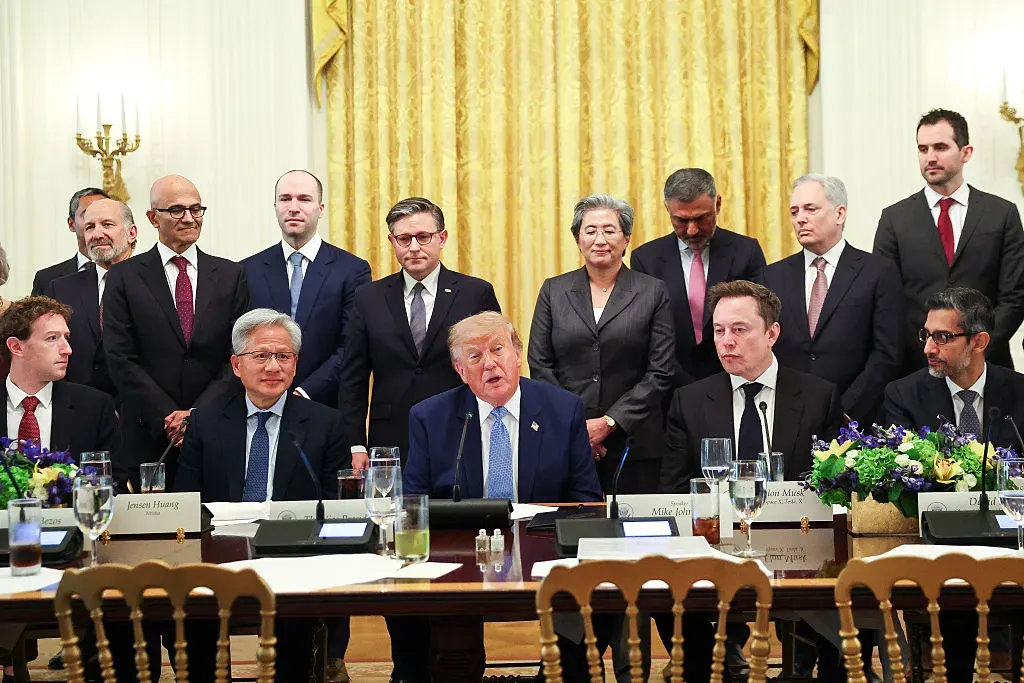
The shift from the term 'Artificial Intelligence' to 'Super Intelligence' (SI) follows an executive order signed by President Trump to rebrand the technological landscape. This linguistic change is not merely semantic; it reflects a specific policy stance that views the current trajectory of technology as an unprecedented evolutionary step rather than a standard incremental advancement. The term 'Super Intelligence' has been increasingly adopted by tech executives during recent high-level meetings at the White House.
This rebranding also serves to distance the administration's policy from previous AI safety debates. President Trump has frequently dismissed traditional AI safety concerns as being driven by political opponents, specifically labeling such debates as a 'hoax' created by 'Radical Left Dumocrats.' By adopting the 'Super Intelligence' nomenclature, the administration is framing its policy around the concept of massive scale and national competitive advantage rather than the precautionary principles often advocated by safety researchers.
The Non-Binding Safety Pledge
During recent gatherings at the White House, various tech executives signed a non-binding safety pledge. While the branding of 'Super Intelligence' has been embraced by these leaders, the administration's approach remains focused on ensuring that such safety measures do not become tools for overregulation. The pledge, which included an impressive typo, represents an attempt by the industry to self-regulate, but the administration's new task force is designed to ensure that such industry-led initiatives do not lead to the 'regulatory capture' mentioned in the force's charter.
The tension between ensuring safety and maintaining the speed of innovation remains a defining characteristic of this new policy direction. The administration appears to be positioning the Super Intelligence Force as the arbiter that will prevent safety-focused regulations from becoming barriers to entry for new competitors.
What are the immediate next steps for the task force?
The Super Intelligence Force has been given a strict 120-day window to produce its initial findings. This report is expected to outline the specific risks and opportunities presented by the rapid advancement of super intelligence. The mandate requires the task force to balance the necessity of national security with the need to foster a competitive environment for American companies.
The timeline suggests an urgency to establish a formal framework for SI governance. The resulting report will likely serve as the roadmap for future executive actions and legislative recommendations. Given the involvement of the Undersecretary of War for Research and Engineering, the report is expected to have significant implications for defense-related technological development and the integration of SI into national security infrastructure. The 120-day deadline places immediate pressure on Clayton and his vice chairs to synthesize complex data into actionable policy recommendations.
Frequently asked questions
Who is the leader of the Super Intelligence Force?
Jay Clayton, the National Intelligence Director, will chair the Super Intelligence Force. He acts as the primary coordinator for the federal government's efforts in the field, effectively serving as the nation's lead strategist for super intelligence and related technological advancements.
What is the primary goal of the task force?
The primary goal is to ensure the United States leads the world in super intelligence. The force aims to manage the risks of SI-enabled threats while preventing overregulation that could stifle innovation or allow regulatory capture to damage competition.
How long does the task force have to report?
The task force has been granted a 120-day period to complete its initial mandate. During this time, they are required to develop a comprehensive report detailing the various risks and opportunities presented by the current state of super intelligence.
Is 'Super Intelligence' different from 'AI' in this context?
While closely related, 'Super Intelligence' is the specific term used by the administration to rebrand the field. This shift emphasizes the transformative, world-changing scale of the technology, comparing its impact to the Industrial Revolution and the creation of the internet.
Which agencies are involved in the task force?
The task force involves several key federal entities, including the National Intelligence Directorate, the Federal Trade Commission (FTC), the Department of War (for research and engineering), and the Office of Personnel Management, ensuring a cross-departmental approach to SI policy.
Key takeaways
- The Super Intelligence Force is led by Jay Clayton to ensure US technological dominance.
- The task force has a 120-day deadline to deliver a risk and opportunity report.
- A core mission is preventing overregulation and regulatory capture in the SI sector.
- The administration has officially rebranded AI as 'Super Intelligence' via executive order.
- Leadership includes officials from the FTC, War Department, and Office of Personnel Management.
The future of US technological governance
The formation of the Super Intelligence Force marks a significant pivot in how the United States approaches advanced technology. By centralizing leadership under Jay Clayton and integrating multiple federal agencies, the administration is attempting to move faster than the regulatory frameworks of the past. The success of this initiative will depend on whether the task force can truly balance the prevention of existential threats with the mandate to avoid stifling the very innovation it seeks to protect. As the 120-day deadline approaches, the global tech community will be watching to see how this new 'Super Intelligence' doctrine shapes the competitive landscape between the US and its rivals.




