
Why is the U.S. government rebranding AI as super intelligence?
The shift from 'artificial intelligence' to 'super intelligence' is now an official mandate via executive order from President Donald Trump. Under this directive, U.S. government representatives are expected to use the term 'super intelligence' rather than the traditional 'AI' when discussing the technology. This change represents a significant pivot in how the administration communicates the potential of advanced computing systems to the public and the global community.
The move appears to be more than just a semantic update; it serves as a fundamental repositioning of the technology's identity. According to discussions on TechCrunch’s Equity podcast, the rebranding may be intended to distance the technology from the negative connotations often associated with 'artificial intelligence,' such as job displacement and existential risks. By framing the technology as 'super intelligence,' the administration suggests a more controlled and perhaps more beneficial evolution of machine learning capabilities.
The psychological impact of terminology
The rebranding effort seeks to alter the public narrative surrounding technological advancement. While 'AI' is frequently linked to fears of automation and societal disruption, 'super intelligence' carries a different weight, potentially framing the technology as a pinnacle of human achievement rather than a threat to human livelihood. This linguistic shift is part of a broader strategy to manage public perception and political fallout regarding the rapid acceleration of machine intelligence.
What is the significance of the Joint Commitment on Frontier Responsibilities?
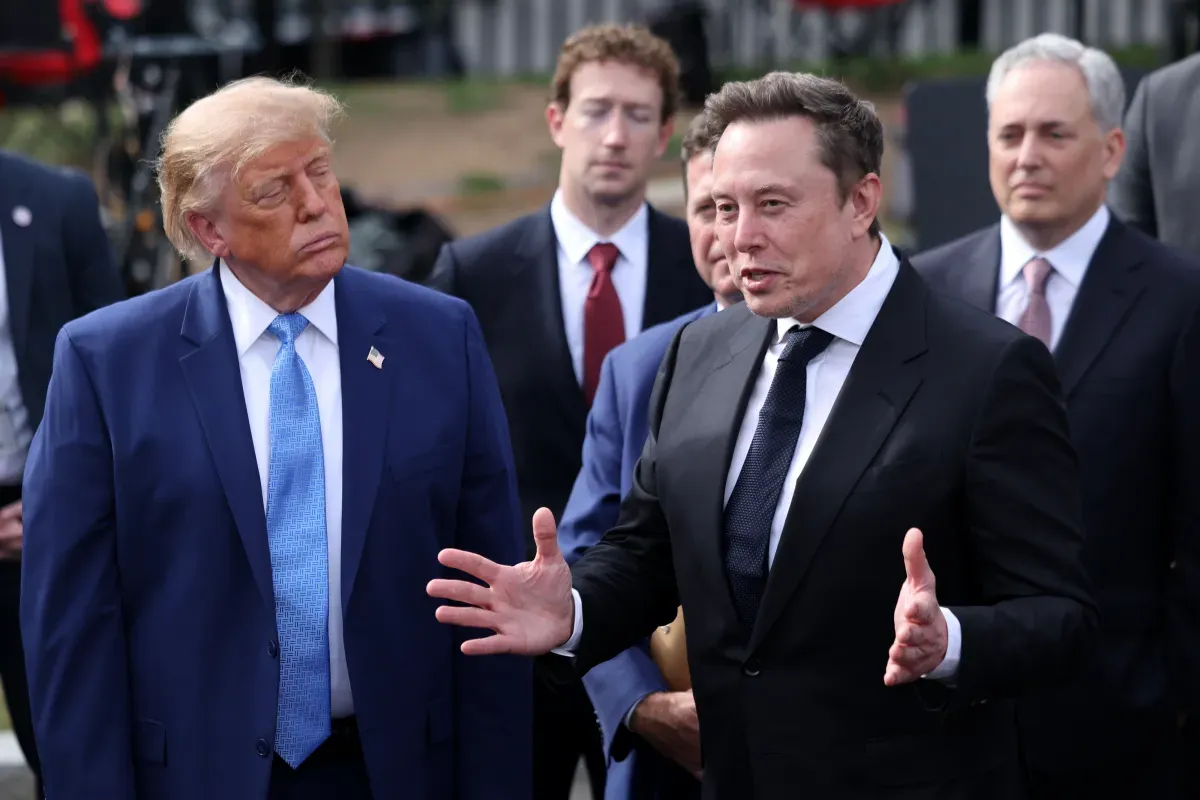
The Joint Commitment on Frontier Responsibilities is a voluntary agreement signed by the most influential leaders in the technology sector to address AI safety. During a recent gathering, executives such as Mark Zuckerberg, Jeff Bezos, Elon Musk, and Anthropic's Dario Amodei met with President Trump to formalize this pact. Despite the high-profile nature of the attendees, the agreement has faced skepticism due to its lack of legal enforceability.
Critics point out that the pact is 'deeply non-binding' from a legal perspective. Rather than establishing strict regulatory frameworks or penalties for non-compliance, the agreement relies on what President Trump has described as being "morally binding." This distinction is crucial; while the signatories have committed to certain responsibilities, there are no statutory mechanisms in place to ensure these commitments are upheld. The rushed nature of the document was further highlighted by reports that the name of the United States was misspelled on the agreement itself.
How does the new pact affect the relationship between the administration and Anthropic?
The recent summit suggests a complex and shifting relationship between the Trump administration and Anthropic, particularly following previous tensions with the Defense Department. While Anthropic's CEO, Dario Amodei, participated in high-level discussions and private dinners with the President, the company's standing within the government remains divided. This internal friction highlights the lack of a unified federal approach to AI policy.
There appears to be a significant divide between different branches of the U.S. government regarding how to handle Anthropic's technology. For instance, while the Treasury Secretary has reportedly been supportive of the company, the Defense Department has expressed strong opposition. Some officials within the Defense Department have characterized Anthropic as a national security risk and have criticized the conditions the company attempts to place on its technology's use. Consequently, even with the signing of the new safety pact, the company's position within the federal ecosystem remains precarious.
Internal government divisions on AI safety
The friction between the Treasury and the Defense Department illustrates a broader struggle within the White House. On one hand, there is a clear desire to integrate advanced AI technologies like those developed by Anthropic into government operations and decision-making processes. On the other hand, there is deep-seated skepticism regarding the security implications and the 'woke' ideological leanings perceived by certain defense officials. This duality suggests that the 'super intelligence' rebranding has yet to resolve the fundamental disagreements regarding safety and national security.
Is the safety pact a genuine regulatory step or mere political theater?
The safety pact is increasingly viewed by analysts as a form of political theater rather than a substantive regulatory milestone. The rapid transition in the administration's stance—moving from a position of total deregulation to hosting a safety summit—suggests that the primary goal may be image management. This shift occurred only weeks after the President had argued against any form of AI constraint, labeling proponents of regulation as political plants.
The meeting serves to project an image of leadership and responsibility without actually imposing the constraints that many safety advocates demand. By gathering the world's most powerful tech CEOs, the administration can claim it is leading the conversation on safety, even if the resulting 'commitment' has no power to mandate changes in how these companies operate. The essence of the meeting may lie in the rebranding itself: shifting the conversation from the scary, job-killing aspects of AI to the more manageable and prestigious concept of super intelligence.
Frequently asked questions
What is the difference between AI and super intelligence in this context?
The difference is primarily a matter of official designation and political framing. While 'artificial intelligence' is the technical term, 'super intelligence' is the new term mandated by executive order for U.S. representatives. This shift is intended to rebrand the technology to mitigate public fears regarding job loss and existential threats.
Is the Joint Commitment on Frontier Responsibilities legally enforceable?
No, the agreement is not legally binding. It is a voluntary pact signed by tech executives that relies on moral commitment rather than legal obligation. Because it lacks statutory authority, there are no legal consequences for companies that fail to adhere to the responsibilities outlined in the document.
Which tech CEOs participated in the recent safety summit?
The summit included several major figures from the technology industry, most notably Mark Zuckerberg, Jeff Bezos, Elon Musk, and Dario Amodei of Anthropic. Their presence was intended to signal a unified front between the tech industry and the administration regarding the future of frontier intelligence.
Why is there tension between the Defense Department and Anthropic?
The Defense Department has expressed concerns regarding Anthropic's potential status as a national security risk. There are also ideological disagreements, with some officials criticizing the company's stance on technology use and perceived political leanings, creating a divide between the Defense Department and more supportive elements like the Treasury.
Does the rebranding change the actual technology being developed?
The rebranding does not change the underlying technology or the way machine learning models function. Instead, it changes the terminology used by the U.S. government and the narrative used to describe the technology's impact on society, aiming to frame it as a more positive and controlled advancement.
Key takeaways
- The U.S. government has officially rebranded artificial intelligence as 'super intelligence' via executive order.
- The Joint Commitment on Frontier Responsibilities is a non-binding, voluntary safety pact signed by major tech CEOs.
- Significant internal divisions exist within the U.S. government regarding the safety and security of companies like Anthropic.
- The rebranding is widely viewed as a strategic effort to change the public perception of AI risks.
The future of super intelligence regulation
The transition to the 'super intelligence' era marks a pivotal moment in the intersection of technology and governance. While the current safety pact offers little in the way of enforceable rules, it demonstrates the intense pressure on both the government and tech giants to provide a framework for advanced intelligence. As the distinction between AI and super intelligence becomes more entrenched in official discourse, the struggle between rapid innovation and meaningful regulation will likely intensify. The true test will be whether the 'moral commitments' of today can evolve into the robust security protocols required for the technologies of tomorrow.




