RTS Unit Tournament Semifinals: The Ultimate Showdown
Four legendary combatants remain in what is undoubtedly the most brutal war in the history of this site. From the heavy weight of Soviet steel to the terrifying scale of Sith superstructures, the battle for the title of the greatest RTS unit enters its most decisive phase yet. This is no longer a mere contest of popularity; it is a clash of titans where only the most iconic machines will survive. Prepare yourself for high-stakes tactical supremacy as the bracket narrows down to the final two contenders.
October 19, 2026
5 min read
Source: ASHENVOW
What are the current semifinals matchups?
The semifinals feature two separate, high-stakes contests that pit vastly different scales of warfare against one another. In the first bracket, the Mammoth Tank from Command and Conquer: Red Alert meets the Pride of Hiigara from Homeworld 2. This is a clash between heavy terrestrial armor and massive interstellar logistics.
In the second bracket, the scale shifts to the cosmic and the mystical. The Executor Super Star Destroyer from Star Wars: Empire at War faces off against the Priest from Age of Empires. These pairings follow intense quarterfinal results that saw the elimination of four significant units, including the beloved Peon and the noble Dolphin. As the tournament progresses, the diversity of the remaining combatants highlights the breadth of the real-time strategy genre.
How did the tournament reach the semifinals?
The journey to this stage has been a grueling process of elimination. The competition began two weeks ago with a field of 16 units. Last week, the tournament moved into the quarterfinals, where eight survivors duked it out for a spot in the final four. The competition has been remarkably tight; in fact, two of the recent battles were decided by a margin of only 10% of the votes.
Staff predictions for the quarterfinals were largely accurate, though one result caused significant shock among the editorial team. While most expected the winners to follow certain trends, the Peon—a unit that had dominated the Glass Dragon in the first round and earned significant community affection—was unexpectedly knocked out by a tank. This loss highlighted the unpredictable nature of the democratic process used to crown the ultimate unit.
Key quarterfinal outcomes
The quarterfinals demonstrated a clear trend: spaceship units are performing exceptionally well in the current meta of the tournament. The Pride of Hiigara triumphed over a group of "horseboys," proving that one of the most iconic vessels in gaming history can overcome even the most dedicated land-based enthusiasts.
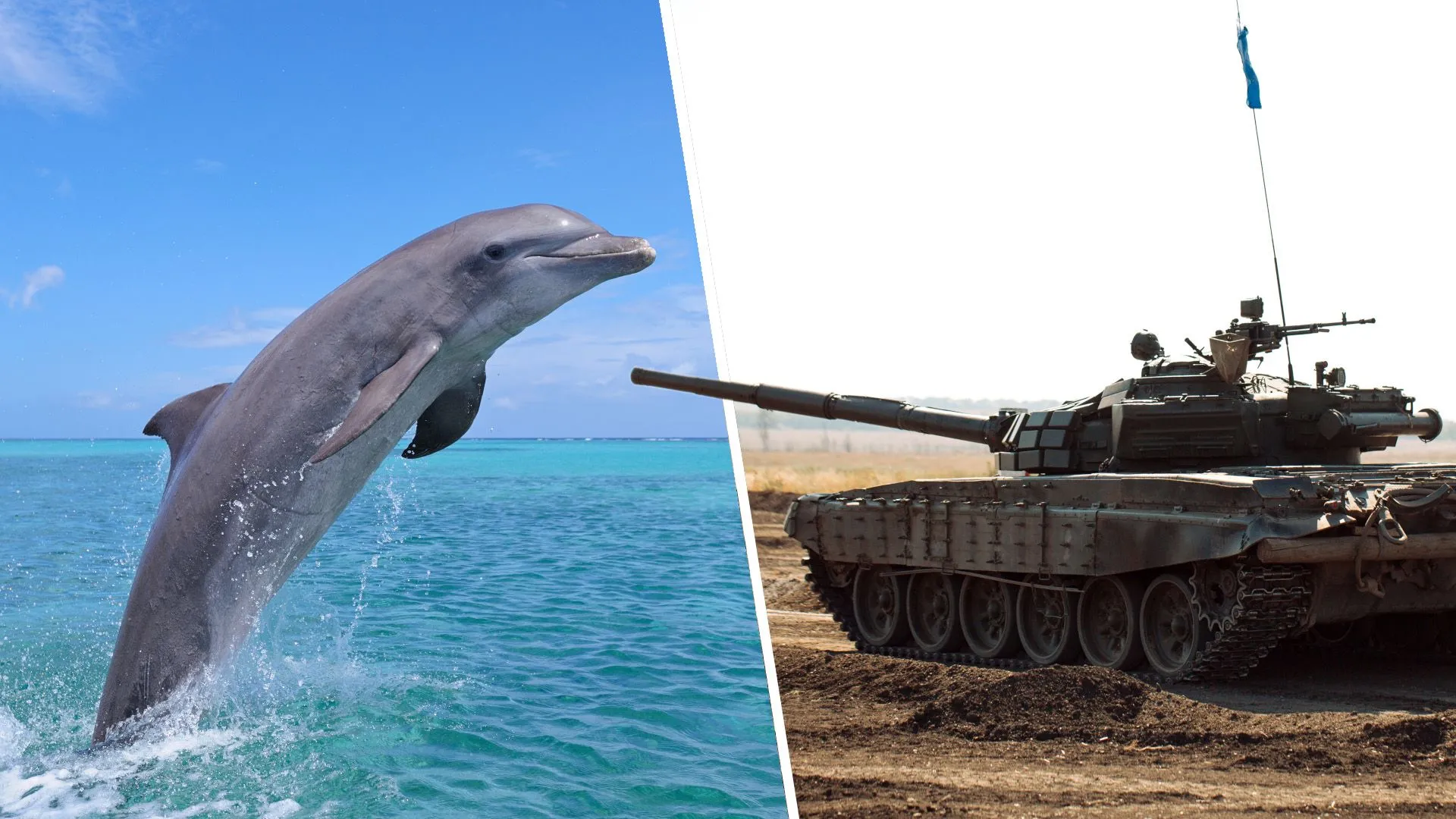
The Super Star Destroyer also showed its dominance by eliminating the Mirage Tank. Despite the Mirage Tank's ability to blend into its surroundings, it could not withstand the sheer volume of fire from the Executor. Meanwhile, the battle between nature and organized religion saw the Priest emerge victorious over the Dolphin. While the Dolphin—a weaponized aquatic mammal capable of destroying ships with sonic blasts—was a fan favorite, the Priest's ability to manipulate the battlefield allowed it to advance. These results have cleared the path for the four remaining heavyweights.
Why does the Mammoth Tank stand out?
The Mammoth Tank represents the pinnacle of Soviet industrial strength and implacable power in Red Alert. Described as being wrought in steel and pig iron, these machines are the definition of heavy armor. While they are unfathomably costly and move with painful slowness, their presence on the battlefield is transformative.
The editorial team notes that the Mammoth Tank's impact is so profound that a single unit might be capable of winning the entire RA1 Soviet campaign by itself. It is a unit defined by its ability to grind through opposition, serving as a symbol of the massive, trundling strength that characterizes Soviet warfare in the series. Its survival into the semifinals is a testament to the enduring respect for heavy, slow-moving, high-impact ground units.
What makes the Pride of Hiigara unique?
The Pride of Hiigara from Homeworld 2 operates on a scale entirely different from the terrestrial combatants. Unlike other ships that focus on discharging missiles or small projectiles, the Homeworld Mothership is a mobile factory. It functions as both a central unit and a base, capable of carrying an entire fleet within its massive hull.
Its primary offensive advantage is its ability to "spit out" capital ships, providing a continuous stream of heavy support. While its direct offensive capabilities are limited compared to dedicated warships, its utility is unmatched. The design of the Kushan/Hiigaran version is considered iconic, standing alongside legends like the Enterprise D. Furthermore, while the ship was largely stationary during the original Homeworld campaign, its full mobility in Homeworld 2 provides a level of tactical flexibility that makes it a formidable semifinalist.
How do the Super Star Destroyer and Priest compare?
The matchup between the Executor Super Star Destroyer and the Priest is a study in extremes. The Executor is a 19-kilometer-long vessel of pure Star Wars fantasy. In Empire at War, it serves as the ultimate expression of power, capable of bullying entire Rebel fleets with its massive array of turbolaser batteries. It is so large that it makes standard Star Destroyers look like "Doritos" by comparison.
Contrasting this cosmic behemoth is the Priest from Age of Empires. While the Executor relies on overwhelming scale and firepower, the Priest relies on the psychological and tactical power of the "Wololo" command. Supporters of the Priest often prioritize subtext, humor, and the unit's ability to convert enemies over raw destructive capacity. It is a battle of 19 kilometers of steel against a single, transformative word.
How can readers participate in the voting?
The power to decide the final two combatants lies entirely with the readers. Voting remains open until the end of Tuesday (BST). There are no strict rules regarding how one should vote; the competition is not strictly a question of "Who would win in a fight?"
Participants are encouraged to vote based on whatever criteria they find most compelling. You might choose a unit because you find the Priest's robes appealing, because you are broadly pro-Sith and want to support the Star Destroyer, or simply because of a personal attachment to a unit's design or history. Your picks will determine which two units head into the glorious final battle.
Frequently asked questions
When does voting close?
Voting closes at the end of Tuesday in British Summer Time (BST).
Can voters consider factors other than combat strength?
Yes. Voters are free to choose based on aesthetics, voice lines, subtext, or personal preference.
Which units reached the semifinals?
The four semifinalists are the Mammoth Tank, the Pride of Hiigara, the Executor Super Star Destroyer, and the Priest.
Did staff predictions match the quarterfinal results?
Most predictions were accurate, with the notable exception of the Peon, which was defeated by the Mammoth Tank.
Where can readers find the full bracket?
The tournament bracket is provided in the original article coverage.
Key takeaways
The semifinals feature two major matchups: Mammoth Tank vs. Pride of Hiigara and Executor Super Star Destroyer vs. Priest. Voting is open until Tuesday BST. The tournament has seen high-stakes, close-margin battles, with spaceship units showing significant strength. The remaining units represent diverse gameplay styles, from the mobile factory capabilities of the Pride of Hiigara to the massive scale of the Executor.
Conclusion
We have reached the business end of the most brutal war in the history of this website. The field has been narrowed from sixteen units down to four, through a process of democratic voting and intense competition. Whether the final features the industrial might of the Soviet Union, the cosmic scale of the Star Wars universe, the tactical depth of Homeworld, or the transformative magic of Age of Empires remains to be seen. The decision is now in your hands.