NYT Connections hints: Word meanings for November 4, 2026
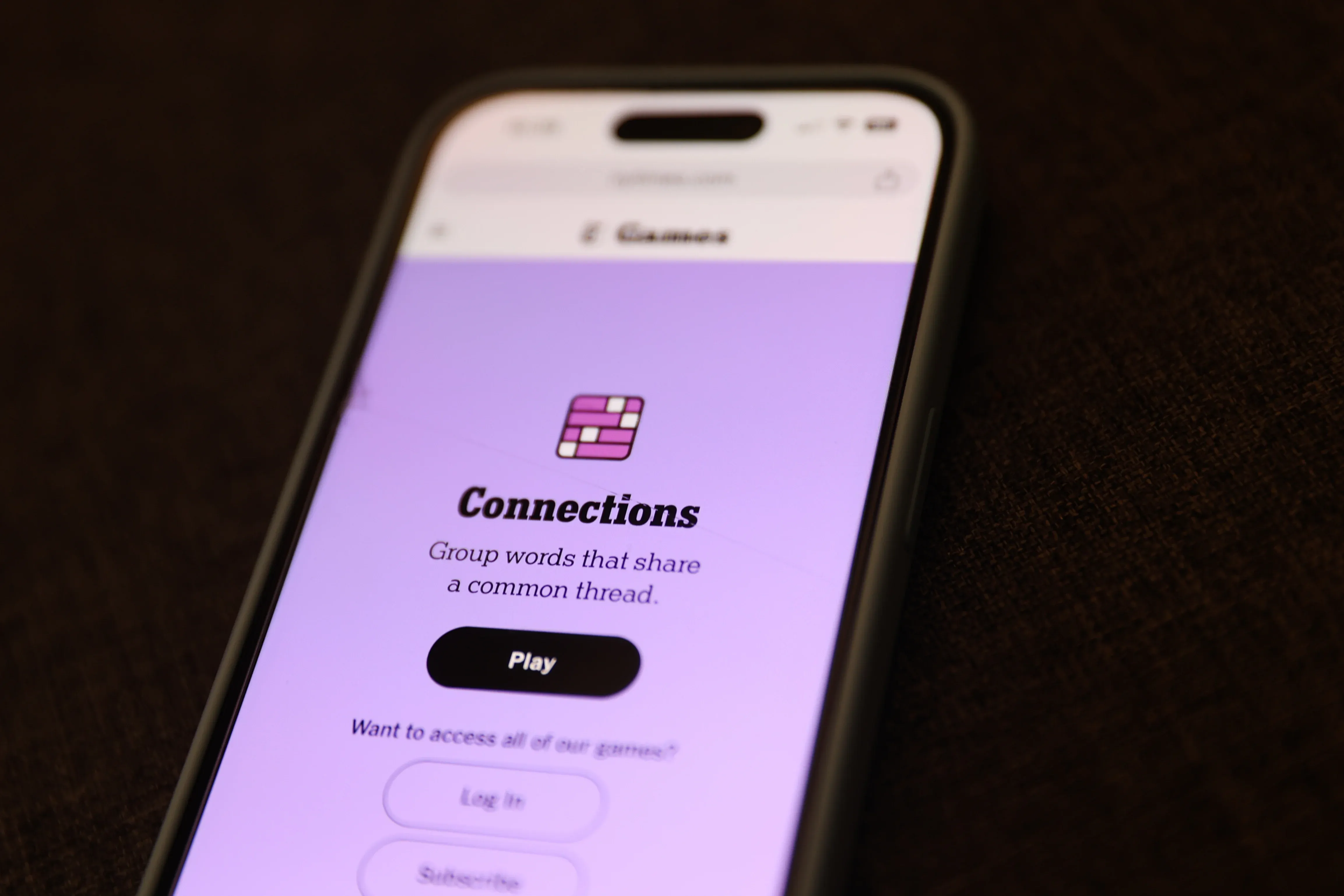
NYT Connections hints are essential for players struggling with the November 4, 2026, puzzle. This daily word game requires users to group sixteen words into four distinct categories of four. Understanding the nuanced meanings of the clues is often more helpful than receiving direct answers, as the New York Times frequently uses linguistic traps. This guide provides the semantic context for today's words, including definitions for terms like 'bleach', 'wedge', and 'putter', to help you find the connections yourself through careful logic.
November 8, 2026
5 min read
Source: ASHENVOW
How can word meanings help solve today's NYT Connections?
Understanding the specific definitions of the words provided is the most effective way to navigate the NYT Connections puzzle without triggering spoilers. The game relies heavily on polysemy—the capacity for a single word to have multiple meanings—which often serves as the primary mechanism for difficulty. By focusing on the semantic essence of each word, players can better identify the underlying themes that bind them together.
In the November 4, 2026, edition, several words possess definitions that could belong to entirely different categories. For instance, a word might have a functional definition (how something works) and a physical definition (what something is). Recognizing these dualities is key to avoiding the 'red herring' categories that the game designers intentionally plant to mislead players.
The role of linguistic traps
The New York Times designers often use words that appear to belong to a common group but actually belong to a more subtle category. For example, a set of words might all relate to 'laundry,' but a subset of those words might actually be part of a category involving 'triangular shapes.' If a player focuses too heavily on the first connection, they will fail to find the correct groupings for the remaining words.
What are the specific meanings for today's puzzle words?
To assist players in their deduction process, we have broken down the definitions of the words featured in today's grid. Reviewing these meanings can clarify whether a word refers to an action, an object, or a characteristic.
| Word | Definition/Context |
|---|---|
| Bleach | To remove color or stains from an item or to make it lighter/whiter via chemicals or sunlight. |
| Iron | A device with a flat, heated metal base used to press wrinkles out of fabric. |
| Tumble dry | A method of machine drying rather than line drying or laying flat. |
| Wring | To squeeze or twist something tightly, usually using both hands in opposite directions. |
| Doorstop | Hardware used to hold a door open/closed or to limit its swing. |
| Flatiron building | A famous, thin, triangular skyscraper located in New York City. |
| Pie slice | A triangular piece of a round, baked sweet dessert. |
| Wedge | A triangular object used to split, lift, secure, or divide materials. |
| Loll | To recline, sit, or hang in a relaxed, lazy, or drooping manner. |
| Poke | To quickly push, jab, or prod with a finger, elbow, or pointed object. |
| Putter | A specialized golf club with a flat face designed for short-distance rolls. |
| Shuffle | To jumble or change the order of items into a random sequence. |
| Cracker | A flat, dry, crisp biscuit or bread product made from wheat flour. |
| Fly | To travel through the air using wings or an aircraft/spacecraft. |
| Wood | A hard, fibrous natural material from the trunks and branches of trees. |
| Works | To operate, function, or perform a specific task. |
What types of clues should players look for in Connections?
The NYT Connections puzzle employs several sophisticated clue types that go beyond simple synonyms. Recognizing these patterns can significantly speed up your solving process.
One common method involves 'words within words,' where a word's spelling contains another smaller word that fits a different theme. Another frequent tactic is the use of visual clues, where the words themselves describe a shape or a physical arrangement. Today's puzzle, for example, features several words that relate to triangular geometry, which may be a hidden theme or a distraction from a more obvious category.
Visual and structural clues
Players should keep an eye out for words that describe geometric shapes. If you see multiple words that imply a triangle—such as 'wedge' or 'pie slice'—consider if they form a category or if they are being used to distract you from a different connection. Similarly, look for words that can function as both nouns and verbs, as this is a common way to create ambiguity in the grid.
How does this compare to other NYT games?
While NYT Connections focuses on grouping, other popular games like Wordle and Strands offer different linguistic challenges. Wordle is a game of deduction based on letter placement, requiring a more structural approach to vocabulary. Strands, on the other hand, involves finding themed words within a grid, which shares some DNA with Connections but focuses more on continuous paths of letters.
Mastering Connections requires a different mental muscle than Wordle. While Wordle is about finding a single specific word, Connections is about understanding the relationships between multiple words simultaneously. This makes Connections a more complex exercise in lateral thinking and semantic categorization.
FAQ: NYT Connections
How do I get help without seeing the answers?
The best way to get help without spoilers is to look up word meanings rather than direct hints. By understanding the various definitions of a word, you can determine which category it most likely fits into without being told the solution directly.
Why is today's Connections puzzle so difficult?
Difficulty in Connections usually stems from polysemy and red herrings. When words have multiple meanings—such as a word that can be both a tool and a verb—it creates confusion. Designers also place words from different potential categories in the same grid to mislead you.
What are the common themes in NYT Connections?
Common themes include synonyms, parts of a whole, words that follow a specific word, and words that share a common prefix or suffix. Today's puzzle includes themes related to shapes and household actions, which are classic Connections tropes.
Can I play NYT Connections on mobile?
Yes, the NYT Connections puzzle is available through the New York Times Games app on both iOS and Android devices, as well as through any standard web browser on your smartphone or tablet.
What is the difference between Connections and Strands?
Connections requires you to group sixteen words into four sets of four. Strands is a different type of word search where you find themed words by connecting letters in a grid, often following a specific path.
Key takeaways
- Use word definitions to identify polysemous traps in the puzzle.
- Watch for geometric themes like triangular shapes in the word list.
- Distinguish between functional meanings and physical descriptions.
- Avoid red herrings by testing multiple category possibilities.
Navigating the daily puzzle challenge
Solving the NYT Connections is a test of both vocabulary and logical reasoning. As seen in the November 4, 2026, edition, the presence of words with multiple definitions requires a careful, analytical approach. By moving beyond surface-level associations and exploring the deeper semantic meanings of each clue, players can successfully navigate the linguistic hurdles set by the editors. Whether you are looking for a quick mental exercise or a deep dive into lateral thinking, the daily Connections puzzle remains one of the most engaging ways to sharpen your linguistic skills.