Nintendo's agnostic approach to media formats
Nintendo is maintaining a dual-format strategy for its latest hardware, prioritizing consumer choice over a total digital transition. Unlike Sony, which has announced a move toward a digital-only game marketplace starting in 2028, Nintendo is adopting what executives call an "agnostic" stance regarding how players access their software.
In a recent interview with YouTuber Coelho no Japão, Bill van Zyll, Nintendo's VP and general manager for Latin America, clarified the company's position. He noted that the company closely monitors what users prefer and adjusts its offerings accordingly. According to van Zyll, the Nintendo Switch 2 is only slightly over a year old, and the platform currently supports both digital downloads via the Nintendo eShop and physical media.
"Historically, we’ve been very agnostic," van Zyll stated. He emphasized that there are currently no plans to abandon physical formats because the company recognizes the high level of enthusiasm among fans for tangible media. By remaining agnostic, Nintendo aims to bridge the gap between traditional collectors and the growing segment of digital-first users.
The evolution of physical media: Game-Key Cards
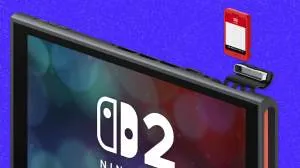
The Nintendo Switch 2 introduces a hybrid method of software distribution known as Game-Key Cards, designed to balance cost-efficiency with physical ownership. This new system serves as a middle ground between a traditional full-game cartridge and a pure digital download.
Game-Key Cards act as authentication keys for software. To play a game using this method, users must insert the physical card into the console and then download the actual game data. This approach offers a low-cost solution for developers while still providing a physical component for the consumer. Crucially, because these cartridges are not strictly tied to a specific user account, players retain the ability to sell their physical copies at a later date.
However, not all software on the Switch 2 utilizes this hybrid model. Some high-profile titles, including first-party Nintendo games and the upcoming Stellar Blade: Complete Edition, still include the full game data directly on the cartridge. This distinction allows Nintendo to offer different tiers of physical products based on the size and requirements of the software.
Comparing industry directions: Nintendo vs. Sony
The divergence in strategy between Nintendo and Sony highlights a significant split in the gaming industry's vision for the future. While Sony is pushing toward a digital-only future for its marketplace by 2028, Nintendo is doubling down on flexibility.
The industry is currently witnessing a tug-of-war between the convenience of digital libraries and the permanence of physical ownership. Critics have pointed out that Sony's push toward an all-digital ecosystem carries substantial risks, particularly regarding long-term game preservation and consumer autonomy. If a marketplace becomes purely digital, players lose the ability to trade, lend, or resell their collections.
Nintendo's hybrid approach, specifically through the use of Game-Key Cards, has been viewed by many as a more well-received compromise. While the Game-Key Card system is not universally loved, it offers a safety net for players who value the secondary market. By refusing to follow Sony's path, Nintendo is betting that consumer demand for physical assets will remain strong enough to justify the continued support of dual-format distribution.
Risks and opportunities in the digital transition
As the gaming landscape shifts, both companies face unique challenges. For Nintendo, the challenge lies in managing the logistical complexities of producing both digital and physical assets while maintaining developer profitability through tools like Game-Key Cards.
For the broader industry, the move away from physical media represents a fundamental change in how value is perceived in gaming. Digital-only models offer streamlined distribution and reduced manufacturing costs, but they also centralize control within the platform holder. Nintendo's decision to remain agnostic suggests a belief that the transition to digital is not an inevitable or immediate requirement for success in the next generation of console gaming.