What is the core concept of the Hell Is Other People game?
The Hell Is Other People game is a psychological horror experience centered on the complexities of social anxiety. Developed by Miss Self Destruct, the title takes its name from the famous Jean-Paul Sartre quote regarding the experience of being trapped within the perceptions of others. This philosophical foundation serves as the engine for a narrative that explores how external judgment shapes internal reality.
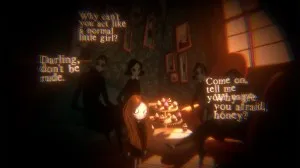
The story follows a young protagonist characterized by striking visual traits, such as onyx eyes and exceptionally long hair. While she appears to lead a relatively mundane life—sleeping on a thin mattress in a lonely room—the narrative tension arises from the disconnect between her reality and how she is perceived by her mother. This disconnect is illustrated through scenes where the child's polite behavior is met with maternal cynicism, creating a sense of isolation that drives the horror elements.
The Sartre Connection
By invoking Sartre's concept of 'the look,' the game moves beyond simple jump scares to explore a deeper, existential dread. The horror is not found in monsters in the dark, but in the terrifying realization that one's identity is constantly being reconstructed and judged by the people around them. This makes the social interactions the primary source of tension.
How do the social skill mechanics work?
Unlike traditional adventure games that rely on an inventory of physical objects, Hell Is Other People replaces item collection with the management of social skills. This mechanic is designed to simulate the cognitive load experienced by those struggling with social anxiety, where every interaction requires a calculated emotional response.
Players must navigate shifting emotional tides by selecting specific responses to social stimuli. For example, when faced with a parent's snide remark, a player might attempt to respond with 'Guilt.' However, the game demonstrates that such responses may not always be impactful or effective in changing the social dynamic. This creates a gameplay loop where the player is constantly testing the boundaries of social survival.
- Emotional Management: Players must balance various internal states to cope with external pressure.
- The Notebook Mechanic: To assist with the difficulty of reading others, players can consult a notebook that outlines how 'normal' people are expected to behave.
- Perceptual Distortion: As anxiety levels rise, the game's interface reflects the protagonist's mental state, causing dialogue to jumble and melt together.
This design choice transforms the act of communication into a survival mechanic, where a failed social interaction can feel as dangerous as a physical encounter in a typical horror game.
What defines the visual aesthetic of the game?
The visual identity of Hell Is Other People is heavily influenced by the 'Tim Burton style' of Gothic caricature. This aesthetic blends the 'twee' and the macabre, creating a world that feels both whimsical and deeply unsettling. The environment is filled with highly stylized, dark imagery that reinforces the protagonist's sense of being an outsider.
Key visual elements include:
- Gothic Motifs: Patterns of arsenic wallpaper and the presence of black cats with sharp, syringe-like teeth.
- Character Design: A protagonist with an 'overgrown' appearance, featuring hair that reaches her fingertips, suggesting a sense of being unkempt or out of place.
- Atmospheric Contrast: The juxtaposition of seemingly innocent items, like frosted cupcakes at a party, against a backdrop of intense psychological dread.
This specific art style serves a dual purpose: it provides a sense of nostalgic comfort for fans of early 2010s indie horror, while simultaneously heightening the uncanny nature of the social interactions. The beauty of the world makes the underlying rot of the social dynamics more apparent.
How does it relate to the history of indie horror?
Hell Is Other People fits into a specific lineage of indie horror games that gained popularity in the early 2010s. This era was defined by a blend of surrealism, psychological vulnerability, and distinct art directions, seen in titles such as Fran Bow and Alice: Madness Returns. These games often featured protagonists who were outcasts, navigating worlds that were as beautiful as they were terrifying.
The game also evokes the era of 'creepypasta' and early viral horror, such as Slender: The Eight Pages. While Slender Man relied on tension and the fear of the unknown, Hell Is Other People moves toward a more personal, character-driven form of horror. It shifts the focus from being hunted by a monster to being haunted by the self and the expectations of society.
For many players, this style of horror offers a unique form of catharsis. By presenting the 'freakish' or 'strange' aspects of human experience through a stylized lens, these games allow players to explore themes of alienation and the desire for understanding in a safe, albeit dark, environment.
FAQ: Hell Is Other People game
What is the main theme of Hell Is Other People?
The main theme is social anxiety and the psychological impact of how others perceive us. Inspired by Jean-Paul Sartre, the game explores the struggle of maintaining an identity when faced with constant social judgment and the feeling of being misunderstood by those closest to you.
How is gameplay different from standard horror games?
Instead of collecting physical items for an inventory, players collect and manage social skills. The gameplay focuses on navigating emotional shifts and choosing dialogue responses that reflect the protagonist's internal state, such as guilt or paranoia, to survive social encounters.
What is the visual style of the game?
The game uses a Gothic caricature style reminiscent of Tim Burton. It features dark, stylized elements like arsenic wallpaper, black cats with syringe teeth, and a protagonist with an exaggerated, 'overgrown' appearance to create a bittersweet, macabre atmosphere.
What platform can I play this game on?
The game is being featured in the Cozy After Dark Showcase and is available through Steam. While a specific release date has not been finalized, it is expected to arrive on the platform in the near future.
Who is the developer of the game?
The game is being developed by the indie studio Miss Self Destruct. They are focusing on a psychological approach to the horror genre, emphasizing emotional resonance and unique social mechanics over traditional jump scares.
Key takeaways
- Hell Is Other People is a psychological horror game focused on social anxiety.
- Developed by Miss Self Destruct, the game uses social skills instead of item inventories.
- The visual style is inspired by Tim Burton's Gothic caricature aesthetic.
- Gameplay includes a notebook mechanic to help navigate social interactions.
- The title is inspired by Jean-Paul Sartre's philosophical concepts.
The evolution of psychological survival
Hell Is Other People represents a sophisticated evolution in the indie horror landscape. By moving away from the external threats that defined the early 2010s and toward the internal, social threats of the modern era, Miss Self Destruct is tapping into a deeply resonant form of fear. The game's ability to blend high-concept philosophy with accessible, stylized art suggests that the future of horror lies not just in what we fear in the shadows, but in how we fear being seen by one another.