
Why did a federal judge rule that Flock Safety searches violate the Fourth Amendment?
The ruling centers on the lack of probable cause or a warrant required to access automated license plate reader (ALPR) data. In the Tulsa, Oklahoma case, Judge Sara Hill found that a deputy's search of the Flock database was unconstitutional because the officer had no apparent reason for the search beyond the fact that the vehicle in question possessed a California license plate.
The deputy used the travel history recorded by Flock to justify a subsequent vehicle search, which allegedly led to the discovery of 91 pounds of methamphetamine. However, because the initial database search was deemed illegal, Judge Hill applied the "fruit of the poisonous tree" doctrine. This legal principle mandates that any evidence discovered as a direct result of an unconstitutional action must be suppressed and cannot be used in court.
While this specific ruling does not establish a binding legal precedent for all jurisdictions, it represents one of the first instances where a federal judge has explicitly labeled a Flock search as a violation of constitutional rights. The decision underscores a critical tension between the convenience of rapid data access for law enforcement and the individual's right to be free from unreasonable searches and seizures.
The "Fruit of the Poisonous Tree" doctrine
In legal terms, when the initial step of an investigation is tainted by unconstitutionality, the entire chain of evidence following that step becomes invalid. In this instance, the discovery of the methamphetamine, while significant, was rendered legally inadmissible because the foundation of the investigation—the Flock database search—was conducted without the necessary judicial oversight of a warrant.
How does Flock Safety surveillance compare to traditional surveillance?
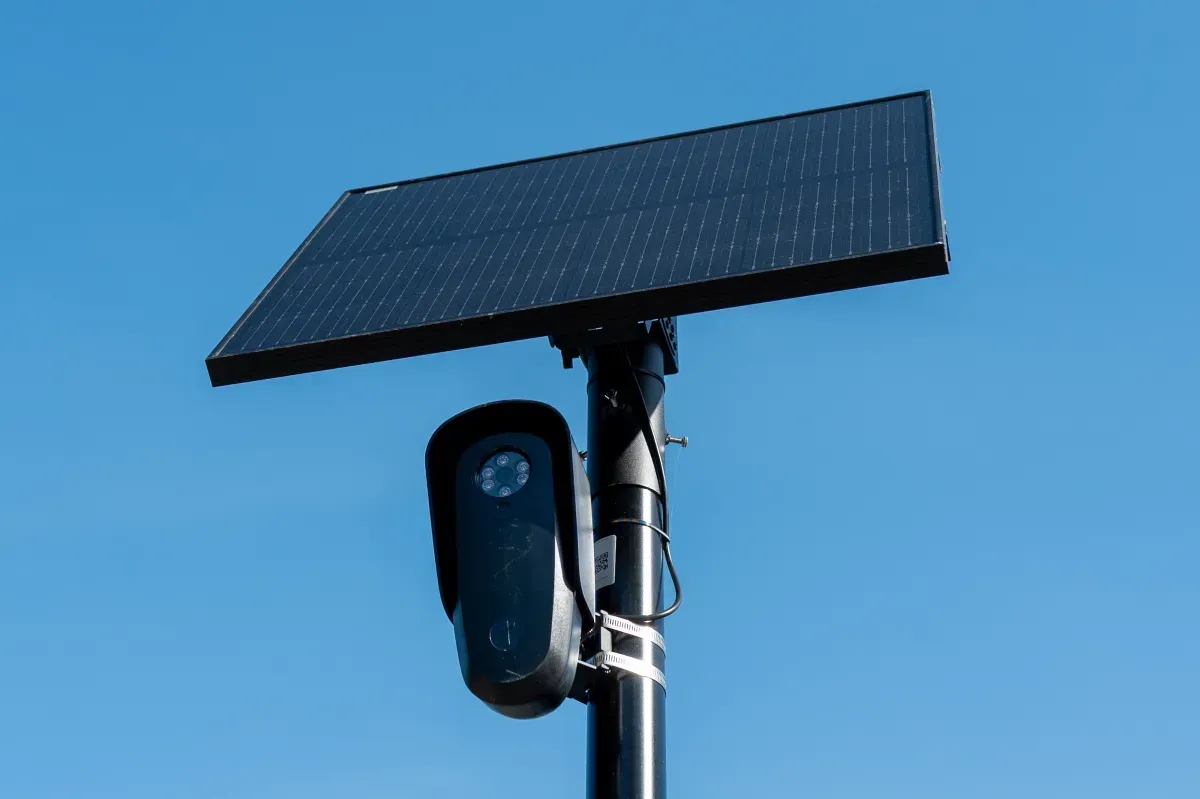
Judge Hill distinguished Flock's capabilities from targeted surveillance by characterizing it as a form of indiscriminate mass surveillance. Unlike traditional methods that focus on specific individuals based on suspicion, Flock's network-connected cameras collect data on all vehicles passing through their coverage area, creating a continuous and passive log of movement.
The judge noted that while individual tracking in public spaces is common, the ability for law enforcement to catalog whereabouts over extended periods and access that information on demand changes the nature of privacy. She compared this to the Supreme Court case Carpenter v. United States, noting that Flock is not targeted on a single individual but serves as a tool for broad, automated data collection.
This distinction is vital for understanding the current legal debate. The argument is that the sheer scale and automation of the system transform it from a tool for specific investigations into a mechanism for pervasive monitoring. This "passive" collection of data means that even law-abiding citizens are constantly being recorded and indexed without their knowledge or consent.
What is the impact of the ruling on law enforcement and privacy advocates?
The ruling has intensified the debate between privacy advocates and those prioritizing public safety. Critics of the technology argue that the ability to indiscriminately catalog vehicle movements creates a permanent record of a person's life, which can be abused by law enforcement or compromised by data breaches.
The legal challenge has already begun to influence policy at various levels of government. Several local and state authorities, including those in Florida and Texas, have indicated intentions to cease using the technology. This shift suggests that the legal and ethical concerns surrounding ALPRs are moving from theoretical academic debates into practical policy decisions.
On the other side of the debate, Flock CEO Garrett Langley has advocated for a compromise between security and privacy. Langley has acknowledged the potential for misuse, specifically offering an apology to women who have been victims of stalking by law enforcement officers using the Flock system. However, the company continues to face significant headwinds as legal and legislative pressures mount.
The backlash against automated tracking
The backlash is not limited to civil liberties groups; it is increasingly crossing political lines. The tension lies in whether the efficiency provided to police in solving crimes justifies the systemic erosion of anonymity in public spaces. As more judges voice concerns similar to Judge Hill's, law enforcement agencies may find themselves unable to use the very tools they rely on for rapid intelligence gathering.
What legislative actions are being proposed to restrict Flock Safety?
Legislative efforts are moving toward federal restrictions through measures like the Block Flock Act. Introduced by Senator Bernie Sanders, this proposed legislation aims to bar federal agencies from utilizing automated license plate readers, such as those provided by Flock Safety, to prevent the expansion of mass surveillance at the national level.
The introduction of such an act signals that the concerns regarding these technologies have reached the highest levels of the United States government. If passed, it would represent a significant shift in how federal law enforcement agencies approach mobile surveillance and data collection.
The business implications for Flock Safety are also becoming evident. Amidst cancellations from various government entities and the looming threat of stricter regulations, the company has reportedly offered voluntary employee buyouts. This move suggests that the company is attempting to restructure its workforce in response to a changing market and a potentially shrinking client base.
Frequently asked questions
Is the judge's ruling a permanent law for all states?
No, the ruling by Judge Sara Hill does not create a binding legal precedent. This means while it applies to the specific case in Tulsa, other judges in different jurisdictions are not legally required to follow this decision, though it may influence their future rulings.
What is the Block Flock Act?
The Block Flock Act is a piece of legislation introduced by Senator Bernie Sanders. Its primary objective is to prohibit federal agencies from using automated license plate readers, like the technology provided by Flock Safety, to mitigate the risks of mass surveillance.
What does "fruit of the poisonous tree" mean in this context?
This legal doctrine means that if the initial evidence (the license plate search) was obtained illegally, any subsequent evidence found (the 91 pounds of meth) is also considered tainted and cannot be used as evidence in a criminal trial.
Why is Flock Safety considered "indiscriminate" surveillance?
It is considered indiscriminate because the cameras do not just target suspects; they automatically record and catalog the location and movement of every vehicle that passes by the network-connected cameras, regardless of whether the driver is suspected of a crime.
Has Flock Safety responded to these privacy concerns?
Yes, CEO Garrett Langley has called for a compromise between safety and privacy. He has also issued an apology to individuals who have been victims of stalking by law enforcement officers using the company's surveillance systems.
Key takeaways
- A federal judge ruled that warrantless Flock Safety searches violate Fourth Amendment protections.
- Evidence obtained via unconstitutional Flock searches is subject to the "fruit of the poisonous tree" doctrine.
- Judge Sara Hill characterized the technology as a tool for "indiscriminate mass surveillance."
- Senator Bernie Sanders has introduced the Block Flock Act to restrict federal use of ALPRs.
- Flock Safety is facing workforce reductions through voluntary buyouts amid growing opposition.
Conclusion
The ruling against the warrantless use of Flock Safety technology marks a pivotal moment in the ongoing struggle between technological advancement and constitutional rights. By labeling such searches as indiscriminate mass surveillance, the judiciary is forcing a re-evaluation of how automated data collection fits within the framework of the Fourth Amendment. As legislative efforts like the Block Flock Act gain traction and more jurisdictions move to ban the technology, the industry faces an uncertain future. The core challenge remains finding a balance that allows for effective law enforcement without sacrificing the fundamental privacy of the public.




