Why is the Marvel and Star Wars shooter reportedly delayed?
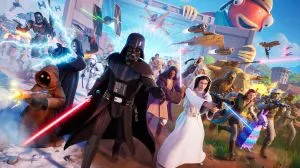
The unannounced shooter featuring characters from the Marvel and Star Wars universes has faced delays due to a strategic shift toward artificial intelligence integration. According to Bloomberg, the project was initially targeted for a March 2027 release, but that timeline has been discarded as Epic Games reevaluates its production workflows.
The delay is not merely a scheduling issue but a fundamental change in how the game is being built. Reports indicate that Epic is pushing its developers to utilize AI tools, such as Claude, to expedite the production process. This shift suggests that the company is prioritizing the implementation of new technologies over maintaining previous release milestones.
While Epic Games has not officially confirmed the existence of this specific Disney-themed shooter, the reported delay aligns with a broader corporate movement toward automation. The company appears to be using this high-profile collaboration as a testing ground for its new development philosophy.
What does the "AI-first" production model entail?
Epic Games is reportedly moving toward an "AI-first" model that fundamentally changes traditional game development roles. An internal memo obtained by Bloomberg suggests a drastic departure from conventional methods, specifically instructing developers that there should be "no more hand-written code."
This directive extends beyond software engineering into the visual aspects of game creation. The memo further stated that artwork would be produced using "full AI workflows." This approach aims to automate the most time-consuming aspects of asset creation and logic implementation, potentially reducing the manual labor required for large-scale productions.
The impact on creative workflows
The transition to AI-generated content and code represents a significant paradigm shift for studio environments. Traditionally, game development relies on highly skilled artists and programmers to craft bespoke assets and complex systems. By implementing "full AI workflows," Epic is attempting to replace or augment these manual processes with generative technologies.
Epic's communications director, Jake Jones, defended this direction by stating that the company is embracing "AI-accelerated development." He emphasized that this process remains led by Epic developers, who act as the "visionaries and creative drivers" for the company's output. This suggests that while the execution may be automated, the high-level creative direction remains human-centric.
How is Tim Sweeney approaching the AI revolution?
Tim Sweeney, CEO of Epic Games, has publicly signaled a "huge pivot" toward "maximum AI acceleration" for the company's development cycles. Sweeney has expressed that this move is intended to benefit not only Epic's internal teams but also the wider ecosystem of developers using the Unreal Engine.
Sweeney's vision for this transition is framed as a matter of industry survival and efficiency. In subsequent social media posts, he described Epic's objective as a "modest aim" to "survive the AI revolution." He believes that by embracing these tools, the company can help other developers do the same, ultimately resulting in the ability to produce better code and content at a faster pace.
This strategic pivot is not just about speed; it is about structural evolution. Sweeney views AI as a tool that will redefine the capabilities of game studios, allowing them to overcome traditional production bottlenecks that have historically limited the scale and complexity of interactive experiences.
What is the current state of the Disney and Epic Games partnership?
The partnership between Disney and Epic Games is a massive financial and creative undertaking, with Disney having invested $1.5 billion into Epic Games and Fortnite. This collaboration involves multiple ongoing gaming projects, including the rumored extraction shooter featuring Disney characters.
While it remains unclear if the delayed Marvel/Star Wars shooter is the same project reported earlier in 2026, the synergy between the two companies is evident. Disney CEO Josh D'Amaro has highlighted that interactive platforms are vital for engaging younger audiences with Disney's iconic stories. D'Amaro noted in May that Disney's characters are among the most popular within the Fortnite universe.
Despite the rumors regarding a potential acquisition of Epic Games by Disney, Disney executive Dana Walden has clarified that such discussions are not currently taking place. Instead, the focus remains on maintaining a "great partnership" that leverages Epic's technological prowess and Disney's vast intellectual property library.
How is the industry reacting to AI-heavy workflows?
The push for AI-heavy workflows is being met with both professional advocacy and industry-wide scrutiny. Some industry experts have actively supported the move toward automation in both coding and art to streamline production.
Lachlan Phillips, an AI consultant and "Metaverse artist" who has directed four Disney experiences for Fortnite, has publicly advocated for "AI-heavy workflow across coding and art." His support reflects a growing segment of the industry that views AI as an essential tool for managing the increasing complexity of modern game engines and metaverses.
However, the move toward "no more hand-written code" and fully AI-generated art remains a controversial topic within the broader creative community. The tension between rapid technological acceleration and the preservation of traditional craftsmanship is a central theme in the current evolution of the gaming sector.
Frequently asked questions
Is the Marvel and Star Wars shooter officially cancelled?
No, the project is not officially cancelled, but it is reportedly delayed. While it was originally intended for a March 2027 release, the timeline is currently uncertain as Epic Games integrates new AI-driven production methods into the development cycle.
Will AI replace human developers at Epic Games?
Epic Games maintains that developers will remain the primary creative force. Communications director Jake Jones stated that while they are using AI-accelerated development, the developers continue to serve as the visionaries and creative drivers behind all company projects.
What role does the Unreal Engine play in this AI pivot?
The pivot is designed to benefit the entire Unreal Engine ecosystem. CEO Tim Sweeney believes that by mastering AI acceleration internally, Epic can provide tools and workflows that help all developers using their engine survive and thrive during the AI revolution.
How much has Disney invested in Epic Games?
Disney has invested $1.5 billion into Epic Games and the Fortnite platform. This investment supports a multi-year collaboration aimed at creating new interactive experiences and integrating Disney's characters into expansive digital universes.
Is Disney planning to buy Epic Games?
There is no evidence that Disney is currently attempting to acquire Epic Games. Disney executive Dana Walden has stated that such conversations are not happening and that the two companies are focused on their existing partnership.
Key takeaways
- The Marvel and Star Wars shooter is delayed due to a shift toward an "AI-first" production model.
- Epic Games is moving toward workflows that include AI-generated artwork and automated coding processes.
- CEO Tim Sweeney views AI acceleration as a necessary strategy for industry survival and efficiency.
- Disney has invested $1.5 billion in Epic Games to facilitate long-term collaborative gaming projects.
The future of game development under AI acceleration
The reported delay of the Disney-themed shooter marks a significant moment in the intersection of high-budget entertainment and generative technology. Epic Games is positioning itself not just as a game developer, but as a pioneer of a new industrial standard for digital content creation. By prioritizing "AI acceleration" over immediate release dates, the company is betting that the long-term efficiency gains will outweigh the short-term costs of delays. As the industry watches, the success or failure of this "AI-first" approach will likely determine the trajectory of game production for years to come.