
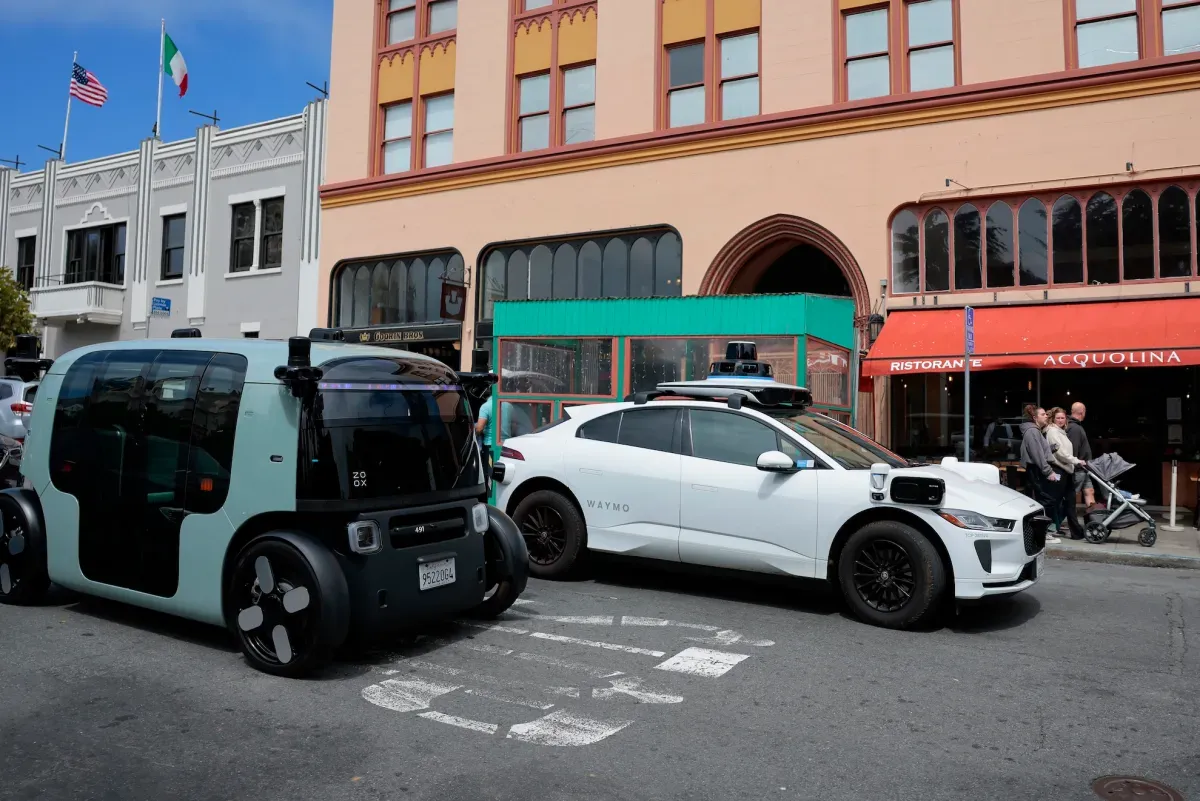
What are the new rules for robotaxis under Senate Bill 1246?
Senate Bill 1246 establishes strict operational requirements for autonomous vehicle developers to ensure they do not hinder public safety during emergencies. The law was prompted by reports of robotaxis obstructing traffic, entering crime scenes, and requiring first responders to manually move disabled vehicles. Under the new mandate, companies such as Waymo, Tesla, and Zoox must provide on-the-ground, local support to assist when their vehicles cause disruptions.
Key provisions of the legislation include:
- Penalty Thresholds: Companies may face legal penalties if a robotaxi blocks police or fire services for a duration exceeding 30 minutes.
- Remote Operator Residency: Developers are restricted to employing remote drivers who are based within the United States and hold valid U.S. driver's licenses.
- Local Communication: Companies must notify local jurisdictions regarding the status and location of their fleet during system-wide technical failures.
- Incident Technicians: The law requires the provision of "local incident technicians" specifically tasked with assisting during AV accidents or obstructions.
While the California Department of Motor Vehicles (DMV) is tasked with finalizing the specific regulatory details, the law is set to take effect in July 2028. The primary goal is to shift accountability back to the technology providers rather than leaving the burden of clearing autonomous vehicles to emergency personnel.
How is the autonomous vehicle sector currently being funded?
Significant capital is flowing into various niches of the autonomous and electric transportation sectors, ranging from maritime intelligence to electric trucking. Recent deal activity highlights a diverse investment landscape where specialized startups are securing substantial rounds to scale their operations.
| Company | Funding/Deal Value | Details |
|---|---|---|
| Harbinger | $300 million | Supply deal for 2,000 electric trucks to FedEx. |
| Quartermaster | $140 million | Series B round led by Insight Partners and others. |
| REGENT Craft | $19.25 million | Total contract value with U.S. Marine Corps. |
| HyperGuest | $25 million | Investment from AMI, an arm of Apax Partners. |
| Voltaback | €2.8 million | Raised from European fund Serena. |
The funding trend shows a split between massive infrastructure deals, such as Harbinger's agreement with FedEx, and high-growth venture capital rounds for intelligence and software startups like Quartermaster and Voltaback.
What are the latest developments from Tesla and Rivian?
Major electric vehicle manufacturers are navigating a complex mix of sales growth, product recalls, and strategic pivots toward artificial intelligence. Tesla and Rivian, in particular, are demonstrating the volatility inherent in the transition to next-generation automotive technology.
Tesla's AI pivot and financial positioning
Tesla continues to balance its traditional automotive sales with an aggressive pursuit of becoming an AI and robotics leader. In the third quarter of 2026, the company reported selling over 480,000 electric vehicles, marking its second consecutive strong quarter. To support its long-term vision of "amazing abundance" through products like the Optimus robot and the Cybercab robotaxi, Tesla has secured $30 billion in new credit lines. This capital is intended to scale the robotics and AI infrastructure that Elon Musk has identified as the core of the company's future value.
Rivian's sales and safety challenges
Rivian has reported record-setting quarterly sales, largely driven by the popularity of its R2 SUV. Despite this commercial success, the company is managing technical hurdles. A recent recall was issued for the R2 SUV due to concerns regarding fasteners on the high-voltage battery pack. If these fasteners are not properly tightened, there is a risk of power loss while the vehicle is in motion. Rivian currently forecasts annual vehicle production to be between 65,000 and 70,000 units.
How is autonomous logistics evolving in the commercial sector?
The deployment of driverless technology is moving beyond urban passenger transport into long-haul logistics and specialized delivery services. Companies are now testing the limits of autonomous operation on public highways and through complex delivery ecosystems.
Kodiak has secured Ikea as a client and is scheduled to begin driverless deliveries on public highways later this year. These operations will involve hauling products along a 219-mile stretch of Interstate 45, connecting Houston and Dallas, without a human driver present in the cab. Similarly, DoorDash is expanding its autonomous footprint through "DoorDash Air," a business model that integrates autonomous aircraft with ground-based systems to streamline the delivery process. Meanwhile, Aurora has set an ambitious target to have 30,000 autonomous trucks operational on the road by the end of 2030, a goal that underscores the massive scale anticipated for the autonomous trucking industry.
What are the privacy and legal risks in modern automotive tech?
As vehicles become more connected, they are increasingly becoming data collection hubs, creating significant privacy concerns and legal liabilities for manufacturers and ride-hailing platforms.
A study by Northeastern University involving 21 vehicles from 17 different automakers revealed that modern cars collect vast amounts of personal data. This information is frequently shared with major tech corporations, including Google, Microsoft, Meta, and Adobe. This data harvesting highlights a growing tension between vehicle connectivity and consumer privacy rights.
In the ride-hailing sector, legal consequences for labor classification remain a major hurdle. Lyft recently agreed to a $272.5 million settlement to resolve accusations that it violated California law by misclassifying drivers as independent contractors rather than employees. This settlement addresses violations occurring prior to the approval of Proposition 22, which currently allows companies like Uber and Lyft to utilize the contractor model.
Frequently asked questions
What happens if a robotaxi blocks an emergency vehicle?
Under California's Senate Bill 1246, if an autonomous vehicle blocks police, firefighters, or other emergency responders for more than 30 minutes, the operating company can face legal penalties. The law requires companies to have local support and technicians available to prevent such obstructions.
Who is allowed to remotely operate autonomous vehicles in California?
The new law specifies that remote drivers for autonomous vehicles must be residents of the United States. Additionally, these individuals are required to hold a valid U.S. driver's license to ensure accountability and local oversight of the vehicle's movements.
Is the robotaxi technology being used for more than just passengers?
Yes, autonomous technology is being applied to various sectors, including long-haul trucking and logistics. Companies like Kodiak are testing driverless trucks on public highways for retail deliveries, while others are developing autonomous aircraft for drone delivery services.
Why are autonomous vehicles collecting so much personal data?
Modern vehicles use a wide array of sensors and companion mobile apps to navigate and provide services. Research shows this results in the collection of significant personal data, which is often shared with major technology firms like Google, Meta, and Microsoft.
What are the main safety concerns with the Rivian R2 SUV?
The primary safety concern recently identified for the Rivian R2 SUV involves the high-voltage battery pack. A recall was issued because fasteners on the battery pack might not be sufficiently tightened, which could lead to a sudden loss of power while the vehicle is being driven.
Key takeaways
- California's Senate Bill 1246 mandates that AV companies provide local support and face penalties for 30-minute obstructions.
- Remote autonomous vehicle operators must be U.S.-based and hold a valid U.S. driver's license.
- Tesla secured $30 billion in credit to fund its AI and robotics, including the Cybercab and Optimus.
- Kodiak will begin driverless Ikea deliveries on a 219-mile highway stretch in Texas later this year.
- Lyft settled a $272.5 million lawsuit regarding the misclassification of drivers in California.
The shift toward accountability in autonomous mobility
The transition from experimental autonomous driving to widespread urban integration is clearly entering a phase of regulatory maturation. While early stages were characterized by technical novelty and occasional chaos, California's Senate Bill 1246 signals a move toward strict operational accountability. By forcing companies to provide local technical support and imposing penalties for emergency interference, the state is attempting to integrate robotaxis into the existing social and safety infrastructure. As the industry scales—supported by billions in new credit and massive logistics contracts—the ability to manage data privacy and public safety will likely determine whether autonomous mobility achieves its promised abundance or remains a source of urban friction.




