
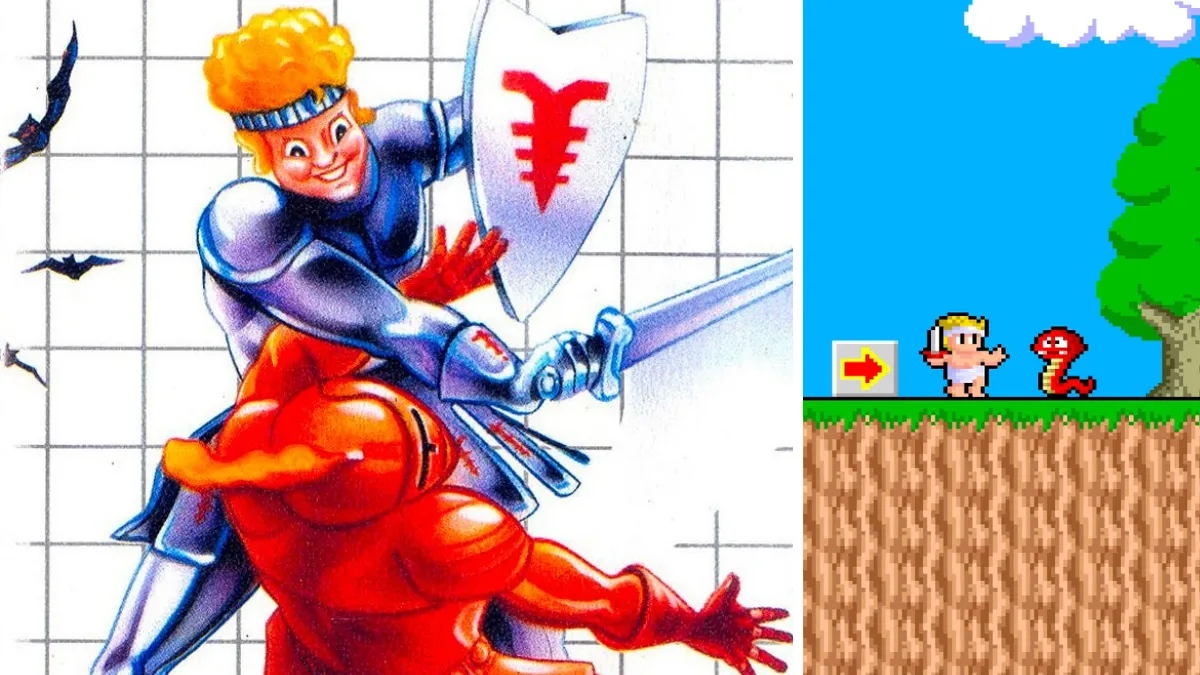
Why is the Wonderboy in Monster Land Steam release controversial?
The primary source of controversy stems from the heavy suspicion that the game is an unauthorized arcade ROM running through an emulator rather than a dedicated, professionally developed port. Technical analysis and player experience suggest the Steam listing is simply a MAME arcade emulator wrapper, with the only notable modification being the removal of the original Sega splash screen to avoid immediate detection. This concern was amplified when the original game's composer, Shinichi Sakamoto, identified the Retro Maniac version as illegitimate, noting its complete unavailability in the Japanese market. Sakamoto even noted that the game had reportedly been downloaded 10,000 times on Steam, though the exact source of that figure remains unconfirmed.
Further red flags include a significant typographical error in the title, which uses 'Wonderboy' instead of the official 'Wonder Boy' branding. This 'rookie error' is often seen as a way to bypass automated trademark filters. Additionally, the publisher, Retro Maniac, has a very limited Steam history; their only other listed title is the 1994 Data East arcade game Street Hoop (also known as Street Slam). These discrepancies—the misspelling, the lack of developer pedigree, and the regional restrictions—have led the 'Wonder Boy Universe' community on X to claim that official DMCA takedown processes are underway, suggesting they may have a direct line to the actual rights holders.
The technical reality of the port
Evidence from players who purchased the title suggests the software lacks the polish and optimization expected of a professional remake or even a standard modern port. Instead of a rebuilt engine or a dedicated emulation layer, the experience mirrors a raw arcade ROM. While some variations of the original game exist that feature English text, the core gameplay remains an unadulterated emulation of the 1987 arcade original. One obvious change noted by users is that the splash screen bearing the Sega logo has been removed. This is a stark contrast to other versions—such as those seen on the YouTube channel Retro Fighters—which retain the SEGA logo and function as legitimate arcade ROMs.
This distinction is vital for collectors and fans who expect licensed preservation rather than the mere redistribution of existing files. For those attempting to access the game from Japan, the situation is even more confusing and legally murky: the title is unavailable in that region, displaying a message stating, "This item is currently unavailable in your region." This discrepancy between global availability and strict regional restrictions in the game's home territory adds another layer of suspicion to the release, suggesting the publisher may be attempting to fly under the radar of Japanese copyright enforcement.
How do the rights for Wonder Boy games work?
The legal landscape surrounding the Wonder Boy IP is uniquely fractured and confusing, split between two distinct entities: LAT Corp and Sega. To release an official game using the 'Wonder Boy' name, a publisher must navigate a dual-permission model. LAT Corp holds the ownership of all intellectual property and assets originally created by Westone Bit Entertainment, including the actual game code and character designs. However, Sega maintains the rights to the 'Wonder Boy' trademark itself. In essence: LAT Corp owns the games, but Sega owns the name.
This split means that both parties would need to provide an OK for any re-release bearing the official title. This complexity explains why certain legitimate titles appear under different names or involve different developers. For example:
- Wonder Boy Returns Remix: An officially licensed title developed by CFK Co., Ltd that successfully navigated the rights landscape.
- Wonder Boy: The Dragon's Trap: A thorough, high-quality remake by Lizardcube and published by Dotemu, which is also officially licensed.
- Monster Boy and the Cursed Kingdom: A spiritual successor that avoided trademark litigation by omitting the 'Wonder Boy' name entirely, despite being heavily influenced by series creator Ryuichi Nishizawa.
The confusion is further compounded by the franchise's history in Western markets. The original arcade version of Wonder Boy was released as Adventure Island in the United States, spawning a parallel line of entirely unrelated follow-up games. This makes it difficult for even diehard fans to define exactly what constitutes a 'Wonder Boy' game in both a legal and spiritual sense, a gap that unauthorized publishers seem keen to exploit.
What is the impact of Steam's DMCA policies on such listings?
According to Valve's own documentation, a DMCA complaint is typically processed within a maximum of 72 hours, though complex cases involving international rights holders may take longer. If a takedown is successful, Steam is required to display a public-facing notice on the product page stating, "A DMCA takedown notice has been filed on this item." As of early October 2026, no such notice has appeared on the Retro Maniac listing, allowing the game to remain available for purchase despite the mounting evidence of its illegitimacy.
The situation highlights a recurring issue on digital storefronts where 'abandonware'—software that is no longer commercially available—is redistributed without permission. While Sega and LAT Corp hold the legal right to act, the lack of easily accessible, legitimate versions of classic titles on Steam can inadvertently create a market for these unauthorized ports. For instance, several Sega classics, including Monster Lair and Monster World, were once available as part of the SEGA Mega Drive and Genesis Classics collection on Steam, but they were removed in 2024. This leaves a void in the market that unauthorized publishers can easily exploit by uploading simple ROM rips.
How did Steam's revenue perform in the latest weekly cycle?
The Steam revenue charts for the period of September 29 to October 6, 2026, show a diverse range of top performers, led by the massive launch of Aion 2. Despite its top ranking, the MMORPG has faced significant criticism for its monetization structures, which many users describe as being too similar to free-to-play mobile games. The game currently holds a "mixed" review status, with players questioning the depth of its monetization and the potential use of AI-generated assets.
| Rank | Game Title | Notes |
|---|---|---|
| 1 | Aion 2 | Launched as an MMORPG; currently holds mixed reviews. |
| 2 | Counter-Strike 2 | Consistent top-tier performer. |
| 3 | Ace Combat 8: Wings of Theve | High-ranking flight combat title. |
| 8 | Wuthering Waves | Notable presence in the top ten. |
| 10 | Minecraft Dungeons | A relatively modest showing for a major franchise spin-off. |
The performance of Minecraft Dungeons was noted as particularly humble for a title tied to one of the world's largest gaming brands, even with its availability on Xbox Game Pass. Meanwhile, the release of Nivalis Nights on September 30 meant its initial weekly performance was statistically disadvantaged in the ranking period, finishing at 27th place.
What are the upcoming indie highlights on Steam?
Beyond the major AAA and MMO releases, several niche indie titles are scheduled for release in early October, offering a stark contrast to the high-revenue MMOs. 'Car Park Capital' is a dystopian simulation where players destroy the world with vast stretches of yellow-lined tarmac to make room for parking. 'Silver Pines' is a rotoscoped metroidvania horror game where players act as a PI in a rundown town. Other notable upcoming titles include 'Truckful,' a driving game with mysterious, possibly malevolent forces, and 'Buitopia DVD,' a unique experience designed to be played within the interface of a physical DVD menu, exploring themes of nostalgia and dead physical media.
Upcoming Indie Release Schedule
- Car Park Capital: October 9 - Dystopian urban planning.
- Silver Pines: October 9 - Rotoscoped horror/metroidvania.
- Truckful: October 10 - Pastoral driving with underlying mystery.
- Buitopia DVD: October 10 - Nostalgia-driven media simulation.




