
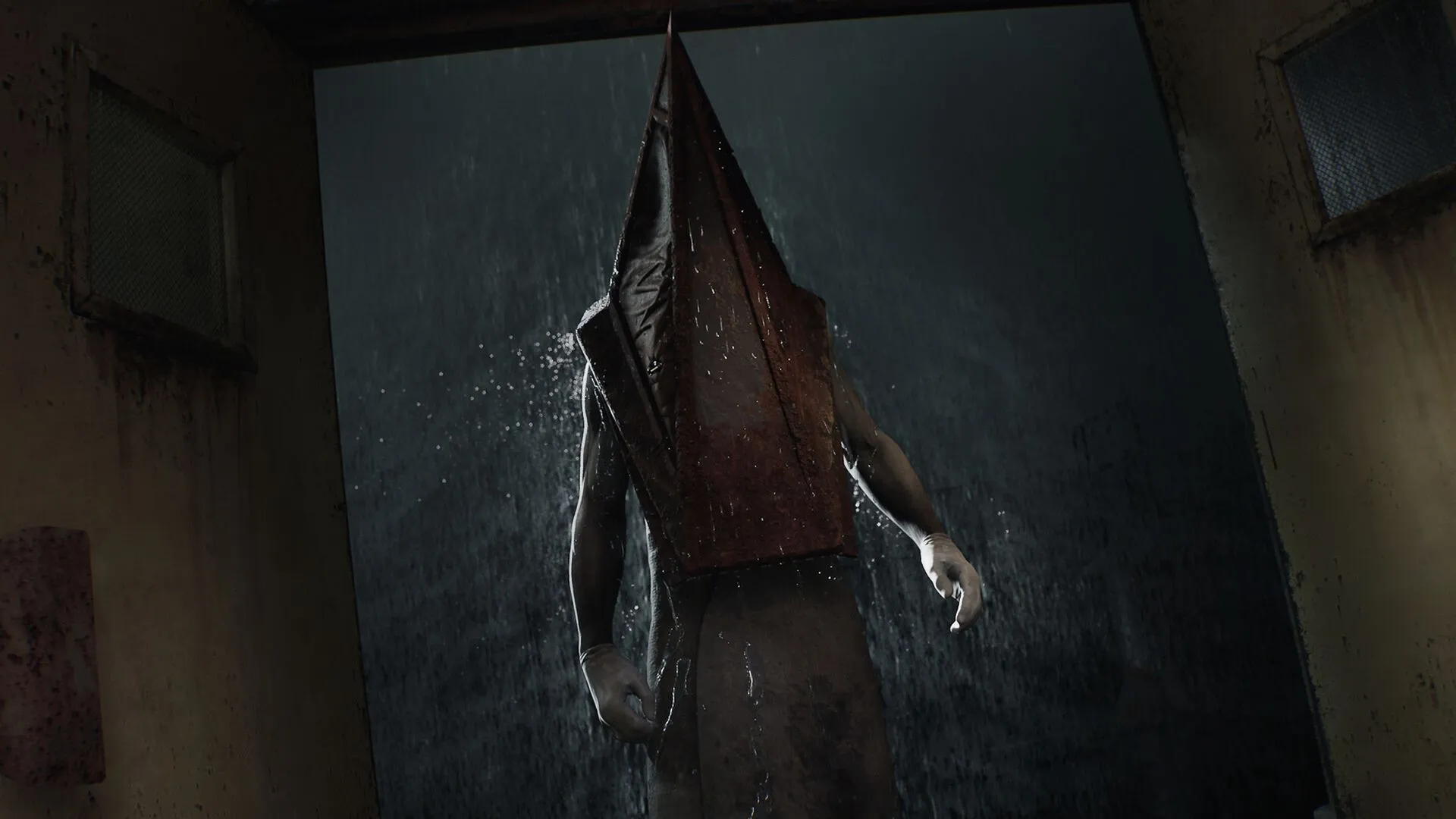
How is the Silent Hill revival progressing according to Konami?
The Silent Hill revival has transitioned from a period of stagnation to a structured multi-phase development strategy. After spending roughly a decade locked in a Konami cupboard, the franchise has seen a significant resurgence. Producer Motoi Okamoto expressed a sense of relief regarding the commercial and critical performance of the initial lineup of games. The first wave, which includes Silent Hill 2 Remake, Silent Hill f, and Silent Hill: Townfall, has met the company's internal expectations for both sales and reception.
Okamoto noted in a Famitsu interview (via IGN) that the successful launch of these three titles provides a foundation for much larger ambitions. "All three titles we initially announced were able to be released successfully," Okamoto said, adding that "they've also received high praise, and we are satisfied with it." Rather than viewing these releases as a singular event, Konami is treating them as the opening chapter of a much broader roadmap. The producer explicitly stated that the company is already looking toward the 'second and third waves' of content for the series. "Successfully launching this 'first wave' comes with great relief, but we're not stopping here; we must think of the second and third waves," Okamoto stated.
The strategic importance of multiple waves
The decision to plan in 'waves' suggests a desire for sustained engagement with the fanbase rather than a one-off attempt to capitalize on nostalgia. By structuring the revival into distinct phases, Konami can manage development cycles more effectively while maintaining a consistent presence in the horror genre. While specific titles for the upcoming waves have not been disclosed, Okamoto confirmed that a number of projects are currently under consideration. "We can't share specific details, but we're currently looking at a number of projects," he added.
This multi-wave approach represents a departure from the franchise's recent history, where uncertainty often loomed over the IP. By committing to a sequence of releases, Konami is signaling a long-term investment in the series' ability to deliver allegorical horror in foggy towns and other atmospheric settings. The success of the first wave serves as the necessary proof of concept for the projects currently on the drawing board.
What challenges did Konami face during the series' comeback?
Securing executive approval for new Silent Hill projects was a significant hurdle for the development teams. The legacy of the franchise is complicated by the high-profile cancellation of Hideo Kojima's Silent Hills in 2015, which left the IP in a state of uncertainty for nearly a decade. This history made the internal push for new entries a delicate process, as the brand had been dormant for so long.
Motoi Okamoto highlighted that persuading Konami leadership to invest in the series required a long-term vision. He specifically argued against the idea of releasing only a single remake. According to Okamoto, if the company had only released one title, it might have signaled to the public that the revival was a temporary measure or subject to another sudden cancellation. He was convinced that "just one remake is not enough." By pushing for a broader slate of games, he aimed to prove the franchise's renewed viability and ensure that the development wouldn't be perceived as something that could be easily halted again.
What upcoming Silent Hill projects are already confirmed?
While the details of the second and third waves remain largely confidential, at least one major project has been confirmed: a remake of the original 1999 Silent Hill. This project is being handled by Bloober Team, the studio responsible for the acclaimed Silent Hill 2 Remake.
The decision to remake the first game presents a unique set of creative challenges for the developers. Unlike the second entry, which is often cited for its complex psychological depth, the original 1999 title features a more straightforward narrative. Bloober Team will need to find ways to modernize the atmosphere and mechanics while respecting the simpler storytelling roots of the foundation of the series. The industry remains curious to see how the studio will approach the task of reimagining the game that started it all.
Developer involvement and future prospects
There is ongoing speculation regarding whether other developers involved in the first wave will return for future installments. NeoBards Entertainment and Screen Burn Interactive have both contributed to the recent expansion of the series, but their involvement in the upcoming waves has not been officially confirmed by Konami.
The performance of these studios has been a point of discussion among industry analysts. For instance, in the review of Silent Hill f, expert Elie Gould described the Japan-set action-horror as a "true return to form." Similarly, regarding the exploration of the Scottish town of St Amelia in Silent Hill: Townfall, Gould wrote that Screen Burn "absolutely understands what makes a great Silent Hill game." Whether these studios remain part of the 'second wave' or subsequent projects will likely depend on Konami's evolving horror strategy, but their recent contributions have established a high bar for the series' revival.
Why is the Silent Hill revival considered a success?
The success of the revival is measured by the combination of critical acclaim and healthy sales figures across the three initial releases. After years of the franchise being 'locked in a cupboard,' the positive reception of the recent titles has validated Konami's decision to reopen the IP. The revival has succeeded in re-establishing the brand's identity in the modern gaming landscape.
By diversifying the settings—ranging from the fog-drenched streets of traditional towns to the unique environments of Silent Hill f—Konami is proving that the series can evolve without losing its psychological horror roots. This successful reintegration into the market is what has provided the momentum necessary to greenlight the subsequent waves of development, moving the series from a state of dormancy into a period of active growth.
FAQ: Silent Hill revival
What are the 'second and third waves' of Silent Hill?
The second and third waves refer to planned subsequent releases of new Silent Hill games currently in development by Konami. Producer Motoi Okamoto confirmed these waves exist to ensure the series' long-term revival, following the successful launch of the initial 'first wave' of titles.
Which games make up the first wave of the revival?
The first wave consists of three specific titles: the Silent Hill 2 Remake, Silent Hill f, and Silent Hill: Townfall. All three games were released to positive reviews and have contributed to the commercial success that allows Konami to plan future projects.
Is there a remake of the original Silent Hill coming?
Yes, Bloober Team is currently working on a remake of the original 1999 Silent Hill. Following their work on the Silent Hill 2 Remake, the studio is tasked with modernizing the first game, which features a different narrative structure than its sequel.
Why did Konami hesitate to revive the series?
Konami's hesitation was largely influenced by the difficult history of the franchise, specifically the 2015 cancellation of Hideo Kojima's Silent Hills. This created a period of uncertainty that made executives cautious about committing to new entries in the horror series.
Who is the producer leading the Silent Hill projects?
Motoi Okamoto is the producer overseeing the current Silent Hill revival. He has been instrumental in advocating for a multi-game strategy to ensure the franchise's stability and to prevent the perception that the revival was merely a single, isolated release.
Key takeaways
- Konami is planning two additional waves of Silent Hill games beyond the initial releases.
- The first wave included Silent Hill 2 Remake, Silent Hill f, and Silent Hill: Townfall.
- Bloober Team is confirmed to be developing a remake of the original 1999 Silent Hill.
- Producer Motoi Okamoto pushed for multiple releases to avoid the appearance of a temporary revival.
The future of psychological horror
The Silent Hill revival represents a significant shift in Konami's approach to its legacy intellectual properties. By moving away from a single-release model and embracing a multi-wave strategy, the company is attempting to build a sustainable ecosystem for psychological horror. While the specific details of the second and third waves remain under wraps, the momentum generated by the first wave provides a strong foundation. As Bloober Team moves forward with the original title's remake, the industry will be watching to see if Konami can maintain this standard of quality across its expanding horror portfolio.




