
What makes a Fortnite skin truly unique?
A skin is considered truly unique in Fortnite when it possesses a mechanical gimmick or a visual behavior that cannot be replicated by other cosmetics. While the majority of skins in the Item Shop offer standard reactive elements—such as simple sound effects or basic particle trails—the most distinctive skins interact with the game environment or the player's actions in highly specific ways.
For instance, most skins react to a kill with a generic animation, but certain skins feature specialized anatomical movements or environmental responses. These features often serve as a signature for the character, making them instantly recognizable in a match. This distinction is crucial for collectors and players who seek more than just a visual change, looking instead for a way to alter their in-game presence through specialized animations and reactive physics.
Which skins feature unique reactive animations?
Several skins utilize specialized animations that trigger during specific gameplay events, such as securing a kill or interacting with objects. These animations go beyond simple emotes and are integrated into the character's model behavior.
Kill-triggered and interaction-based animations
The Sinister Glare skin is a prime example of mechanical uniqueness; it features a human hand in place of a head that snaps its fingers specifically after a player secures a kill. Similarly, the Candyman skin, a sentient collection of Valentine's Day candy, performs a unique movement by turning its head to look directly into the camera after every kill. The Wednesday skin also offers high interactivity through 'Thing,' the hand on the character's shoulder, which points at the player's crosshair when aiming down sights and snaps its fingers when opening chests.
Other skins use sound and movement to create a unique identity. The Beavis and Butt-head skins are notable for their social reactivity; while they perform their iconic chuckle upon a kill, they are also programmed to chuckle at each other's kills if played as a duo. In the Dead Ball set, the zombie soccer players feature loose-hanging jaws that physically flop around during movement or emotes, adding a layer of physics-based characterization rarely seen in standard skins.
How do environmental and state-based skins function?
Some of the most advanced skins in Fortnite do not just react to player actions, but to the game world itself or the progression of the match. These skins change their appearance based on external variables like elevation or time.
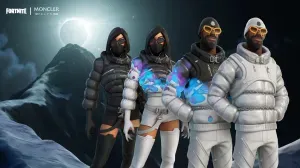
The Moncler collaboration introduced a sophisticated visual mechanic where the clothing of the skins changes color based on the player's altitude. The garments appear black at lower elevations and transition to white as the player reaches higher ground. This creates a dynamic visual profile that shifts throughout a match. In a different way, the original Peely skin from the Chapter 2 Season 4 Battle Pass features a biological progression; the banana gradually ripens and turns brown as the match progresses, a change that occurs naturally over time rather than as a reaction to damage.
Other skins use color and light to signal their state. The Spider-Punk skin features a body that flashes various solid colors in response to a wide array of triggers, including taking damage, dealing damage, opening chests, healing, or securing kills. Blinky, a human-shaped container for Christmas lights, utilizes a random blinking mechanic to maintain a constant, unpredictable visual presence.
Which Fortnite skins are permanently exclusive?
Exclusivity is a major factor in the value of Fortnite skins, with some being locked behind Battle Passes or specific seasonal packs that never return to the rotation.
Battle Pass and Level-up pack exclusivity
The Mystique skin, a Marvel character from the Chapter 2 Season 4 Battle Pass, remains one of the most mechanically complex exclusives. As a shapeshifter, she included a built-in transformation emote that allowed her to take on the appearance of the most recent opponent defeated. This level of functional shapeshifting has not been replicated for other characters, despite similar abilities existing in other media. Similarly, the original Peely is permanently locked to those who held the Chapter 2 Season 4 Battle Pass.
Other skins like Ayida, from a Chapter 3 Season 4 level-up pack, offer a unique monochromatic manga aesthetic. Because level-up packs are a discontinued mechanic, skins like Ayida are considered highly rare. In contrast, many other unique skins, such as the Five Nights at Freddy's animatronics, remain in the Item Shop rotation. These animatronics are unique because they take visible damage during a match whenever the player is hit, with the damage persisting until the end of the match or the player's death.
What are the most specialized transformation skins?
Transformation mechanics in Fortnite are often tied to specific character identities, such as the Bunnywolf and Llion skins. These skins utilize a 'toggle' mechanic based on the player's equipped items. Bunnywolf switches to a bunny-shaped head when the pickaxe is drawn, but reverts to a wolf head when a weapon is equipped. Llion follows a similar logic, switching between a Llama and a Lion head depending on the player's current tool or weapon. This provides a layer of visual variety that changes mid-combat, a feature that is highly specialized compared to standard cosmetic sets.
FAQ: Frequently asked questions
Which skin changes color based on height?
The Moncler collaboration skins are the only ones that feature elevation-based color shifting. The clothing transitions from black at lower altitudes to white at higher elevations, providing a dynamic visual effect that responds directly to the player's position in the game world.
Is the Mystique skin available in the Item Shop?
No, the Mystique skin is permanently locked. It was a Battle Pass exclusive from Chapter 2 Season 4. It is highly valued for its unique shapeshifting emote, which allowed players to transform into the last opponent they defeated in combat.
How does the Peely skin work?
The original Peely skin, exclusive to the Chapter 2 Season 4 Battle Pass, features a ripening mechanic. Unlike other skins that react to damage, Peely naturally turns brown and ripens over the course of a match, simulating a biological progression over time.
Do any skins react to being in a duo?
Yes, the Beavis and Butt-head skins have a unique social mechanic. When played as a duo, they do not just laugh at their own kills, but will also perform their iconic chuckle in response to their teammate securing a kill.
What makes the Five Nights at Freddy's skins unique?
The Five Nights at Freddy's animatronic skins feature a persistent damage mechanic. Whenever the player takes damage during a match, the skin shows visual signs of wear and damage that remain visible until the player dies or the match concludes.
Key takeaways
- Mystique features a unique shapeshifting emote that mimics defeated opponents.
- Moncler skins change color from black to white based on player elevation.
- The original Peely skin naturally ripens and turns brown during a match.
- Beavis and Butt-head skins react to their teammate's kills with laughter.
- Sinister Glare features a hand-head that snaps its fingers after kills.
Conclusion
The diversity of Fortnite skins extends far beyond simple aesthetic changes, with many cosmetics offering deeply integrated mechanical features. From the environmental responsiveness of the Moncler set to the permanent exclusivity of Battle Pass icons like Mystique and Peely, these skins define the player experience through unique visual and auditory feedback. While many of these features are tied to specific, non-returning seasons, others remain available in the Item Shop, ensuring that players can still acquire skins with highly specialized behaviors. Understanding these mechanics provides a clearer view of how Epic Games uses cosmetics to enhance character identity and gameplay immersion.




