
What were FPS level packs and why were they unique?
FPS level packs were a distinct category of software products that existed between traditional video games, official expansions, and community-made mods. During the 1990s, these collections were frequently sold as boxed retail products, offering additional content for popular first-person shooters such as Duke Nukem 3D and Quake. While they shared structural similarities with expansions, their legal and developmental status was often much more ambiguous.
The industry at the time lacked a standardized framework for third-party content. Some products were marketed as "Official Mission Packs," such as the Quake episodes Scourge of Armagon and Dissolution of Eternity. Others occupied a much more precarious position, acting as unofficial collections that sat on store shelves without clear authorization from the original IP holders. This lack of structure created a "Wild West" environment where quality and legality varied wildly from one box to the next.
How did sanctioned developers shape the genre?
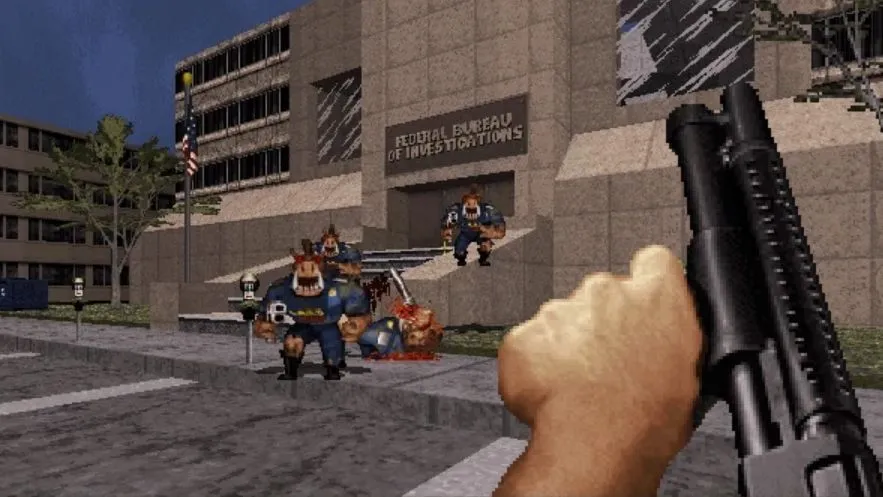
The most successful mission packs were typically produced by sanctioned third-party developers like Sunstorm Interactive, who brought professional standards to the burgeoning market. Sunstorm specialized in the Build engine, producing highly regarded titles including Duke Caribbean: Life's A Beach, Duke It Out in DC, and Duke Xtreme for the 1996 hit Duke Nukem 3D.
These professional studios served as an essential training ground for the next generation of industry leaders. A notable example is Charlie Wiederhold, who transitioned from a college student obsessed with mapping for Rise of the Triad to a professional designer. After being recruited by Sunstorm following his involvement in a LAN tournament, Wiederhold went on to contribute to massive franchises including Borderlands and Call of Duty: Modern Warfare 2.
The technical evolution of level design
The ability of developers like Sunstorm to produce high volumes of content was largely due to advancements in mapping technology. Unlike earlier titles such as Doom, where designers often had to exit the editor and launch the game to view a level in 3D, the Build engine allowed for real-time visualization. According to designer Charlie Wiederhold, the engine enabled designers to "fly around" the environment and see sprites as they were being placed. This real-time feedback loop, combined with official documentation provided by 3D Realms, allowed designers to push technical boundaries and experiment with complex sector-based effects within a functional editor environment.
What was the dark side of the unregulated mission pack market?
While companies like Sunstorm provided polished experiences, other publishers exploited the lack of regulation to release low-quality "shovelware." Wizardworks, for instance, published Duke Assault, a pack that essentially compiled over 1,500 uncurated user-made levels from the internet. Because these levels were not vetted, the product often included unfinished maps or "troll" maps designed specifically to kill the player immediately upon spawning.
Even more controversial was the Nuke It series produced by Micro Star Software. Similar to Duke Assault, these were boxed expansions filled with player-created content that lacked clear authorization from the original developers. This practice of bundling community content into commercial retail products without permission created a legal powder keg that would eventually explode in the courtroom.
How did the Micro Star v. FormGen lawsuit change copyright?
The legal tension culminated in a landmark case that redefined the relationship between game developers and the modding community. Micro Star Software, facing uncertainty regarding the legality of its products, filed for a declaratory judgment to assert that it had not committed copyright infringement. However, Duke Nukem 3D's publisher, FormGen, responded with a countersuit, arguing that the maps included in the Nuke It series constituted unauthorized derivative works of the original game.
In 1998, the court ruled in favor of FormGen. This decision was transformative for the industry, as it legally established that video game mods are considered derivative works. Consequently, creating and selling mods based on existing intellectual property without the holder's consent constitutes a copyright violation. This ruling effectively ended the era of unregulated, boxed mission packs, forcing third-party content to move into the formal categories of either official expansions or unofficial, non-commercial mods.
What is the legacy of the 1990s mission pack era?
Although the era of unregulated commercial level packs vanished, the creative impulse that drove it remains a cornerstone of FPS culture. The distinction between official content and community mods is now clearly defined, with developers often choosing to support modding communities as a way to extend the life of their titles.
The spirit of experimentation seen in the 1990s continues through modern community-driven projects. Today, players engage with high-quality unofficial masterpieces like Arcane Dimensions or participate in official new content releases like Quake's Dawn of the Machine. These modern addons are the direct descendants of the technical boundary-pushing that designers like Wiederhold pioneered thirty years ago.
Frequently asked questions
What is the difference between an expansion and a mod?
An expansion is typically a formal, often official, addition to a game's content that is released with the developer's blessing. A mod, or modification, is community-created content that is usually unofficial. While expansions are commercial products, mods are often shared freely by the player community.
Why were 1990s level packs considered a "Wild West"?
The era was considered a "Wild West" because there was no established industry structure or legal precedent for selling third-party levels in retail stores. This allowed for a mix of high-quality professional work and low-quality, unauthorized "shovelware" to coexist on store shelves.
What was the significance of the Micro Star v. FormGen ruling?
The 1998 ruling was significant because it legally classified video game mods as derivative works. This meant that selling player-created content without the permission of the original copyright holder was a violation of the law, effectively ending the market for unregulated commercial mission packs.
How did the Build engine improve level design?
The Build engine provided superior mapping tools compared to earlier engines like Doom. It allowed designers to view their levels in a 3D environment in real-time while editing, rather than having to launch the game to see the results, which enabled much faster and more complex design work.
Who were some key figures in the early FPS mapping scene?
Charlie Wiederhold is a prominent figure who began his career creating levels for Duke Nukem 3D and later worked on major titles like Call of Duty. Other important entities included Sunstorm Interactive, which produced high-quality sanctioned packs, and developers like Robert Travis.
Key takeaways
- The 1990s saw a unique market for boxed FPS level packs that sat between official expansions and mods.
- Sunstorm Interactive was a leading sanctioned developer, producing high-quality content for the Build engine.
- The Micro Star v. FormGen lawsuit established that unauthorized mods are legally considered derivative works.
- This landmark ruling ended the era of unregulated commercial mission packs in the gaming industry.
- Modern modding continues the legacy of early designers through high-quality, community-driven content.
Conclusion
The era of unregulated FPS level packs was a volatile but formative period in gaming history. It served as a testing ground for both professional developers and hobbyist designers, providing a bridge between the early days of the genre and the sophisticated ecosystems of today. While the legal ambiguity of the 1990s was eventually resolved by the Micro Star v. FormGen decision, the underlying passion for expanding virtual worlds remains unchanged. Today, the distinction between official content and community mods is legally clear, yet the creative energy that once filled the "Wild West" continues to drive the evolution of first-person shooters.




