
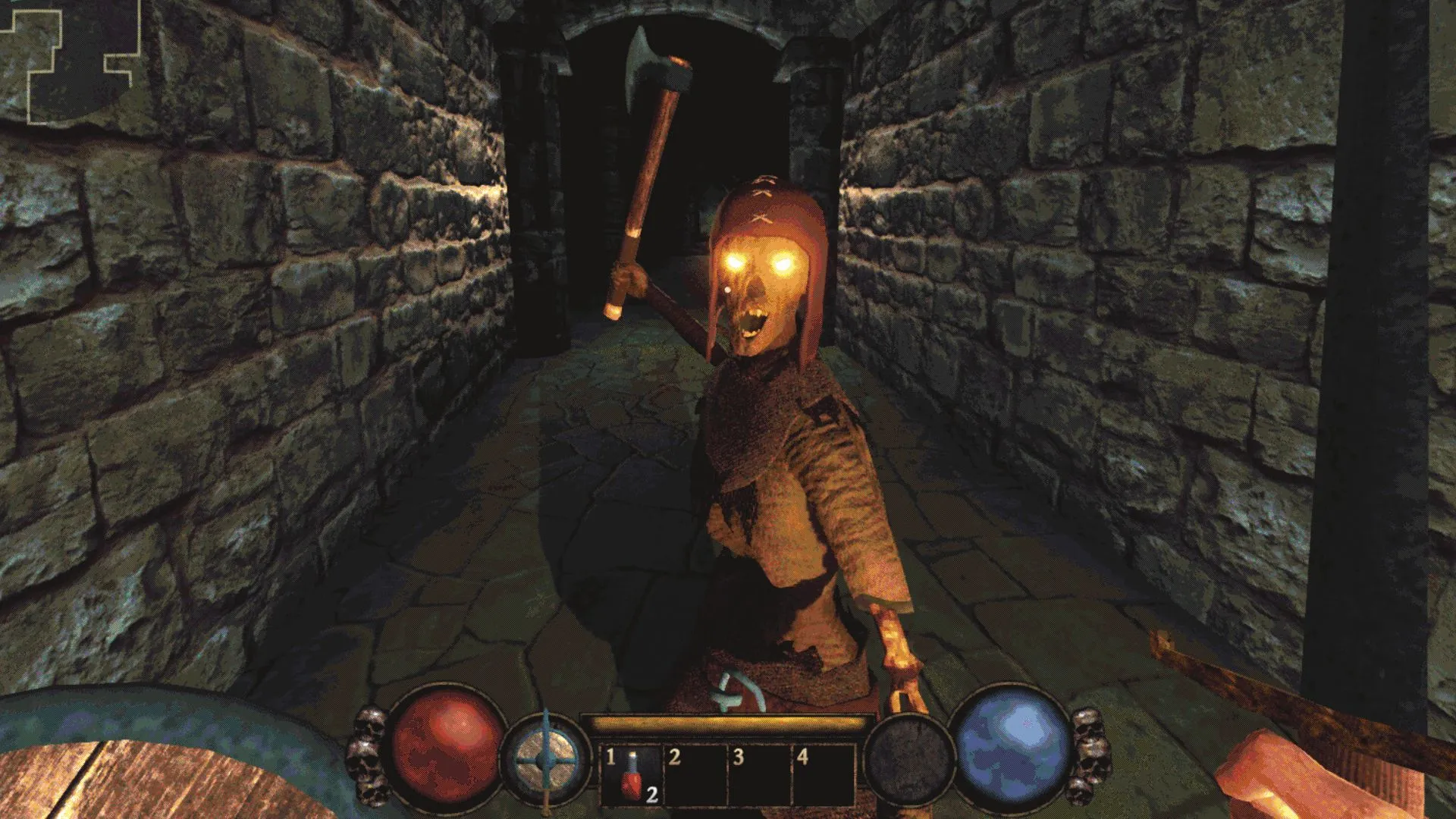
What makes the combat in Heathen unique?
The core differentiator for Heathen is its emphasis on highly reactive, physics-based dismemberment within a first-person perspective. While many action RPGs treat limb loss as a purely visual effect, developer Christopher Yabsley has designed the system to be a functional component of combat strategy. This approach aims to solve the common difficulty of making first-person melee combat feel weighty and satisfying, a feat often difficult for solo developers to achieve.
According to Yabsley, the ability to lop off appendages is not merely about increasing the gore factor; it is a tactical necessity as players progress. The gameplay loop involves navigating increasingly horrific environments where managing enemy limbs becomes vital for survival. For example, fighting multi-limbed creatures requires players to systematically dismantle the threat to prevent being overwhelmed. Yabsley notes that this system has "done a lot for making swords and axes feel really good," suggesting that the tactile feedback of the weapons is deeply tied to the anatomical destruction they cause.
As players delve deeper into the subterranean labyrinth, the enemies become stranger and more horrific. This escalation ensures that the dismemberment mechanic remains relevant, transitioning from a novelty into a core survival requirement. The tension of a "descent into madness" is thus mechanically supported by the need to physically deconstruct the monsters that stand in your way. This creates a loop where the player's mastery of the environment and the enemy's physical form is just as important as their ability to swing a blade.
The physics of improvised weaponry
One of the most striking demonstrations of this system involves the interaction between decapitation and physics. The developer has showcased a sequence where a player decapitates an undead archer and can subsequently kick the severed head midair. If the player possesses enough skill, they can use that flying head as a projectile to strike and kill a different enemy.
This "ridiculous reactivity" is a central pillar of the game's design. By allowing players to turn parts of their enemies into improvised weapons, Yabsley creates a combat loop that rewards both precision and creativity. It moves the genre away from simple button-mashing and toward a more kinetic, physics-driven experience where the environment and the enemies themselves become tools for survival. The ability to kick a head midair to execute another foe suggests a level of emergent gameplay where the player's skill directly dictates the chaos of the battlefield.
This level of interactivity transforms the battlefield from a static arena into a dynamic space where every successful strike can create new opportunities. The physics-driven nature of these interactions implies that combat in Heathen will be less about memorizing patterns and more about reacting to the emergent chaos of a fray. It is this specific brand of unpredictability that Yabsley seems to be targeting, turning the very remains of a defeated foe into a tool for the next engagement.
How does Heathen blend genres and influences?
Heathen acts as a hybrid between the loot-driven progression of isometric ARPGs and the visceral, immersive combat of first-person melee titles. The game draws significant inspiration from the Diablo series, particularly in its presentation of loot, user interface elements, and the core loop of descending into dangerous environments to secure fortune and glory. The visual language—such as the way treasure chests vomit out loot and the presence of conjured portals to transport players back to town—is distinctly "Diablo-ish," though it remains to be seen if these UI elements are final or placeholders.
Beyond the mechanical influences, there is a personal connection to the genre. Yabsley has cited his childhood experiences playing Diablo with his mother as a key influence, noting that she played the game specifically to connect with him. This emotional foundation carries over into the game's multiplayer ambitions; Heathen is set to support online co-op when it eventually launches into early access, allowing players to share the experience of descending into the subterranean labyrinth of Saltgrave.
The combat also draws from first-person melee heavyweights like Dark Messiah of Might and Magic and Warhammer: Vermintide 2. By combining the fast-paced hacking and slashing of these titles with the deep progression systems of a traditional ARPG, Yabsley aims to create something that feels both familiar and entirely new. The setting of Saltgrave, with its "ancient horror" and "descent into madness," provides the dark fantasy backdrop necessary for this blend of high-octane combat and loot hoarding. The result is a game that attempts to marry the cerebral satisfaction of gear optimization with the raw, physical satisfaction of first-person combat.
Frequently Asked Questions
What is the setting of Heathen?
The game is set in the fantasy town of Saltgrave, where players explore a vast subterranean labyrinth beneath the town to find fortune and glory.
Will Heathen have multiplayer?
Yes, the game is expected to support online co-op when it launches into early access.
Who is the developer of Heathen?
Heathen is being developed by solo developer Christopher Yabsley.
Key Takeaways
- Heathen features a unique first-person dismemberment system that is tactical, not just visual.
- Players can use severed enemy parts, such as heads, as improvised projectile weapons.
- The game blends Diablo-style loot and UI with first-person melee combat inspired by titles like Vermintide 2.
- The game will feature online co-op upon its early access launch.




